
Fitness Products Buying Guide for Beginners
Starting a fitness routine can make every product look important: shoes, bands, mats, trackers, machines, recovery tools, and apps all promise a smoother path. Beginners usually do better by choosing fewer items that reduce friction and support safe repetition.
This guide explains how to build a first fitness setup around comfort, stability, clear goals, and easy storage. Use it to decide what is useful now, what can wait, and how to avoid products designed for routines you have not built yet.
Buying framework
How beginners should think about fitness products
Beginner purchases should make workouts approachable, repeatable, and safe while leaving room to adjust as preferences become clearer.
Choose confidence over complexity: Products with simple setup, clear sizing, and predictable use help beginners start without feeling blocked by settings, subscriptions, or technical choices.
Build around one routine: A walking plan, beginner strength circuit, mobility habit, or low-impact cardio goal gives each purchase a purpose.
Keep intensity adjustable: Beginner-friendly products should offer a forgiving starting point and gradual increases rather than forcing one difficult level.
Protect joints and surfaces: Supportive shoes, a stable mat, good grip, and appropriate flooring matter because early discomfort can quickly stop a new routine.
Leave room to learn: Avoid locking into expensive platforms before you know which workouts you enjoy and can repeat consistently.
Who this is for
Pick beginner fitness products that match your starting point
Different beginners need different combinations of guidance, comfort, space efficiency, and accountability.
Restarting after a long break: Choose low-impact products with stable footing, modest resistance, and easy recovery support so workouts can ramp up gradually.
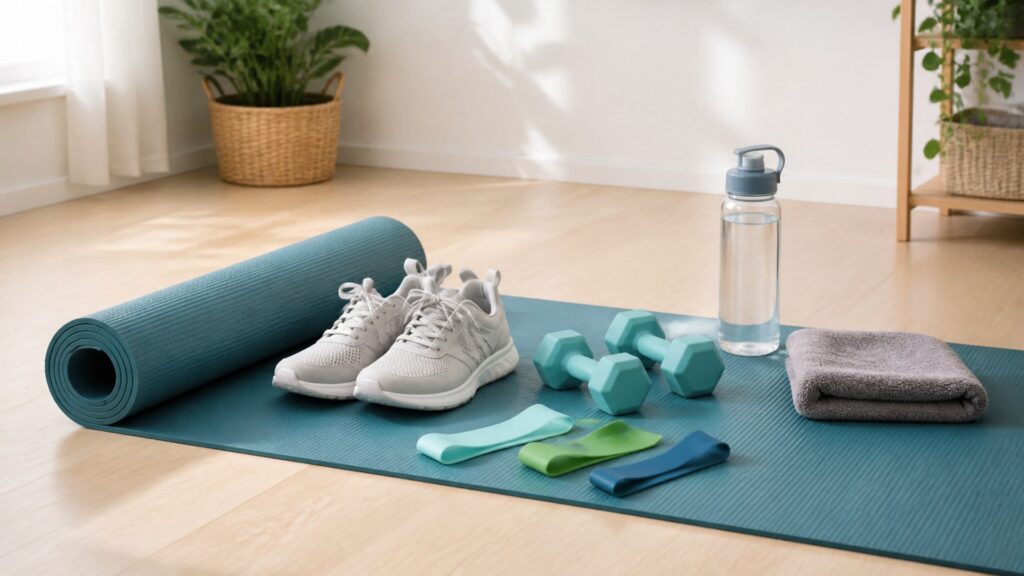
Small-space beginners: A mat, bands, adjustable hand weights, and compact storage often beat larger machines until the habit is established.
Guidance-seeking shoppers: A basic wearable, app, or connected product can help when reminders, pacing, and clear sessions prevent guesswork.
Budget-conscious starters: Spend first on fit and safety, especially shoes and stable surfaces, then add resistance or tracking only when needed.
What to pay attention to
Which beginner fitness product specs actually matter
The best beginner specs are the ones that affect comfort, safe movement, easy setup, and gradual progression.
Specs that affect feel
Cushioning, grip, sizing, weight, adjustment speed, display readability, and how secure the product feels during slow movements.
Specs that affect capability
Resistance range, weight increments, speed settings, battery life, supported classes, and whether the product can grow with ability.
Sizing and fit range: Shoes, apparel, wearables, benches, and bikes should fit comfortably without constant adjustment or pressure points.
Grip and stability: Mats, handles, steps, pedals, and benches should stay predictable so the workout feels controlled rather than uncertain.
Starting resistance: Bands, dumbbells, machines, and cable systems need a light enough entry point for clean form.
Setup time: Products that unfold, pair, adjust, or store quickly are more likely to be used during short windows of motivation.
Avoid these traps
Common mistakes beginners make when buying fitness products
Beginner purchases go wrong when they copy an advanced routine before the basics are comfortable.
Buying too much at once: A crowded setup creates decisions before every workout. Start with the few products needed for the first routine.
Choosing advanced gear too early: Heavy loads, aggressive machines, and complex trackers can distract from form, consistency, and gradual conditioning.
Ignoring discomfort signals: Poor shoe fit, slippery mats, awkward handles, or rough fabrics can turn mild soreness into a reason to stop.
Assuming technology solves motivation: Apps and screens help some beginners, but reminders only work when the underlying workout feels doable.
Decision guidance
Which beginner fitness products are right for you
Choose products that support your first repeatable routine and give you room to progress.
For walking or light cardio: Start with supportive shoes, breathable apparel, and optional tracking that keeps pacing simple.
For beginner strength: Choose bands, light dumbbells, a stable mat, or adjustable resistance that encourages clean form before heavy loading.
For mobility and recovery: A comfortable mat, stretching strap, roller, or massage tool can help if it supports a routine you will actually follow.
For accountability: A simple wearable or app can be useful when step goals, reminders, and guided sessions keep workouts from feeling vague.
Ownership & compatibility
What beginners are really buying into long term
The first setup should be affordable to maintain, easy to store, and flexible enough to change as preferences become clearer.
Upgrade paths: Begin with products that can remain useful later, such as bands, a mat, adjustable weights, or shoes suited to your main activity.
Cleaning and storage: Beginner products should be simple to wipe down, hang, fold, charge, or put away so cleanup does not become a barrier.
Subscription caution: If a product depends on classes or tracking, confirm the monthly cost and what functions remain without a subscription.
Shared use: If family members may join, choose products with broad sizing, fast adjustment, and surfaces that handle repeated cleaning.
FAQ
Fitness products buying guide FAQ
Quick answers to common shopper questions about fitness products, value, safety, setup, and long-term use.
What fitness products does a beginner really need?
Should beginners buy a fitness tracker?
Are resistance bands good for beginners?
Should I buy home gym equipment right away?
How much should beginners spend?
Bottom line
The simplest way for beginners to choose fitness products
Buy the smallest useful setup that makes your next workout easier to start.
If you are unsure: Start with shoes, a mat, light resistance, and a simple tracking method before buying specialized gear.
If motivation is fragile: Choose products that are visible, easy to use, and comfortable enough that setup never becomes the excuse.
If budget matters: Put money toward fit, safety, and durability before screens, advanced metrics, or niche accessories.
Final check: If the product supports a workout you can do this week, store easily, and progress safely, it is beginner-friendly.
Reading Shortcuts
Jump to the sections that matter most for beginner fitness products.
Decision Reminders
A quick checklist before you commit to a fitness product purchase.
- Start small: A clear first routine beats a room full of products.
- Protect comfort: Fit, grip, cushioning, and easy adjustment matter early.
- Delay complexity: Add subscriptions or advanced metrics after the habit proves durable.
Glossary Snippets
Quick translations for terms that confuse fitness product buyers.
When to Use a Top 10 Review
Use this format when you want a faster way to narrow the fitness product field.
- You want beginner picks: A Top 10 can highlight products that are forgiving, simple, and useful in small spaces.
- You need value guidance: Rankings help separate essential starter gear from attractive extras.
Already down to 2-3 options? A Comparison is usually faster than reading broad buying advice.
When to Use a Comparison
Ideal once you have a shortlist and need clear, practical tradeoffs.
- You are choosing between two starters: Comparisons clarify differences in comfort, storage, safety, and progression.
- You are avoiding overbuying: Side-by-side guidance shows when a simpler product is enough.
Still exploring? Start with a Top 10 to identify the right fitness product category first.