
Fitness Products Buying Guide for Home Gyms
A home gym is not just a collection of fitness products. It is a working space where footprint, noise, storage, flooring, ceiling height, and setup time decide whether workouts happen regularly.
This guide helps you choose home gym products that match your training goals and the room you actually have. Use it to balance cardio, strength, mobility, recovery, and technology without overfilling the space.
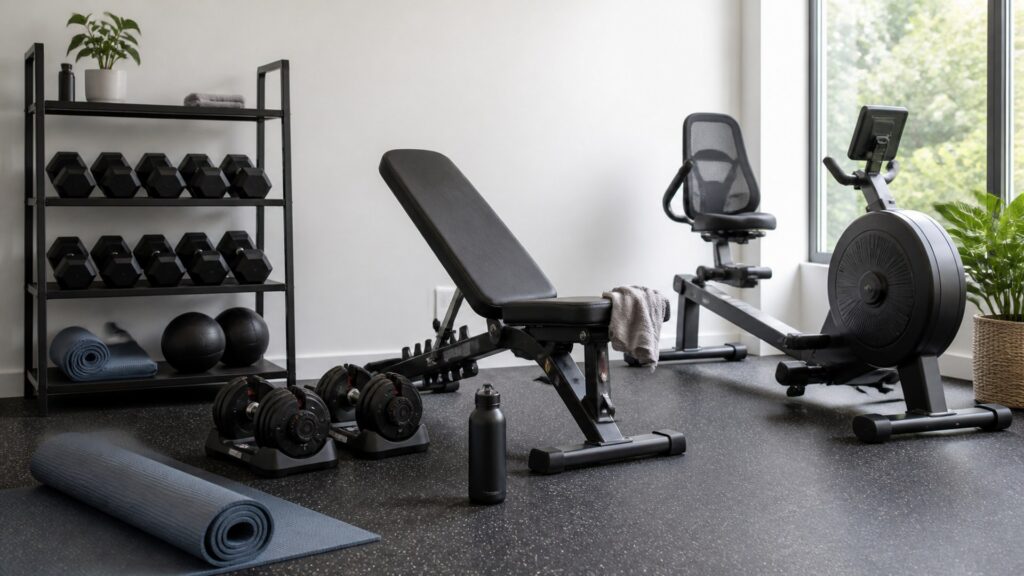
Buying framework
How to think about fitness products for a home gym
Plan the room first, then choose products that support your highest-value workouts with manageable setup, storage, and maintenance.
Map the workout zones: Separate lifting, cardio, mobility, and storage needs before buying. Clear zones prevent products from competing for the same floor space.
Buy for your ceiling and floor: Tall racks, jump movements, treadmills, bikes, mats, and dropped weights all depend on the room itself.
Prioritize versatile anchors: A stable bench, adjustable weights, bands, a mat, and smart storage can support many routines before larger machines are needed.
Control noise and vibration: Neighbors, family members, flooring, and workout times should influence cardio machines, weight choices, and protective mats.
Leave upgrade space: A home gym works better when future accessories, heavier loads, or different training styles have somewhere to go.
Who this is for
Pick home gym products that match your space and training style
The best setup depends on whether the room is shared, dedicated, compact, or built for serious progression.
Apartment and shared-space users: Choose quiet, compact products with fast storage, low vibration, and limited floor impact.
Strength-focused home gyms: Prioritize stable racks, benches, adjustable loads, flooring, and safety hardware before accessories.
Cardio-first spaces: Compare footprint, noise, stride or pedal feel, maintenance access, and whether the machine can be moved for cleaning.
Hybrid family gyms: Look for broad adjustability, durable surfaces, multiple user profiles, and storage that keeps the room usable.
What to pay attention to
Which home gym fitness product specs actually matter
Home gym specs should be read through the limits of your room, the workouts you repeat, and how safely the product handles real use.
Specs that affect feel
Footprint, handle comfort, adjustment speed, stability, noise, display placement, and whether movement feels natural in the room.
Specs that affect capability
Load rating, resistance range, motor capacity, incline range, accessory support, safety catches, and long-term replacement parts.
Footprint in use and storage: Folded dimensions can be misleading if the product needs clearance, swing room, cable travel, or access around it.
Load rating and stability: Benches, racks, steps, and adjustable systems should feel secure under your realistic training loads and movement patterns.
Noise profile: Motor sound, belt slap, fan resistance, dropped weights, and vibration through floors all matter in a home environment.
Adjustment speed: Fast weight changes, seat positions, handle heights, and app startup times make circuits and shared workouts easier.
Avoid these traps
Common mistakes people make when buying home gym fitness products
Home gym mistakes usually come from measuring the product but not the workout around it.
Forgetting clearance: Machines, benches, racks, and cable systems need space to mount, move, adjust, clean, and exercise around.
Buying one huge centerpiece too early: A large machine can dominate the room before you know whether it supports your most common workouts.
Skipping flooring: Even light equipment can mark floors, slide, transmit vibration, or make cleaning harder without the right surface.
Ignoring storage: Loose bands, plates, mats, shoes, chargers, and accessories create clutter if storage is not part of the purchase plan.
Decision guidance
Which fitness products are right for your home gym
Choose products in the order that makes the room more useful, not just more complete.
For a compact starter gym: Use a mat, adjustable dumbbells or bands, a stable bench, and vertical storage before adding machines.
For strength progression: Invest in loadable equipment, a bench, rack or stands, safety features, and flooring that can handle repeated use.
For cardio convenience: Choose the machine that fits your space, noise tolerance, maintenance comfort, and preferred movement pattern.
For a polished multipurpose room: Blend storage, foldable gear, attractive mats, quiet equipment, and products that can disappear when workouts end.
Ownership & compatibility
What home gym buyers are really buying long term
Home gym purchases include maintenance, storage, safety, cleaning, and upgrade compatibility.
Maintenance access: Cardio machines and adjustable systems need cleaning, lubrication, battery replacement, firmware support, or occasional tightening.
Accessory ecosystems: Racks, benches, weights, handles, sensors, and platforms should work together without forcing awkward adapters.
Moving and resale: Heavy products should be judged by assembly, doorway fit, transport, warranty transfer, and whether you can move them later.
Safety over aesthetics: A clean-looking setup still needs stable surfaces, secure storage, safe clearances, and products rated for realistic loads.
FAQ
Fitness products buying guide FAQ
Quick answers to common shopper questions about fitness products, value, safety, setup, and long-term use.
What should I buy first for a home gym?
How much space does a home gym need?
Are foldable fitness products worth it?
What matters most for home gym cardio equipment?
Do I need special flooring?
Bottom line
The simplest way to choose fitness products for a home gym
Build the room around repeatable workouts, clear storage, and equipment that can grow without taking over.
If the room is small: Choose compact resistance, a quality mat, vertical storage, and one cardio option only if it earns the footprint.
If strength is the priority: Spend on stability, safety, flooring, and adjustable load before smaller accessories.
If several people will use it: Prioritize fast adjustment, broad fit ranges, durable surfaces, and storage that keeps products easy to find.
Final check: Measure the product in use, not just in storage. If the workout path works, the home gym has a stronger foundation.
Reading Shortcuts
Jump to the sections that matter most for choosing home gym fitness products.
Decision Reminders
A quick checklist before you commit to a fitness product purchase.
- Measure active space: Include clearance, movement, storage, and cleaning access.
- Plan storage early: Accessories create clutter when they have no defined home.
- Respect noise: Vibration and motor sound can matter more than product size.
Glossary Snippets
Quick translations for terms that confuse fitness product buyers.
When to Use a Top 10 Review
Use this format when you want a faster way to narrow the fitness product field.
- You are furnishing a room: A Top 10 can highlight products that use space efficiently and cover common workout needs.
- You need category shortcuts: Rankings help compare cardio, strength, storage, and recovery options quickly.
Already down to 2-3 options? A Comparison is usually faster than reading broad buying advice.
When to Use a Comparison
Ideal once you have a shortlist and need clear, practical tradeoffs.
- You are choosing one large item: Comparisons clarify differences in footprint, noise, capacity, and maintenance.
- You are balancing budget and space: Side-by-side tradeoffs show where premium features matter at home.
Still exploring? Start with a Top 10 to identify the right fitness product category first.