
Fitness Products Buying Guide for Strength Training
Strength training products need to do more than feel heavy. The right tools support controlled movement, steady progression, safe setup, and enough durability to handle repeated loading over time.
This guide explains how to choose strength-focused fitness products for home or gym-adjacent training. Use it to compare resistance tools, benches, racks, mats, accessories, and tracking products without buying gear that limits progress or crowds your space.
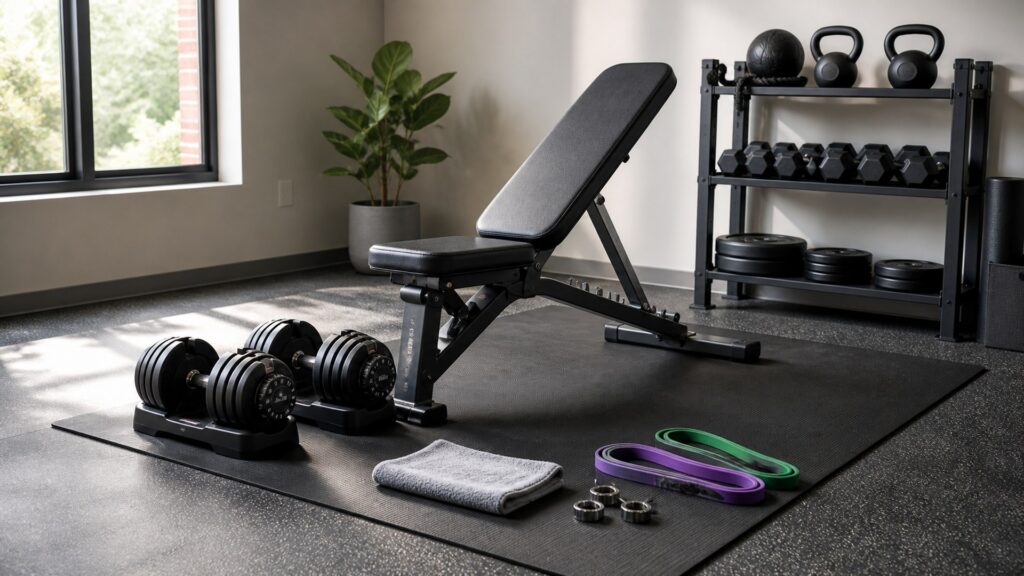
Buying framework
How to think about fitness products for strength training
Choose products by movement quality, load progression, safety, and how the setup will evolve as you get stronger.
Start with the movements: Squats, hinges, presses, rows, carries, and core work require different tools, clearances, and safety decisions.
Plan progression early: Strength products should offer enough load steps or resistance changes to stay useful beyond the first few weeks.
Value stability over novelty: Benches, racks, handles, plates, and adjustable products must feel secure when fatigue and heavier loads enter the workout.
Match storage to weight: Strength gear gets awkward fast. Stands, racks, shelves, or compact systems protect the room and make workouts smoother.
Protect form and recovery: Grip, stance, padding, flooring, and setup height influence technique and comfort as much as raw resistance.
Who this is for
Pick strength training products that match your lifting style
Different strength setups prioritize compact resistance, heavy loading, guided movement, or accessory variety.
Beginner strength builders: Bands, light dumbbells, a stable mat, and simple tracking help develop form before heavier loading.
Home lifters with limited space: Adjustable dumbbells, foldable benches, compact racks, and vertical storage can provide progression without taking over a room.
Heavy progression shoppers: Prioritize racks, benches, bars, plates, flooring, and safety hardware rated well beyond current working loads.
Accessory-focused trainers: Handles, grips, bands, cable attachments, and recovery tools can fill gaps once the core setup is stable.
What to pay attention to
Which strength training product specs actually matter
Strength specs should be judged by real loading, adjustment speed, stability, and whether the product supports clean movement.
Specs that affect feel
Grip texture, balance, bench pad firmness, adjustment speed, stance space, handle diameter, and how stable the product feels.
Specs that affect capability
Maximum load, increment size, rack height range, safety rating, attachment support, flooring thickness, and replacement part availability.
Load range and increments: Small enough jumps help progression stay manageable, while enough top-end capacity keeps products useful as strength improves.
Frame and handle stability: Benches, racks, dumbbells, and cable systems should not wobble, rattle, or shift under normal training.
Adjustment security: Pins, collars, locks, dials, and clamps must be easy to check and hard to misuse when workouts move quickly.
Surface and grip: Knurling, rubber, padding, texture, and mat traction influence control, comfort, and confidence under load.
Avoid these traps
Common mistakes people make when buying strength training products
Strength purchases go wrong when capacity, safety, and progression are treated as afterthoughts.
Buying too little load range: A product that feels challenging today can become limiting quickly if the next resistance step is too small or unavailable.
Ignoring safety hardware: Racks, benches, collars, spotter arms, and flooring matter when loads increase or training happens alone.
Choosing awkward adjustable gear: If changing weight is slow or uncertain, circuits and progressive workouts become frustrating.
Underestimating floor and storage needs: Weights, bars, benches, and plates can damage surfaces or create trip hazards without a storage plan.
Decision guidance
Which strength training fitness products are right for you
Choose the setup that supports the movements you perform most and the progression you can sustain.
For compact general strength: Adjustable dumbbells, bands, a mat, and a foldable bench cover many movements with limited space.
For barbell-style training: A rack, bench, bar, plates, collars, safeties, and flooring should be planned as one system.
For guided resistance: Cable, smart resistance, or selectorized products can work well when they fit your space, budget, and maintenance comfort.
For accessory upgrades: Add grips, handles, bands, straps, or recovery tools after the core resistance setup no longer covers your needs.
Ownership & compatibility
What strength training buyers are really buying long term
Strength products become part of a system of weights, storage, safety, flooring, maintenance, and progression.
Compatibility matters: Bars, plates, racks, collars, attachments, benches, and storage should match dimensions and standards before you buy.
Wear and maintenance: Moving parts, cables, pads, rubber coatings, collars, and adjustment mechanisms may need cleaning, tightening, or replacement.
Safety margins: Choose products rated comfortably above intended loads, especially for benches, racks, stands, and wall-mounted storage.
Long-term space planning: Strength setups often expand. Leave room for heavier weights, additional storage, and safe movement around equipment.
FAQ
Fitness products buying guide FAQ
Quick answers to common shopper questions about fitness products, value, safety, setup, and long-term use.
What strength training products should I buy first?
Are adjustable dumbbells worth it?
Do I need a weight bench?
Are resistance bands enough for strength training?
What safety gear matters for home strength training?
Bottom line
The simplest way to choose fitness products for strength training
Buy for stable movement, clear progression, and safe storage before chasing specialized accessories.
If space is limited: Choose adjustable resistance, a compact bench, bands, and vertical storage before larger machines.
If heavy lifting is the goal: Treat rack, bar, plates, bench, collars, safeties, and flooring as one safety-focused system.
If you are still learning: Choose tools that make form easier to control and progression simple to track.
Final check: If the product supports your main lifts, grows with you, and stores safely, it is a stronger buy.
Reading Shortcuts
Jump to the sections that matter most for strength training products.
Decision Reminders
A quick checklist before you commit to a fitness product purchase.
- Plan progression: Buy enough load range and small enough increments for steady improvement.
- Check stability: Wobble and uncertain locks become bigger problems under fatigue.
- Store safely: Weights and bars need a home that protects floors and walkways.
Glossary Snippets
Quick translations for terms that confuse fitness product buyers.
When to Use a Top 10 Review
Use this format when you want a faster way to narrow the fitness product field.
- You want strength picks: A Top 10 can surface products by compact setups, heavy training, value, and safety.
- You need upgrade ideas: Rankings help identify which strength products add the most capability first.
Already down to 2-3 options? A Comparison is usually faster than reading broad buying advice.
When to Use a Comparison
Ideal once you have a shortlist and need clear, practical tradeoffs.
- You are choosing between systems: Comparisons clarify load range, storage, durability, and total cost.
- You are close to buying: Side-by-side details reveal safety and compatibility differences that broad advice can miss.
Still exploring? Start with a Top 10 to identify the right fitness product category first.