
Fitness Products Buying Guide for Weight Loss
Weight loss products often get marketed with dramatic claims, but useful fitness purchases do something simpler: they make repeatable activity easier, safer, and more measurable. The best product is the one that supports habits you can sustain.
This guide explains how to choose fitness products for weight loss without chasing shortcuts. Use it to compare cardio options, strength tools, wearables, apparel, and recovery gear through the lens of consistency, comfort, progression, and long-term use.
Buying framework
How to think about fitness products for weight loss
Choose products that increase sustainable activity and reduce friction instead of promising effortless results.
Support consistency first: Weight loss depends on repeated behavior, so products should be easy to start, comfortable to use, and realistic for your schedule.
Combine cardio and strength: Cardio products can support energy expenditure, while strength tools help maintain muscle and make progress more measurable.
Use tracking carefully: Wearables, scales, and apps can clarify trends, but they should guide habits rather than create stress around single readings.
Protect recovery: Shoes, mats, mobility tools, and recovery products can help keep soreness or joint irritation from interrupting consistency.
Avoid miracle framing: No product guarantees weight loss by itself. The purchase should make the plan easier to repeat, not replace the plan.
Who this is for
Pick weight-loss fitness products that match your routine
The best product type depends on preferred movement, current fitness level, injury history, and tracking style.
Walking and low-impact users: Supportive shoes, a comfortable wearable, treadmill access, or low-impact cardio equipment can make frequent sessions easier.
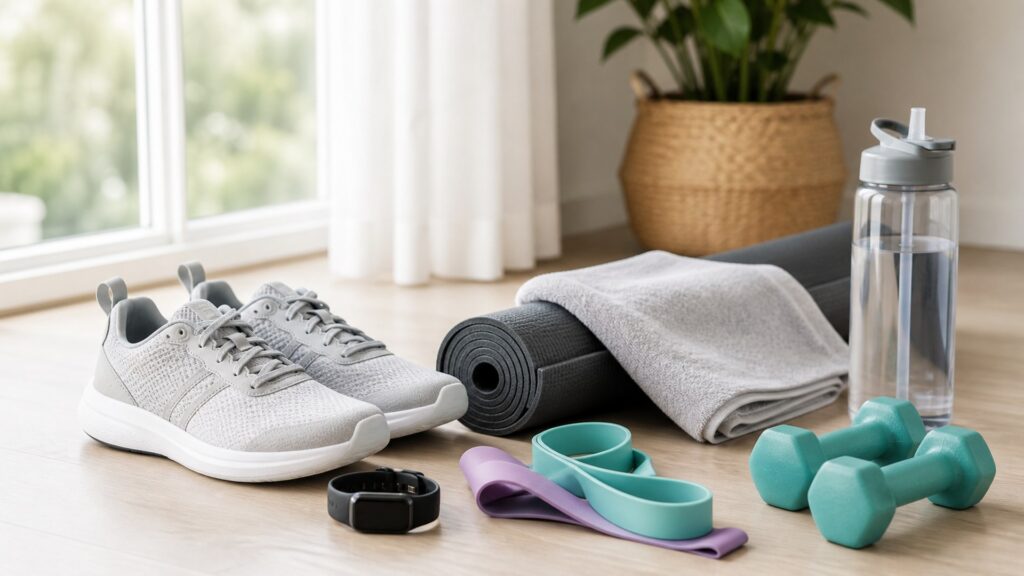
Home workout builders: Choose compact cardio, bands, dumbbells, a mat, and storage that make short workouts simple to start.
Data-motivated shoppers: Wearables and apps can help when step goals, heart-rate zones, streaks, or sleep trends improve decisions.
Strength-focused weight loss: Adjustable resistance, benches, and form-friendly tools help build repeatable strength sessions alongside cardio.
What to pay attention to
Which weight-loss fitness product specs actually matter
Useful specs help you train comfortably, measure trends, and progress without making workouts harder to sustain.
Specs that affect feel
Shoe cushioning, seat comfort, handle placement, stride feel, display readability, breathability, and low-impact movement quality.
Specs that affect capability
Resistance range, speed and incline range, workout modes, battery life, metric accuracy, and compatibility with health apps.
Comfort during longer sessions: Shoes, apparel, seats, handles, and machine geometry should stay comfortable when workouts extend beyond a few minutes.
Intensity control: Speed, incline, resistance, load increments, and heart-rate feedback should allow easy, moderate, and challenging sessions.
Tracking clarity: Useful metrics should be easy to understand, compare over time, and connect to habits like steps, minutes, sleep, or recovery.
Joint friendliness: Cushioning, impact level, stride pattern, grip, and stability affect whether training remains comfortable enough to repeat.
Avoid these traps
Common mistakes people make when buying fitness products for weight loss
Weight-loss purchases fail when they chase novelty instead of supporting repeatable behavior.
Buying a product for punishment workouts: A tool that feels miserable is unlikely to support long-term consistency, even if it burns energy quickly.
Trusting exaggerated claims: Be skeptical of products that promise targeted fat loss, effortless results, or dramatic changes without broader habit support.
Ignoring strength training: Cardio can be useful, but resistance tools help preserve capability and make progress less dependent on one metric.
Overtracking every number: Metrics help most when they reveal trends. Obsessing over daily swings can make useful tools feel discouraging.
Decision guidance
Which fitness products are right for weight loss
Choose the product that helps you move more often, recover better, and measure progress in a calm, practical way.
For daily movement: Supportive shoes, weather-appropriate apparel, and a simple tracker can make walking or light cardio easier to repeat.
For home cardio: Pick a machine or compact tool that matches your joints, noise tolerance, available space, and preferred workout length.
For strength support: Bands, dumbbells, adjustable weights, and a mat can build sustainable resistance training without a full gym.
For habit feedback: Use wearables or apps when step goals, workout minutes, heart-rate zones, or recovery trends influence better choices.
Ownership & compatibility
What weight-loss fitness product buyers are really buying long term
Long-term value comes from durability, comfort, data usefulness, and products that still fit after the first motivation wave.
Wear and replacement cycles: Shoes, bands, mats, apparel, and machine parts may need replacement sooner with frequent use.
Data privacy and subscriptions: Connected products can store health data or require paid features. Check settings, export options, and free functionality.
Recovery support: Products that reduce soreness, improve comfort, or support mobility can protect consistency during higher activity periods.
Changing needs: As fitness improves, resistance, speed, incline, or workout variety may need to increase. Buy with some headroom.
FAQ
Fitness products buying guide FAQ
Quick answers to common shopper questions about fitness products, value, safety, setup, and long-term use.
What fitness product is best for weight loss?
Do fitness trackers help with weight loss?
Should I buy cardio equipment or weights?
Are sweat belts or toning products worth it?
What should I consider if I have joint pain?
Bottom line
The simplest way to choose fitness products for weight loss
Buy products that make consistent movement easier and keep expectations grounded.
If you need momentum: Start with shoes, walking support, a basic tracker, and simple resistance that fits into daily life.
If you prefer home workouts: Choose compact cardio and strength tools that set up quickly and do not make the room harder to use.
If you like metrics: Use tracking to spot trends and support decisions, not to judge every workout or daily fluctuation.
Final check: If the product supports a routine you can repeat for months, it is more valuable than one built around short-term intensity.
Reading Shortcuts
Jump to the sections that matter most for weight-loss fitness products.
Decision Reminders
A quick checklist before you commit to a fitness product purchase.
- Consistency wins: Choose products that make regular activity easier, not just harder.
- Treat metrics as trends: Useful tracking supports decisions without overreacting to daily swings.
- Avoid miracle claims: Skip products that promise targeted or effortless fat loss.
Glossary Snippets
Quick translations for terms that confuse fitness product buyers.
When to Use a Top 10 Review
Use this format when you want a faster way to narrow the fitness product field.
- You want practical options: A Top 10 can surface products that support consistency without relying on gimmicks.
- You need a shortlist: Rankings help compare cardio, strength, tracking, and recovery choices by use case.
Already down to 2-3 options? A Comparison is usually faster than reading broad buying advice.
When to Use a Comparison
Ideal once you have a shortlist and need clear, practical tradeoffs.
- You are choosing between tools: Comparisons clarify comfort, intensity range, tracking value, and long-term cost.
- You want realistic tradeoffs: Side-by-side guidance helps separate useful support from marketing claims.
Still exploring? Start with a Top 10 to identify the right fitness product category first.