
Fitness Products Buying Guide: How to Choose the Right Ones
Fitness products cover everything from cardio machines and strength tools to wearables, shoes, apparel, mats, and recovery gear. The right choice is rarely the flashiest option; it is the product that fits your goal, body, room, schedule, and willingness to maintain it.
This guide gives you a practical framework for deciding what belongs in your setup, what can wait, and which specifications actually affect day-to-day use. Use it to separate durable, motivating purchases from clutter that looks useful but does not support consistent training.
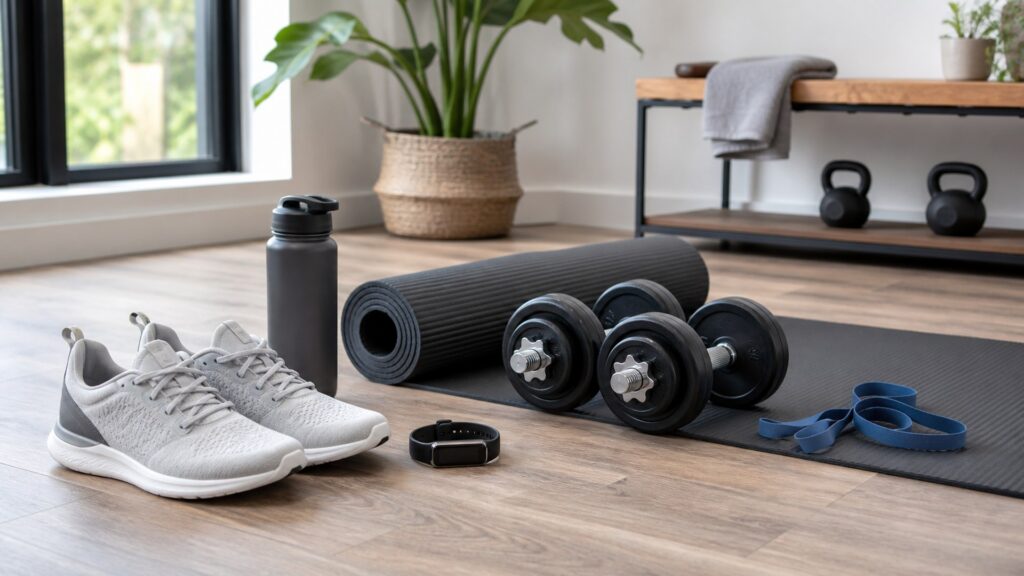
Buying framework
How to think about buying fitness products
Start with the role the product will play in your routine, then compare comfort, space, durability, safety, and total cost.
Define the job first: A product for daily cardio, progressive strength work, mobility, tracking, or recovery should be judged by different standards. Decide what problem it solves before comparing features.
Match the product to your environment: Apartment noise, ceiling height, flooring, storage, ventilation, and shared rooms affect satisfaction as much as the product itself.
Prioritize repeat use: Comfortable setup, easy adjustment, simple cleaning, and predictable feel matter because fitness purchases only help when they are used often.
Budget for the whole system: Shoes, mats, batteries, subscriptions, attachments, replacement parts, and storage can turn a low sticker price into a more expensive ownership decision.
Avoid category drift: Buying too many unrelated products can fragment your routine. Build around the few tools that support your current goal, then expand deliberately.
Who this is for
Pick fitness products that match how you actually train
Different shoppers need different levels of complexity, durability, guidance, and space efficiency.
Habit builders: Choose simple products that lower friction, such as comfortable shoes, a mat, resistance bands, or a compact cardio option that is easy to start.
Goal-focused improvers: Look for products that support measurable progression, including adjustable resistance, useful tracking, stable surfaces, or repeatable workout settings.
Home setup planners: Prioritize footprint, storage, noise, floor protection, and products that can serve multiple workout types without crowding the room.
Data-driven buyers: Fitness technology helps when the metrics change behavior. Avoid paying for advanced tracking if you mainly need comfort, safety, or basic consistency.
What to pay attention to
Which fitness product specs actually matter
Spec sheets vary by category, but the useful numbers are the ones that affect fit, control, safety, durability, and progression.
Specs that affect feel
Fit, grip texture, adjustment speed, padding, stability, noise, display clarity, and how easy the product is to set up.
Specs that affect capability
Load capacity, resistance range, speed range, battery life, supported accessories, platform compatibility, and serviceable parts.
Fit and adjustability: Check size ranges, adjustment points, strap design, handle positions, and whether the product can adapt as your strength, mobility, or household changes.
Stability and load rating: Benches, racks, steps, bikes, treadmills, and suspension tools should feel stable under realistic movement, not just meet a number on paper.
Resistance or intensity range: A good product should offer a useful low end and enough headroom to stay relevant as fitness improves.
Noise and maintenance: Motors, belts, bearings, moving joints, fabrics, batteries, and washable surfaces shape ownership long after the first workout.
Avoid these traps
Common mistakes people make when buying fitness products
Most poor purchases come from buying for an imagined routine instead of the routine a person can actually repeat.
Buying around motivation alone: A premium product can inspire a first week, but long-term use depends on convenience, comfort, and whether the workout fits your schedule.
Ignoring body fit: Shoes, wearables, benches, bikes, and apparel can all fail if sizing, reach, padding, or geometry does not match the user.
Overvaluing connected features: Screens, apps, leaderboards, and subscriptions are useful only when they improve adherence or instruction. They are not substitutes for basic product quality.
Forgetting storage and cleanup: Bulky gear, sweaty fabric, loose attachments, and hard-to-move equipment become daily friction if there is no realistic place to keep them.
Decision guidance
Which fitness products are right for your goals
Choose the product type that supports the next practical step, not every possible future goal.
Start with basics if consistency is the goal: Shoes, a mat, simple resistance, and a low-friction cardio option often build more momentum than complicated equipment.
Choose progression tools for strength or performance: Adjustable dumbbells, bands, benches, racks, and tracking tools make sense when workouts need measurable increases over time.
Choose comfort tools for recovery and mobility: Mats, rollers, massage tools, supportive apparel, and recovery products should be judged by comfort, durability, and ease of regular use.
Choose technology when feedback changes behavior: Wearables and connected equipment are worth more when metrics guide pacing, recovery, workout choice, or accountability.
Ownership & compatibility
What you are really buying into long term
Fitness products often bring ongoing costs, space needs, replacement cycles, and compatibility decisions that matter more over time.
Replacement and wear items: Shoes, bands, grips, mats, straps, batteries, belts, and pads wear out. Check whether replacements are easy to find before committing.
Subscriptions and app support: Connected products may depend on paid classes, cloud features, or software updates. Confirm what still works if you stop paying.
Storage and floor protection: Heavy or abrasive products may need mats, stands, shelves, wall storage, or flooring changes to protect the workout area.
Household sharing: If multiple people will use the product, adjustment speed, size range, profile support, and cleaning become much more important.
FAQ
Fitness products buying guide FAQ
Quick answers to common shopper questions about fitness products, value, safety, setup, and long-term use.
What fitness products should I buy first?
Are expensive fitness products always better?
How do I avoid buying fitness clutter?
Should I choose connected fitness products?
What matters most for home fitness products?
Bottom line
The simplest way to choose the right fitness products
Buy the products that remove friction from the workout you will actually repeat.
If you are starting fresh: Choose a small set of versatile basics before investing in specialized machines, advanced wearables, or large strength setups.
If you already train consistently: Upgrade the product that limits progress, comfort, or safety most clearly instead of replacing everything at once.
If space is tight: Favor foldable, adjustable, or multi-use products that have a defined storage place and do not disrupt the room.
Final check: Before buying, picture the exact workout, setup, cleanup, and storage. If that sequence feels realistic, the product has a better chance of earning its place.
Reading Shortcuts
Jump to the sections that matter most for choosing fitness products.
Decision Reminders
A quick checklist before you commit to a fitness product purchase.
- Buy for repeat use: Comfort and convenience beat impressive features when consistency is the goal.
- Check the room first: Noise, storage, flooring, and ceiling height can decide whether a product works.
- Budget beyond the item: Accessories, replacements, subscriptions, and storage often affect total cost.
Glossary Snippets
Quick translations for terms that confuse fitness product buyers.
When to Use a Top 10 Review
Use this format when you want a faster way to narrow the fitness product field.
- You want a shortlist: A ranked list can separate broad fitness categories into practical choices for different spaces and goals.
- You are comparing value: Top 10 formats help show which products offer the strongest balance of features, comfort, and price.
Already down to 2-3 options? A Comparison is usually faster than reading broad buying advice.
When to Use a Comparison
Ideal once you have a shortlist and need clear, practical tradeoffs.
- You narrowed it to 2-3 options: A comparison makes differences in fit, durability, cost, and ownership easier to judge.
- You are choosing between product types: Side-by-side tradeoffs help clarify whether equipment, apparel, technology, or recovery tools fit the goal.
Still exploring? Start with a Top 10 to identify the right fitness product category first.