
Fitness Technology Buying Guide for Health Monitoring
Health monitoring is where a fitness-device comparison needs firm boundaries. A brand may offer general-wellness trends, regulated medical-device features, and entertainment functions, but clearance or approval for one feature does not automatically cover every displayed metric.
Define the health-related question with a clinician when diagnosis, treatment, or an existing condition is involved. Verify the exact model, feature, region, intended use, eligibility, measurement method, and labeling. Test fit, signal quality, alerts, reports, battery, sharing, and accessibility without assuming a reading is infallible. Plan what happens after a concerning value before enabling notifications. Symptoms and emergencies require appropriate care even when a device looks normal, and medications or treatment should not be changed solely from a wearable estimate.
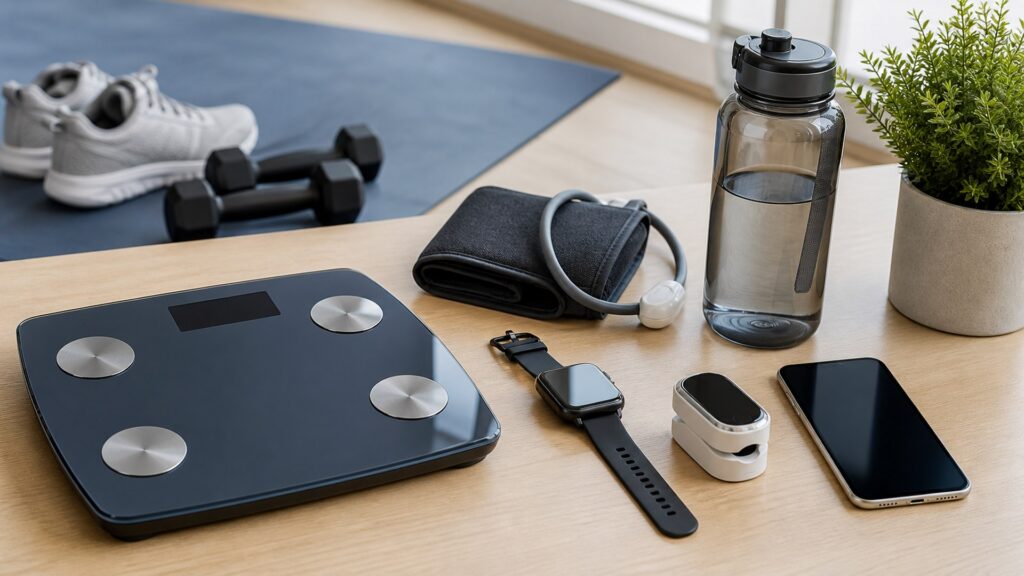
Buying framework
Define the health question and clinical boundary
The correct product depends on whether the task is general wellness, contextual tracking, screening, or monitoring under professional direction. Establish that boundary before comparing brands.
Write the intended decision: Specify the value, trend, symptom context, or report the buyer needs and who will interpret it. Diagnosis, treatment, and condition management require a different standard from general activity or wellness tracking.
Verify the exact feature: Check model, hardware generation, software version, country or region, age or eligibility limits, intended use, contraindications, and regulatory status. Do not transfer a claim from one feature or device to another.
Understand the measurement chain: Identify sensor location, signal, user action, calibration, algorithm, sampling window, and output. Separate a directly sensed signal from a derived estimate, score, notification, or retrospective trend.
Create an alert response plan: Decide with suitable professional guidance which alerts or patterns require repetition, symptom checking, routine contact, urgent contact, or emergency action. Configure only notifications that have a clear safe response.
Map privacy and reporting: Determine whether records remain on the device, phone, company account, cloud, caregiver portal, or clinician system. Review sharing consent, access, export, deletion, retention, and whether the chosen report is usable.
Who this is for
Match monitoring technology to its intended role
A wellness user, patient following a care plan, alert-focused buyer, caregiver-sharing household, and privacy-first user need different labeling, reports, and account controls.
General-wellness trend user: Prioritize comfortable consistent wear, clear definitions, visible gaps, restrained scores, and longer trend views. Keep activity, sleep, or heart-related estimates within their labeled wellness role and escalate health concerns appropriately.
Clinician-directed monitor user: Begin with the clinician's required measurement method, schedule, accuracy, report, and action thresholds. Confirm the exact device or feature is suitable for that use rather than substituting a convenient fitness metric.
Notification-focused buyer: Review what signal triggers an alert, eligibility, false or missed notification limitations, phone or network dependencies, battery, and geographic availability. Establish who receives it and what action follows before enabling it.
Caregiver or family-sharing user: Check explicit consent, separate accounts, role permissions, delayed sync, alert routing, report access, and how sharing can be revoked. Technology should support communication without silently broadening access to unrelated health or location data.
Privacy-first monitor user: Favor minimal collection, clear local versus cloud processing, optional permissions, narrow sharing, useful export, and verified deletion controls. Do not assume health information in a consumer app is protected exactly like a clinical record.
What to pay attention to
Read health features at the feature level
Model names and dashboard polish are insufficient. The useful comparison covers intended use, measurement performance, user fit, alert logic, reporting, privacy, and continuity.
Intended use and labeling: Read what the exact feature is designed to do, who should use it, required conditions, warnings, contraindications, and whether it is general wellness or regulated for a stated medical purpose in the buyer's region.
Sensor method and placement: For each health-monitoring reading, follow instructions for wrist, finger, chest, cuff, scale, patch, or other contact. Check movement, skin contact, circulation, temperature, fit, posture, timing, and preparation that may affect validity.
Performance evidence and limitations: Look for product-specific validation against an appropriate reference, studied population, operating range, error description, and known interference. Regulatory review for one function does not establish accuracy for unrelated estimates.
Readings, trends, and missing data: Inspect units, timestamps, confidence or quality indicators, repeat-measurement guidance, baseline, trend scale, and gaps. Determine whether manual edits or algorithm updates alter historical comparisons and whether raw readings remain available.
Alerts and accessibility: Test vibration, sound, text size, contrast, language, button or touch operation, caregiver routing, and phone dependence. Check whether an alert can be reviewed safely and whether frequent false alarms would make it ignored.
Reports and interoperability: Open the exact PDF, summary, raw export, or clinical connection intended for sharing. Verify date range, units, context, annotations, timestamps, and whether the receiving professional or system can actually use it.
Privacy, battery, and support: Review health and location collection, third parties, retention, deletion, security updates, account recovery, charging gaps, battery service, consumables, subscription, warranty, recalls, and ongoing support for the exact monitoring feature.
Avoid these traps
Avoid treating a wellness dashboard as a diagnosis
The highest-risk errors come from overextending a feature's claim, ignoring symptoms, or changing care from an uncertain reading. Keep labeling and the response plan attached to every metric.
Assuming the whole brand is medically approved: Authorization, clearance, or approval applies to defined products and intended uses. Verify the exact model and feature in the relevant official database or labeling instead of relying on a broad marketing badge.
Using one reading as a conclusion: A single result can be affected by placement, movement, physiology, environment, software, or ordinary variation. Follow device instructions for valid readings and professional guidance for interpretation rather than self-diagnosing.
Ignoring symptoms because the device looks normal: A consumer device can miss events, lose contact, or operate outside its intended use. Seek appropriate care for serious or worsening symptoms and emergencies regardless of a reassuring dashboard.
Changing medication or treatment from an estimate: Do not start, stop, or alter medication, therapy, oxygen, diet, or other treatment solely because a fitness device, smartwatch, or general-wellness app displays a value or score.
Assuming consumer health data is automatically private: Read the current privacy notice, permissions, connected services, advertising or research choices, retention, sharing, export, and deletion. Many consumer apps are not governed in exactly the same way as healthcare-provider records.
Decision guidance
Validate the feature, workflow, and response plan
A safe purchase trial covers the exact claim, correct measurement procedure, result quality, alert routing, professional report, privacy controls, and continuity when the phone or network fails.
Confirm the role with the right person: For condition monitoring, diagnosis-related questions, or treatment decisions, ask an appropriate clinician what measurement and report are needed. Keep general-wellness tracking separate when it cannot meet that requirement.
Check official feature status: Verify exact model, software, region, eligibility, intended use, regulatory listing where relevant, warnings, and support documentation. Save the instructions needed to take and interpret a valid measurement.
Perform the instructed workflow: Fit the device, prepare as directed, take a reading, repeat when instructed, identify quality indicators, and locate limitations. Test the process with accessibility needs and without improvising placement or calibration.
Rehearse an alert and report: Use demonstration or settings tools when available to confirm notification routing, phone and network dependencies, caregiver access, and the response plan. Generate the report and verify its recipient can interpret the needed fields.
Audit continuity and privacy: Test charging, missed data, offline behavior, sync, export, revoking sharing, deletion, subscription cancellation, software support, and account recovery. Reject a monitor whose required record can disappear behind an unmanageable service.
Ownership & compatibility
Maintain the monitoring procedure, not just the device
Changes in fit, technique, sensors, consumables, firmware, accounts, and professional plans can make a familiar number less comparable. Preserve method and context.
Follow cleaning and storage instructions: Care for sensors, bands, cuffs, electrodes, contacts, cases, and chargers by the manufacturer. Replace required consumables on schedule and stop using damaged equipment that can no longer take a valid safe reading.
Keep the method consistent: Use the specified placement, posture, preparation, timing, settings, and calibration. Record meaningful changes rather than comparing values gathered by different methods as though the measurement conditions were identical.
Test alert delivery: Periodically verify phone permissions, network or cellular service, caregiver contacts, quiet modes, volume, vibration, app login, and battery. Update the response plan when clinicians, family roles, or living arrangements change.
Review updates, recalls, and support: Maintain security and feature updates, read significant measurement or algorithm changes, and check manufacturer or regulator notices for the exact model. Preserve reports before replacing hardware or closing an account.
Bring concerns beyond the dashboard: Share relevant readings, method, timestamps, symptoms, and context with an appropriate professional. Use emergency services for urgent situations and do not delay care while troubleshooting a wearable or waiting for another score.
FAQ
Health-monitoring fitness technology questions
These answers clarify intended use, regulatory status, sensor limits, alerts, reports, privacy, and the actions a consumer monitor should never take on the user's behalf.
Is a fitness tracker a medical device?
Can a smartwatch diagnose a health condition?
How accurate are wearable health readings?
Can I rely on a wearable blood-oxygen estimate?
Should I change medication based on a fitness device?
What should happen after a health alert?
Can wearable data be shared with a clinician?
Is fitness-app health data protected by HIPAA?
When should health-monitoring technology be replaced?
Bottom line
Keep every health metric attached to its limits
A useful monitoring system has a defined role, verified feature, repeatable measurement method, understandable report, safe response plan, and protected data path.
Verify the exact claim: Check model, feature, region, eligibility, intended use, labeling, limitations, and regulatory status.
Practice the procedure: Fit, prepare, measure, assess quality, repeat only as instructed, and preserve context.
Plan the response: Decide professional, caregiver, urgent, and emergency actions before enabling health alerts.
Protect continuity: Maintain sensors, battery, consumables, updates, reports, permissions, export, and appropriate care.
Reading Shortcuts
Jump to clinical boundaries, monitoring roles, feature-level specifications, or health-device questions.
Decision Reminders
Verify the exact feature and preserve professional judgment, symptom awareness, measurement procedure, alert response, and data privacy.
- Feature: Check exact model, region, intended use, eligibility, labeling, and regulatory status.
- Method: Follow placement, preparation, calibration, timing, quality, and repeat instructions.
- Response: Plan how symptoms, alerts, concerning patterns, and emergencies reach appropriate care.
- Data: Review reports, sharing, permissions, retention, export, deletion, and account recovery.
Glossary Snippets
Health-monitoring terms for distinguishing intended uses, measured signals, calculated values, notifications, and professional reports.
When a Top 10 Helps
Use health-monitoring rankings after defining the question, exact intended use, evidence, method, limitations, alerts, reports, privacy, battery, and care plan.
- Claim filter: Reject health-monitoring products whose exact feature, regulatory status, intended users, limitations, or supporting evidence cannot be verified.
- Care filter: Compare valid-reading workflow, alerts, reports, professional use, privacy, continuity, and support.
A ranking cannot diagnose symptoms, choose treatment, establish a clinician's requirements, or decide which data-sharing risks are acceptable to you.
When a Comparison Helps
Compare finalists using their labeled procedures, identical reporting needs, alert plan, accessibility requirements, privacy review, and continuity test.
- Measurement: Compare intended use, placement, quality indicators, limitations, gaps, repeat steps, and accessibility.
- Care pathway: Compare alerts, reports, professional compatibility, sharing, battery, consumables, updates, and support.
Prefer the monitoring feature whose verified role, limitations, report, and response plan match the real health-related need.