
Floor Protection Buying Guide for Family Vehicle Organization
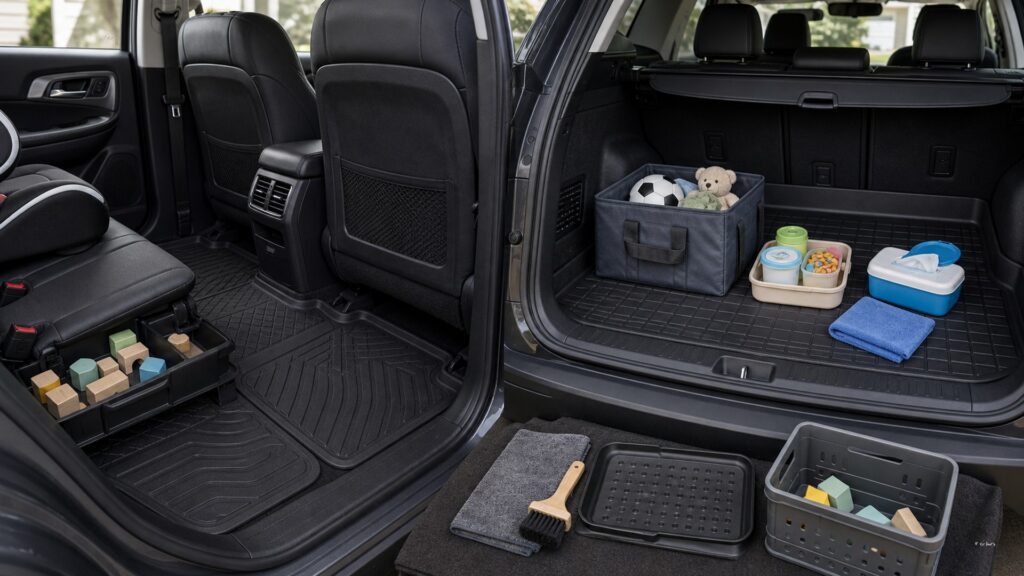
Family mess is distributed unevenly. The driver heel area accumulates grit, the second row catches drinks and snacks, the center hump receives climbing feet, and the third-row path collects whatever passengers carry past the door. One material or cleaning interval rarely serves all of those zones equally well.
Design a reset routine instead of chasing maximum coverage. Keep the driver mat singular, anchored, and clear of pedals; give high-spill rows removable containment; preserve seat tracks, lower anchors, vents, and folding mechanisms; and store cleaning tools outside footwells. During removal, search for small objects and dry the original carpet before children or pets return.
Buying framework
Organize cleanup by cabin zone
Assign the source, frequency, and cleanup owner for each part of the cabin.
Draw a cabin mess map: Mark drink positions, snack seats, muddy entry routes, pet locations, school-bag storage, center-hump traffic, third-row access, and the driver control zone.
Protect mechanisms separately: Keep mats away from lower anchors, top-tether routes, seat rails, floor latches, electrical connectors, heating ducts, and removable-seat attachment points.
Create a spill response: Assign towels, absorbent material, waste bags, safe cleaner, gloves, and a temporary place for wet liners without storing supplies near pedals.
Define the family reset: Empty pockets, sweep for small objects, release pieces, carry them flat, clean, dry, inspect carpet, reconnect anchors, and verify controls.
Who this is for
Match construction to family organization routines
Toddlers, school-age passengers, pets, carpools, and occasional third-row use create different floor patterns.
Young-child household: Deep second-row containment, easy wipe surfaces, controlled removal, and clear access to seating hardware usually outrank decorative texture.
School and sports family: Modular row pieces help isolate mud, turf, sand, cleats, and snacks while allowing one busy zone to be cleaned alone.
Pet-carrying vehicle: Hair release, claw durability, wet-paw grip, odor cleanup, door-edge exposure, and cargo-to-row transitions need practical trials.
Occasional carpool or third-row owner: Choose protection that supports changing passenger counts without folding into tracks, covering latches, or becoming loose when seats move.
What to pay attention to
Specifications that change family organization performance
Useful family protection combines carry-out control, hardware clearance, washable surfaces, and replaceable high-wear pieces.
Organize cleanup by cabin zone
Organize protection around snacks, school gear, muddy footwear, pets, changing rows, and the locations where small objects collect.
Maintenance is part of performance
Favor pieces one adult can release, carry level, clean, dry, inspect beneath, and reset quickly between trips.
Row-specific containment: Compare front wells, rear pans, center bridge, third-row cavities, and entry edges according to where cups, boots, paws, and bags actually travel.
Small-object visibility: Channels should not conceal coins, fasteners, toys, food, or sharp debris indefinitely; color and texture can make inspection easier.
Safe seat integration: Confirm clear lower-anchor access, track movement, floor latches, wiring covers, vents, and foot space in every approved seat configuration.
Carry-out behavior: Test whether a loaded piece can clear doors and seat bases without flexing, tipping liquid, shedding crumbs, or brushing passengers and upholstery.
Family-cleaning compatibility: Review approved soaps, stain response, food oils, milk, sunscreen, pet residue, drying time, and whether textured recesses remain reachable.
Replacement strategy: Individual row availability, color continuity, retainer parts, warranty exclusions, and delivery time matter where one seat receives disproportionate abuse.
Avoid these traps
Mistakes that undermine family organization
Loose objects and rushed reinstallation can turn a cleanup aid into a footwell hazard.
Storing cleanup supplies in the driver footwell: Bottles, wipes, toys, and bags can migrate under controls; use a closed location designed for cargo and inspect before driving.
Covering child-restraint hardware: Protection must not alter seat installation or access to anchors and latches; follow the vehicle and restraint manufacturers' instructions.
Removing a spill-filled liner at an angle: Plan the exit path first and lift within its supported shape so captured liquid does not pour onto carpet or wiring.
Reinstalling over damp carpet: Moisture sealed beneath a barrier can produce odor, staining, corrosion, or wet padding; dry and trace the spill before resetting.
Decision guidance
Choose the right protection pattern
Zone-specific choices reduce the burden of servicing the whole cabin after one spill.
Prioritize the second row for food and drink: Use a stable connected or segmented design with suitable channels, center coverage, seat clearance, and an easy carry-out path.
Keep high-wear zones modular: Separate driver, passenger, and row pieces allow rapid service and economical replacement without disturbing clean areas.
Extend protection along pet routes: Evaluate door entry, rear wells, seatback transition, and cargo deck while maintaining grip, ventilation, and hardware access.
Choose simpler surfaces when time is scarce: A lower-detail washable design may outperform intricate channels if the household will rinse, dry, and reinstall it consistently.
Ownership & compatibility
Keep the system clean and correctly positioned
A repeatable reset keeps retainers visible and reveals damp carpet, odors, and forgotten items.
Reset after significant messes: Remove food, liquid, mud, sand, pet residue, and hidden objects promptly; inspect padding and seat hardware before odors or stains develop.
Teach mat rules to every driver: No stacking, no loose items near pedals, visible anchor engagement, correct side and row, and a pedal check after anyone cleans the cabin.
Audit changing family needs: Revisit coverage when child seats, pets, carpools, sports, seating positions, or third-row use change the contamination map.
FAQ
Questions about family organization floor protection
These answers should be adapted to the vehicle's seating and restraint instructions.
Can a liner run under a child safety seat?
How should drink spills be removed?
Are connected rear liners easier for families?
What surface works best with pet hair?
Can toys under a liner become a problem?
Should cleaning products stay in the passenger cabin?
How often should family floor protection be reset?
Do third-row mats stay installed when seats fold?
Is darker material always better at hiding mess?
Bottom line
Make safe fit the permanent baseline
Organization succeeds when every piece returns dry, secured, and ready for the next passenger.
Divide the cabin into zones: Match protection and service frequency to drinks, snacks, footwear, pets, bags, and passenger paths.
Keep family hardware clear: Preserve pedals, anchors, tracks, latches, vents, wiring, and every intended seat configuration.
Make resetting easy: Carry contamination out, find small objects, dry hidden surfaces, lock pieces back down, and verify the driver area.
Reading Shortcuts
Move through the family cleanup routines decision in order.
Decision Reminders
A family floor plan should shorten cleanup without hiding hazards.
- Draw a cabin mess map: Verify and record this requirement.
- Protect mechanisms separately: Verify and record this requirement.
- Create a spill response: Verify and record this requirement.
- Reset after significant messes: Verify and record this requirement.
- Teach mat rules to every driver: Verify and record this requirement.
- Audit changing family needs: Verify and record this requirement.
Glossary Snippets
Terms used in this floor protection plan.
When to Use a Top 10 Review
Use rankings only after the requirements are fixed.
- Divide the cabin into zones: Use this as a shortlist filter.
- Keep family hardware clear: Use this as a shortlist filter.
- Make resetting easy: Use this as a shortlist filter.
- Exclude: Use this as a shortlist filter.
Already down to 2–3 options? A Comparison is usually the faster next step.
When to Use a Comparison
Compare finalists through the retainer, edge, pedal, seat-track, door, removal, spill, cleaning, and dry-floor check; make spill zone an explicit recorded result.
- Draw a cabin mess map: Check both candidates against this requirement.
- Protect mechanisms separately: Record the result for each shortlisted option.
- Create a spill response: Use the same operating conditions for both tests.
- Define the family reset: Keep the evidence with the final decision.
Still exploring? Start with a Top 10 to build a shortlist first.