
Foot Care Buying Guide for Dry Skin
Dry feet often need a different strategy from dry arms or legs. Heel skin is thick, bears weight, and rubs against shoes, so a light body lotion may disappear without reducing tightness or scaling. The purchasing decision is mainly about moisture retention and tolerable repeat use.
First distinguish intact dryness from deep fissures, redness, itching, pain, or changes between the toes. Cosmetic products are suitable for uncomplicated roughness, not every cause of peeling. For intact heels, compare a rich cream, an occlusive balm, and gentle smoothing rather than stacking them all immediately.
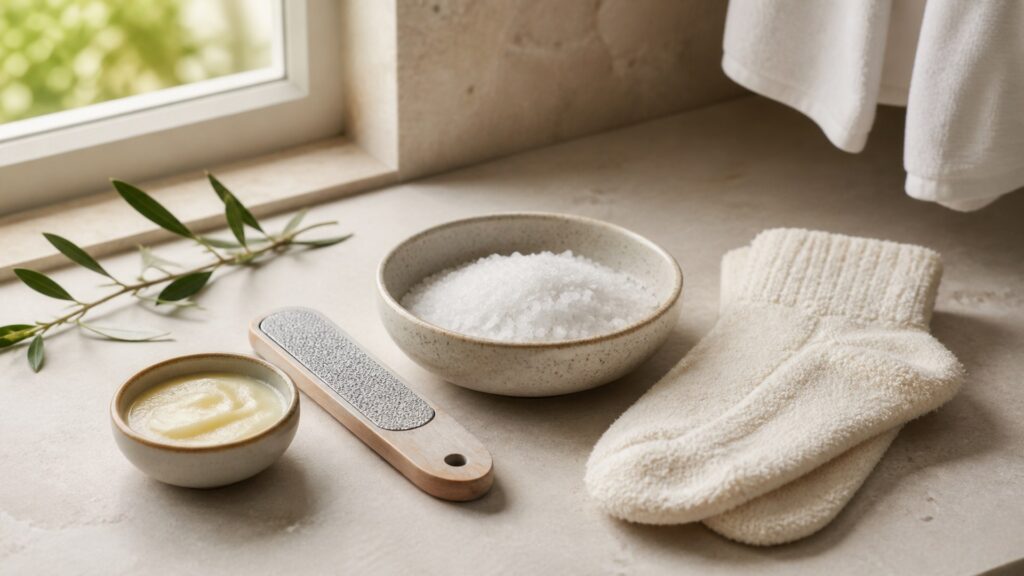
Buying framework
Frame the job around persistent dryness
Build the routine around water retention. Apply a suitable leave-on product after washing and drying, then use abrasion sparingly only when loose surface buildup prevents comfortable application.
Check whether skin is intact: Fine white scaling and rough heels may suit cosmetic care. Open fissures, heat, swelling, discharge, significant itch, or pain require a different decision and possibly clinical advice.
Choose moisture before abrasion: Apply emollient care consistently for several days before deciding how much filing is necessary. Hydrated surface scale may need far less mechanical removal.
Reserve occlusion for the right area: Heavy balm can help dry heels overnight, but avoid placing it between toes or anywhere that remains damp. Use clean breathable socks if covering treated heels.
Who this is for
Match foot care to the user, not the bundle
Dryness varies with footwear, standing time, age, climate, and washing habits. Choose texture and schedule for the person who will actually apply it, not an idealized nightly ritual.
The daytime applier: A non-greasy tube cream suits someone who needs shoes soon afterward. Fast absorption and easy handwashing may be worth more than maximum richness.
The overnight user: A concentrated balm paired with washable cotton socks can work when bedtime application is reliable. Packaging should allow a small controlled amount without contaminating the remainder.
The winter-only buyer: Seasonal dryness may need a small tube and an adjustable schedule, not a bulk jar. Check the period-after-opening symbol before storing leftovers until next winter.
What to examine
Read specifications through the lens of persistent dryness
Ingredient families predict feel and purpose. Humectants attract water, emollients smooth spaces between surface cells, and occlusives slow evaporation. Keratolytic ingredients may soften thick scale but can sting damaged skin.
First-use evidence
Notice spread, pressure, sting, traction, and how cleanly the product leaves the skin or tool. Immediate softness alone does not establish that foot care will remain comfortable or useful over time.
Routine evidence
Repeat the labeled method under normal conditions without adding intensity. Judge whether nighttime application when socks can protect bedding and extend contact remains practical, whether the surface stays comfortable, and whether cleaning or reapplication creates hidden work.
Urea concentration: Lower-strength urea products primarily support hydration, while stronger formulas can have greater softening action and sting compromised skin. Follow labeled sites and warnings rather than chasing the highest percentage.
Occlusive base: Petrolatum-rich products reduce water loss effectively but feel heavy. Consider floor traction, sock transfer, bedding, and whether the user will tolerate that finish.
Package access: Cracked fingertips make stiff jars and tiny screw caps frustrating. Pumps and flip-top tubes can improve adherence, though very thick formulas may dispense better from a tube or pot.
Avoid these traps
Mistakes that undermine persistent dryness
Dry heels invite overcorrection. Buyers often purchase the strongest acid, file too frequently, or cover damp feet immediately, turning a manageable texture concern into irritation.
Filing every day: Repeated abrasion can create tenderness and stimulate a cycle of roughness. Use a fine surface infrequently, on intact skin, with enough visibility to judge progress.
Treating all peeling as dryness: Scaling caused by irritation or infection will not be solved by adding richer moisturizer. Persistent itch, odor, redness, or spreading changes deserve assessment.
Ignoring shoe friction: A heel counter that rubs can undo topical care. Inspect fit, seams, sock movement, and pressure before blaming the moisturizer for every recurring rough patch.
Decision guidance
Choose the right level of investment
Match richness to the severity and the time available for absorption. A less elegant balm may excel overnight, while a faster cream can produce better real-world adherence during mornings.
Choose cream: Select a balanced cream when dryness is moderate and daytime wear matters. A tube kept near the usual changing area encourages repeat application.
Choose balm: Use a denser occlusive for very rough intact heels when overnight coverage is practical and the user can avoid slippery walking.
Seek advice: Pause home experimentation for deep or bleeding cracks, impaired sensation, circulation concerns, or failure to improve despite gentle consistent care.
Ownership & compatibility
Plan the upkeep behind foot care
Thick formulas and fabric accessories need clean handling. Plan how jars, tubes, heel sleeves, and socks will be used without introducing water or trapping persistent dampness.
Protect the formula: Do not scoop from a jar with wet fingers. Close caps promptly, wipe residue from threads, and discard products that separate, smell different, or exceed their labeled life.
Wash fabric covers: Heel sleeves and treatment socks collect formula and skin debris. Follow fabric directions, rotate clean pairs, and dry them fully before reuse.
Adjust with the weather: Reduce heavy occlusion when humidity and closed footwear make feet damp. Increase frequency gradually during cold, dry periods instead of starting with aggressive exfoliation.
FAQ
Questions about foot care for persistent dryness
The following questions focus on choosing moisturizers for uncomplicated dry foot skin.
Which ingredients help very dry feet?
Should I file dry heels before moisturizing?
Can I use ordinary body lotion on my feet?
Bottom line
A final decision for persistent dryness
A successful dry-foot routine feels uneventful: regular moisture, occasional restrained smoothing, and fewer uncomfortable cracks. Escalation is not a substitute for consistency.
Select one main moisturizer: Compare finish, package, labeled area, and repeat cost. Avoid buying several rich products before discovering which texture earns regular use.
Set a two-week routine: Use the same gentle method and observe comfort, scaling, and fissures. Do not change filing pressure and formula simultaneously.
Maintain rather than chase perfection: Heel skin naturally differs from facial skin. Aim for comfort and intact flexibility, not an unnaturally thin or polished surface.
Reading Shortcuts
Jump to the decisions that shape foot care for persistent dryness.
Decision Reminders
A last check before buying foot care.
- Purpose: Every item has a distinct role in persistent dryness.
- Tolerance: Directions, warnings, and application area match the user.
- Upkeep: The owner can manage keeping jars clean and checking feet regularly for fissures.
Glossary Snippets
Useful language for evaluating foot care for dry skin without mistaking a claim for demonstrated routine performance.
When a Top 10 List Helps
Use a ranked list when the foot care for dry skin field is still broad and you need a manageable starting set.
- The search is just beginning: A foot care for dry skin list can organize plausible candidates before detailed testing begins.
- Several formats seem viable: Ranked foot care for dry skin options make price, format, and intended-use differences easier to scan.
Already considering only a few choices? Open the comparison section for a closer tradeoff review.
When a Direct Comparison Helps
Choose a comparison after narrowing foot care for dry skin to a few credible candidates with different strengths.
- Two or three options remain: A direct foot care for dry skin comparison exposes meaningful differences in fit, upkeep, and value.
- The tradeoff is unclear: Side-by-side foot care for dry skin evidence helps show whether an upgrade solves the original need.
Need to discover candidates first? Visit the Top 10 section before comparing finalists.