
Foot Care Buying Guide: How to Choose the Right One
Foot-care aisles mix cosmetic creams, abrasive tools, cushions, soaks, and devices as though they solve one problem. They do not. Begin by locating the concern—heel surface, forefoot pressure, nail edge, or general fatigue—and deciding whether it is appropriate for home maintenance.
A sensible starter setup is deliberately small. Pair one moisturizer with one controllable smoothing tool when rough, intact skin is the issue; use pressure protection only for a known footwear friction point. Pain, numbness, swelling, drainage, or unexplained skin changes belong with a clinician, not a stronger gadget.
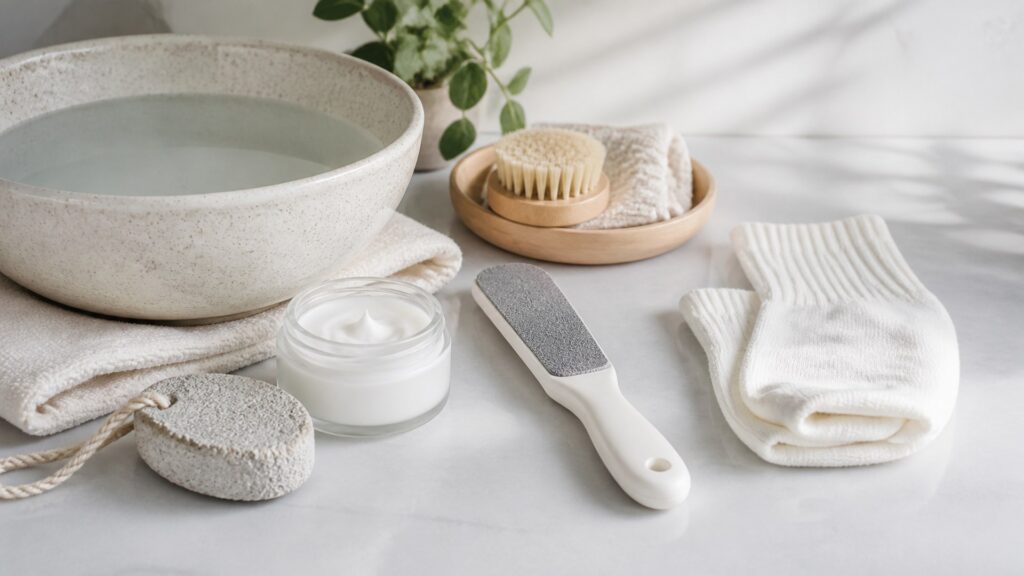
Buying framework
Frame the job around a first complete setup
Sort products by job before comparing brands. Moisture loss calls for a leave-on formula; superficial roughness may justify gentle abrasion; rubbing may need a properly placed cushion. A soak changes the experience but rarely replaces those functions.
Identify the surface: Examine clean, dry feet in good light. Note whether the concern is loose dry skin, intact thick skin, footwear rubbing, or discomfort that should be assessed before buying anything.
Separate treatment from comfort: A warm soak can feel relaxing, yet hydration and pressure management require different products. Do not count a sensory extra as evidence that the core problem is covered.
Choose a stopping point: Decide in advance that tenderness, bleeding, burning, or visible injury ends the session. Products designed around aggressive removal are poor beginner choices.
Who this is for
Match foot care to the user, not the bundle
Experience changes the acceptable complexity. A first-time buyer benefits from obvious controls, while someone maintaining an established routine may value replaceable surfaces or more precise application.
Occasional maintenance: For a monthly tidy-up, prioritize a fine manual surface, secure grip, and easy storage. Large electric kits add charging and sanitation work that an occasional user may never justify.
Regular moisturizer user: Choose a pump or tube that can be handled with clean hands and a finish compatible with socks. Consistent modest application usually matters more than a long ingredient story.
Limited reach or dexterity: Long handles, stable bases, and low operating force can be meaningful. If safe inspection is difficult, professional foot care may be preferable to sharper or more powerful tools.
What to examine
Read specifications through the lens of a first complete setup
Useful specifications describe control and contact. Look beyond counts of attachments and ask how the working surface meets skin, how easily pressure can be moderated, and whether the item can be cleaned completely.
First-use evidence
Notice spread, pressure, sting, traction, and how cleanly the product leaves the skin or tool. Immediate softness alone does not establish that foot care will remain comfortable or useful over time.
Routine evidence
Repeat the labeled method under normal conditions without adding intensity. Judge whether a weekly reset plus brief maintenance between sessions remains practical, whether the surface stays comfortable, and whether cleaning or reapplication creates hidden work.
Abrasive grade: Fine and coarse are relative marketing terms, so inspect the material and directions. A surface should remove small amounts gradually rather than encourage forceful scraping.
Cream format: Tubes limit finger contact; jars accommodate very thick balms; pumps simplify frequent use. Check whether the formula is intended for heels only or broader intact areas.
Protective pieces: Cushions must fit footwear without shifting or crowding toes. Adhesive strength, thickness, washability, and replacement frequency are more informative than package quantity.
Avoid these traps
Mistakes that undermine a first complete setup
Several expensive mistakes begin with misclassification. A callus, blister, rash, thickened nail, and painful pressure point should not be treated as interchangeable cosmetic roughness.
Buying the biggest assortment: Duplicate files and novelty attachments create clutter without improving decisions. Buy a single controlled implement, learn its effect, and expand only when a distinct need appears.
Using blades at home: Cutting tools can remove living tissue and create an infection route. Their apparent speed is not a worthwhile trade for ordinary cosmetic maintenance.
Sharing personal tools: Files, pumice stones, brushes, and nail implements should stay with one user. Color-code household items and store them separately after complete drying.
Decision guidance
Choose the right level of investment
Set a budget after choosing the necessary format. A basic cream and manual file can cover ordinary intact dryness; powered equipment deserves consideration only when it improves control for a user who can operate it safely.
Stay basic: Choose manual tools and a straightforward moisturizer when skin is intact, reach is comfortable, and gradual maintenance meets the goal.
Consider an upgrade: Pay more for a genuinely steadier handle, washable construction, replaceable working surface, or dispenser that reduces contamination—not for decorative accessories.
Do not buy yet: Delay cosmetic treatment when the concern is painful, inflamed, bleeding, rapidly changing, or difficult to see clearly. Appropriate assessment is the better next step.
Ownership & compatibility
Plan the upkeep behind foot care
Reusable foot-care equipment creates a hygiene obligation. Purchase cost should include replacement heads, drying space, disinfecting directions, and the likelihood that small parts remain available.
Clean after contact: Remove visible debris according to the maker’s instructions, then let reusable parts dry in open air. A damp closed case supports odor and contamination.
Track consumables: Replacement files, rollers, cushions, and creams determine annual cost. Confirm availability before choosing a proprietary device or unusually shaped insert.
Store for safe access: Keep sharp or abrasive items capped and away from children. Cream should remain outside the humid shower area unless its package specifically tolerates that environment.
FAQ
Questions about foot care for a first complete setup
These answers address common questions that arise when assembling a general foot-care kit.
What belongs in a basic foot-care kit?
Are electric foot files better than manual ones?
When should I avoid treating my feet myself?
Bottom line
A final decision for a first complete setup
The strongest general-purpose choice is not the fullest box. It is a modest combination whose purpose, pressure, and cleaning requirements are easy to understand.
Confirm the job: State what each item will do in one sentence. If two products have the same role, remove one from the cart.
Picture the entire session: Include setup, seating, towel protection, cleaning, and drying—not merely the few minutes of contact with skin.
Reassess before intensifying: If gentle maintenance does not improve an intact cosmetic concern, adding pressure or frequency may create harm. Reconsider the diagnosis and seek advice where appropriate.
Reading Shortcuts
Jump to the decisions that shape foot care for a first complete setup.
Decision Reminders
A last check before buying foot care.
- Purpose: Every item has a distinct role in a first complete setup.
- Tolerance: Directions, warnings, and application area match the user.
- Upkeep: The owner can manage sanitizing reusable surfaces and replacing worn abrasives.
Glossary Snippets
Useful language for evaluating foot care : the right one without mistaking a claim for demonstrated routine performance.
When a Top 10 List Helps
Use a ranked list when the foot care : the right one field is still broad and you need a manageable starting set.
- The search is just beginning: A foot care : the right one list can organize plausible candidates before detailed testing begins.
- Several formats seem viable: Ranked foot care : the right one options make price, format, and intended-use differences easier to scan.
Already considering only a few choices? Open the comparison section for a closer tradeoff review.
When a Direct Comparison Helps
Choose a comparison after narrowing foot care : the right one to a few credible candidates with different strengths.
- Two or three options remain: A direct foot care : the right one comparison exposes meaningful differences in fit, upkeep, and value.
- The tradeoff is unclear: Side-by-side foot care : the right one evidence helps show whether an upgrade solves the original need.
Need to discover candidates first? Visit the Top 10 section before comparing finalists.