
Foot Masks Buying Guide for Skin Type and Texture Needs
Foot-mask format should follow skin condition, not the promise of baby-soft feet. Dry intact heels may benefit from moisturizing occlusion, while thick rough soles may tolerate an exfoliating mask only when the rest of the foot is healthy and suitable.
Mixed conditions create the hardest decisions. A peel bootie surrounds thin skin, toe spaces, and any unnoticed crack along with the callus, so broad exposure may be a poor match for a small localized problem.
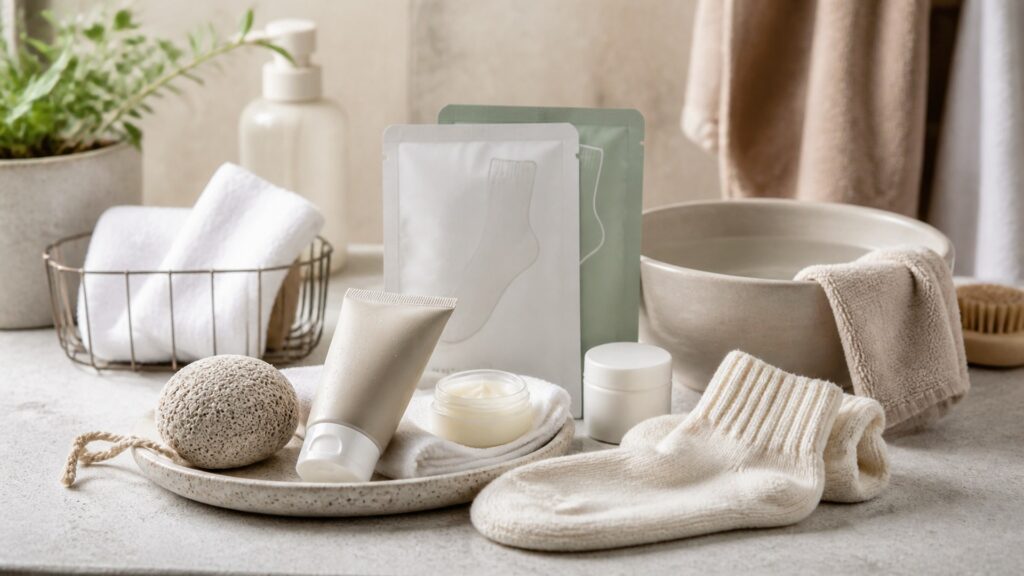
Buying framework
Define the skin type and texture needs routine before comparing products
Use the setting, frequency, and skin priorities to narrow foot masks logically.
Start with the use case: Inspect heel, sole, top, toe spaces, nails, and pressure points before choosing a category.
Rank the practical tradeoffs: Separate general dryness from thick callus, fissures, rash, blisters, and unexplained peeling.
Check instructions early: Match the broad bootie exposure to the most vulnerable enclosed area, not only the roughest spot.
Use profiles
Match foot masks to the person and pace
Three shopper profiles expose different priorities for skin type and texture needs.
Routine-focused buyer: A uniformly dry-foot user may prefer a low-fragrance moisturizing sock.
Performance-focused buyer: A localized rough-heel user may gain better control from targeted cream instead of a peel bootie.
Occasional or flexible user: A mixed sensitive-and-thick foot needs professional or more precise care rather than uniform intensity.
Specifications
Read the specifications through a skin type and texture needs lens
Translate technical language into visible routine benefits.
Handling lens
Base suitability on the least tolerant skin inside the bootie.
Ownership lens
Photograph cracks and borders before any mask obscures them with moisture.
Mask Format: Moisturizing masks combine humectants and occlusion for temporary softness.
Featured Ingredients: Exfoliating masks expose most enclosed skin to acids, regardless of local need.
Contact Time: Bootie seams and folds can concentrate liquid at pressure points.
Fit And Containment: Thin dorsal or ankle skin may tolerate less exposure than the sole.
Aftercare Needs: One-size construction can leak or bunch on very small or large feet.
Common mistakes
Avoid shortcuts that undermine skin type and texture needs
A good purchase can still disappoint when selection or use is based on the wrong assumption.
Buying from one metric: Do not use a whole-foot peel for one small rough heel edge by default.
Skipping compatibility checks: Avoid masks over blisters, fissures, dermatitis, or unidentified peeling.
Ignoring post-use care: Do not assume thick skin means reduced risk across the entire foot.
Decision guidance
Choose the simplest option that covers the real need
Use these decision rules to finish a shortlist for skin type and texture needs.
Choose the basic format when: Choose hydration masks for uncomplicated broad dryness and temporary comfort.
Choose the flexible format when: Prefer targeted roughness care when the treatment need is localized.
Pause before upgrading when: Seek assessment for wounds, pain, unusual scaling, numbness, or circulation concerns.
Ownership & compatibility
Plan for clean, repeatable ownership
The best value remains convenient after the first few uses.
Consumables and replacements: Remain seated during wear and inspect every enclosed area afterward.
Cleaning and storage: Dry between toes thoroughly and follow category-specific aftercare.
Routine compatibility: Delay repeat use until the full skin response and recovery are complete.
FAQ
Foot Masks Buying Guide for Skin Type and Texture Needs FAQ
Practical answers about choosing and owning foot masks for skin type and texture needs.
What matters most when choosing foot masks for skin type and texture needs?
Is the most expensive option better for skin type and texture needs?
How should I compare two similar foot masks options?
Bottom line
Buy for repeatable skin type and texture needs results
A focused shortlist is easier to own and use well.
Prioritize fit: Let the most vulnerable enclosed skin set the mask intensity.
Verify the limits: Use targeted care when roughness is localized.
Count ownership costs: Distinguish ordinary dryness from symptoms needing diagnosis.
Reading Shortcuts
Jump to the key foot masks decisions.
Decision Reminders
Keep these checks beside your shortlist.
- Check mask format: Follow the labeled contact time and do not use peeling masks on broken or irritated skin.
- Check featured ingredients: People with diabetes, poor circulation, or reduced foot sensation should seek professional guidance before intensive foot treatments.
- Check contact time: Stop use if burning, pain, or significant irritation develops.
Glossary Snippets
Plain-language foot masks terms.
When to Use a Top 10 Review
Use a ranked list to identify a manageable set of strong candidates.
- You are still exploring: A ranked list can reveal the main formats and price tiers.
- You want a shortlist: Start broad, then confirm fit with this buying guide.
Have finalists? Use a Comparison.
When to Use a Comparison
Use a direct comparison when only a few candidates remain.
- Features are close: Side-by-side details clarify meaningful differences.
- Prices overlap: Compare ownership value, not only purchase price.
Still exploring? See the Top 10.