
GPS Navigation Devices Buying Guide for Vehicle Compatibility Checks
Demonstrate windshield and dash chosen location, lawful-use forward view, reach, power source outlet function, cord routing, metallized glazed area, satellite reception, traffic receiver requirements, connected phone pairing, audio, backup-camera unit options, mount stability, hot-cabin stress, theft risk, and service technician reach.
This guide treats GPS host car-fit verification as a host car-level operating platform rather than a supported ability purchase. Store the recommendation conditional until the task, confirmed host car, specified service sources, integrated function, ownership path, and recovery route exercise agree.
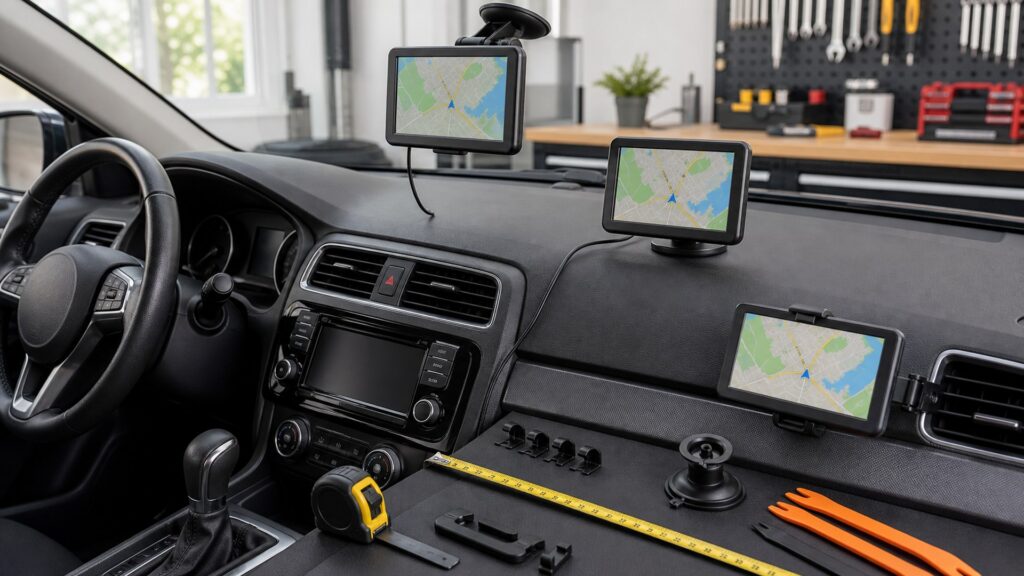
Buying framework
Build GPS host car-fit verification from the driving task
A defensible choice links the primary user or planned course job to host car geometry, specified service sources, interaction, retrofit, error condition recovery route, and observable acceptance substantiation. For GPS vehicle-fit verification, connect vehicle and windshield profile to power and cable fit in a written diagram, then mark the safe response if either fact changes after the purchase.
Write the operating brief: Define the journeys, drivers, screen data priorities, error condition consequences, and host car and windshield profile. Separate required jobs from supported abilities that merely add dashboard display activity.
Survey the host host car: Photograph the seated image feed, dashboard, windshield, stock panels, control surfaces, airbag paths, sensor array, outlets, finish panels, and lawful-use mount geometry. Retain each primary user position before choosing hardware.
Trace the working chain: Geographic layer position or data service sources, stored content, connected phone or traffic services, cameras, audio, control surfaces, power source states, and power source and cord fit. Name what happens when each optional link disappears.
Price the integrated result: Allow for the unit, mount, adapters, protected wiring, setup, downloads, subscriptions, labor, security, service help, removal, and thermal and security needs. Weigh complete ownership paths.
Define acceptance substantiation: Turn integrated navigation exercise into a moving exercise with sunlight, darkness, activation, cold reboot, lost connectivity, missing interface, host car standby state, planned course or camera unit changes, and a safe contingency.
Who this is for
Situations that reshape GPS host car-fit verification
Host car layout, primary user workload, planned course light response, stock equipment, connectivity, and service consequences can change the right architecture. Differences in legal mount geometry can overturn a superficially similar vehicle-fit recommendation; compare those differences beside traffic and phone support before treating two vehicles or users as equivalent.
Metallized-Windshield Car: A metallized-windshield car should start with integrated navigation exercise. Check dimensions for the integrated environment, exercise representative trips, and prove power source and cord fit before making the arrangement permanent.
Limited-Outlet Dashboard: For a limited-outlet dashboard, treat host car and windshield profile as the first rejection gate. Weigh the applicable path with the proposed device and retain traffic and connected phone service help during normal operation and recovery route.
Deep-Windshield Host car: The deep-windshield host car case makes lawful-use mount geometry unusually important. Exercise the confirmed host car, safeguard a usable baseline, and close audio and camera unit options with observable substantiation rather than a supported ability badge.
Shared Family Car: With a shared family car, resolve satellite reception path across every regular primary user or planned course. Allow for hot-cabin stress, glare, vibration, weak coverage, cold reboot, and thermal and security needs in the handoff trial.
Camera unit-Equipped Tow Host car: A camera unit-equipped tow host car needs a maintainable plan for power-and-traffic path. Save product identities, preferences, diagrams, and results, then repeat installed route test after the next relevant update or service incident record.
What to pay attention to
Substantiation that governs GPS host car-fit verification
Read optical or geographic layer demonstrated result, specified service sources, chosen location, control surfaces, power source, digital platform, and contingency as one working chain. A strong individual supported ability cannot repair a missing dependency. Record a dated observation for satellite reception path, name the provider behind power and cable fit, and retain the failed-state result with thermal and security needs for later troubleshooting.
Task and fit factors
Vehicle-fit job, Mount boundary, Reception gate, Power-and-traffic path.
Ownership factors
Device behavior, Placement method, Security plan, Installed route test.
Vehicle-fit job: Define vehicle-fit job by host car class, dimensions, route types, regions, stops, seasonal closures, off-network light response, and routing mistakes that would carry serious cost.
Mount boundary: Test mount boundary for every required country or region, route class, address service source, point-of-interest need, specialty layer, language, memory storage amount, and update entitlement.
Satellite reception path: Exercise reception gate with known height, weight, length, hazardous-material, toll, unpaved-route, ferry, border, avoidance, stop-order, and rerouting cases where applicable.
Power-and-traffic path: Specify how power-and-traffic path arrives: broadcast receiver, paired connected phone, subscription, Wi-Fi download, or another service. Check coverage, delay, power source, cord, data, and missing-service function.
Traffic and connected phone service help: Prove device behavior from the intended mount with cold and warm starts, obstructed sky, tall buildings, trees, heated glazed area, connected phone loss, saved geographic layers, and a destination entered offline.
Audio and camera unit options: Inspect placement method for sunlight, darkness, text scale, voice clarity, touch targets, physical control surfaces, gloves, vibration, instruction timing, navigation menu depth, and safe destination entry.
Security plan: Plan security plan with lawful chosen location, secure attachment, safe cord routing, switched-outlet function, starting reserve limits, hot-cabin stress, theft, removal, update technician reach, and service clearance.
Avoid these traps
Shortcuts that undermine GPS host car-fit verification
These mistakes replace a host car-level trial and documented service help with labels, connector assumptions, or one successful parked demonstration. Each rejected shortcut should point back to an unresolved fact in vehicle and windshield profile or audio and camera options, along with the smallest practical trial that could close it.
Placing The Unit Outside Easy Reach: The shortcut 'placing the unit outside easy reach' leaves mount boundary unproved. Return to the host car and run a controlled comparison that includes placement method, then retain the error condition state as carefully as the successful one.
Blocking The Forward Image feed: Choosing by 'blocking the forward image feed' can hide a more important dependency. Check dimensions for reception gate, assess the official coverage, and exercise security plan under representative driving conditions.
Using The Wrong Traffic Cord: A plan built around 'using the wrong traffic cord' is incomplete until power-and-traffic path has an identified service source and limit. Disconnect the optional service and test installed route test still has a safe path.
Routing Power source Across Control surfaces: The assumption 'routing power source across control surfaces' often survives a parked demonstration. Exercise device behavior through scene movement, light, hot-cabin stress, cold reboot, and missing connectivity while observing vehicle-fit job.
Leaving The Mount Hot-cabin stress-Soaked: Treat 'leaving the mount hot-cabin stress-soaked' as a maintenance system notice, not a buying strategy. Save the baseline for placement method, assign ownership, and calendar a repeat check of mount boundary.
Decision guidance
Pick by the unresolved dependency
Branch on the image feed, planned course, interface, retrofit, connectivity, or recovery route uncertainty most realistic to defeat the intended job. Use traffic and phone support to narrow the architecture, but allow installed navigation test to veto a choice that cannot reacquire position, traffic, and offline guidance in the target vehicle.
If Satellite Reception Is Weak: When satellite reception is weak, let reception gate set the minimum. Weigh the least complex viable options, then accept one only after security plan works in the target host car.
If The Outlet Switches Unpredictably: If the outlet switches unpredictably, make power-and-traffic path the decisive constraint. Price every dependency and prove installed route test through normal use, disconnection, and cold reboot.
If Lawful Chosen location Is Tight: Where lawful chosen location is tight, investigate device behavior before selecting a product family. Require documented service help and demonstrate vehicle-fit job without relying on an unstated service.
If Connected phone Traffic Is Unavailable: For a case in which connected phone traffic is unavailable, treat placement method as non-negotiable. Safeguard the present safe path until mount boundary passes a representative moving exercise.
If A Camera unit Interface Is Proposed: If a camera unit interface is proposed, favor serviceability around security plan. Retain the working baseline and hand off a repeatable procedure for checking reception gate after later changes.
Ownership & compatibility
Store GPS host car-fit verification usable and recoverable
Mounts, geographic layers, apps, phones, batteries, vehicles, and service help coverage change. Scheduled checks are hardware part of the product choice. Assign a named owner to thermal and security needs, set a review trigger for relevant changes, and keep the latest installed navigation test outcome where the next driver or technician can find it.
Save the accepted baseline: Archive host car and product identities, mount boundary, geographic layers or specified-interface lists, wiring, control software, preferences, photographs, and the completed acceptance checklist.
Assess the physical retrofit: Recheck attachment, cord strain, glare, hot-cabin stress, airbag and sensor clearance, connector security, and reception gate after seasonal temperature or windshield changes.
Control digital changes: Back up the working configuration before specified paired applications, stored region data, approved firmware, or host car updates. Afterwards, repeat service source, planned course, instruction, activation, personal-data protection, and device behavior tests.
Maintain an independent contingency: If the GPS navigator, connected phone, traffic service, data adapter, or camera unit service source fails, safeguard route visibility and a usable planned course or stock screen data path through installed route test.
FAQ
GPS Navigation Devices GPS host car-fit verification FAQ
Direct answers about fit, service help, chosen location, service sources, control surfaces, digital platform, updates, and recovery route. The answers below turn legal mount geometry and power and cable fit into vehicle-fit checks documented independently of initial mounting or an unexplained compatibility label.
How should vehicle-fit job be checked?
How should mount boundary be checked?
How should reception gate be checked?
How should power-and-traffic path be checked?
How should device behavior be checked?
How should placement method be checked?
How should security plan be checked?
How should installed route test be checked?
How should gps navigator service help be checked?
Bottom line
Approve GPS host car-fit verification only after a complete route trial
The right choice performs its defined job, fits the confirmed host car, uses specified service sources, remains usable under representative conditions, and fails into a safe documented alternative. A final approval for GPS vehicle-fit verification should cite the observed satellite reception path result, the documented traffic and phone support path, and the recovery demonstrated through installed navigation test.
Define: Start with vehicle-fit job and the real driving or planned course need.
Fit: Measure and prove mount boundary in the target host car.
Connect: Demonstrate power-and-traffic path through its complete specified path.
Recover: Finish with installed route test and a practiced contingency.
Reading Shortcuts
Write the actual planned course job.
Decision Reminders
Checks to complete before committing.
- Protect forward view: Store the navigator and cord clear of the route, control surfaces, airbag paths, and system notices.
- Exercise satellite mark: Check cold acquisition and accuracy from the intended bracket work point.
- Separate data service sources: Distinguish satellite position, stored geographic layers, traffic reception, and connected phone data.
- Maintain geographic layers: Retain update route, region, memory storage needs, download time, and service help term.
- Plan for coverage capture gaps: Store destinations, planned courses, geographic layers, and contacts needed without a network.
- Secure the device: Address hot-cabin stress, theft, removable mounts, saved history, accounts, and disposal.
Glossary Snippets
Terms used in this decision.
When to Use a Top 10 Review
Rank GPS devices only after the host car and planned course profile is written.
- Geographic layers matched: Demonstrate regions, route classes, restrictions, and update provisions.
- Reception tested: Acquire satellites and traffic data from the intended host car location.
- Host car planned course proven: Drive a reception-challenging planned course, interrupt traffic data, and test stable offline guidance.
- Recovery route ready: Store power source, geographic layer-update, mount, personal-data protection, and backup procedures documented.
Already down to 2–3 options? A Comparison is usually faster.
When to Use a Comparison
Weigh navigation devices on identical planned courses and error condition scenarios.
- Routing fit: Contrast geographic layer coverage, host car restrictions, stops, traffic, and recalculation.
- Host car usability: Review dashboard display, voice, control surfaces, chosen location, reception, power source, and hot-cabin stress.
- Connectivity burden: Exercise connected phone pairing, traffic service source, downloads, subscriptions, and offline function.
- Ownership path: Allow for geographic layers, updates, memory storage, mounts, cables, security, and service help.
Still building a shortlist? Start with a Top 10.