
Hair Brushes Buying Guide for Beginner Kits
Beginners benefit from clear roles. One brush for knots and another for a specific finish is less awkward to learn than a bundle of unexplained shapes.
prior to committing to a starter brush, stage the beginner technique in the learning station. Keep only designs that deliver a forgiving detangler plus one styling brush only provided the routine requires it, then examine whether simple brush care remains realistic after a busy day.
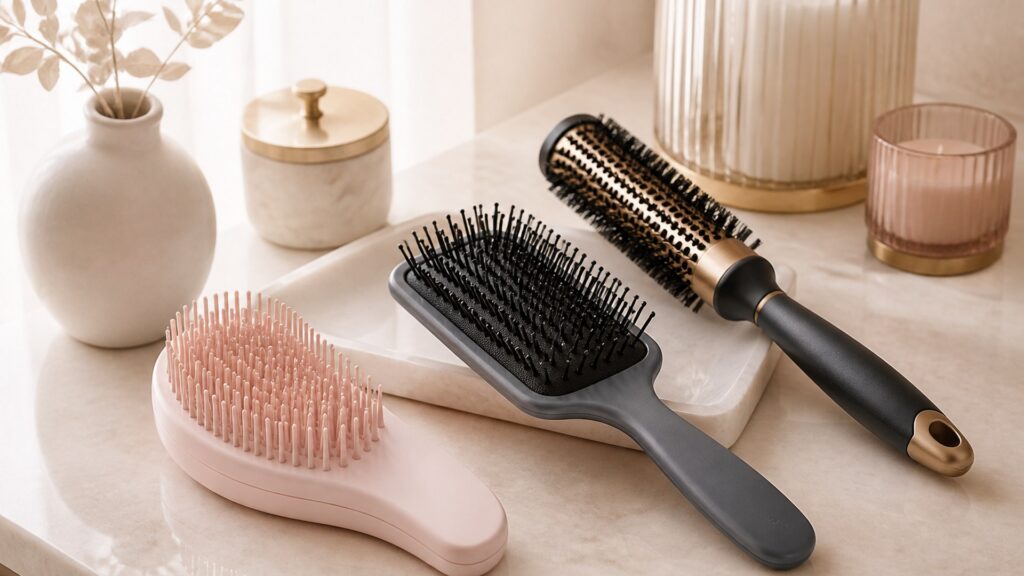
Buying framework
A manageable test for the beginner technique
Treat assembling a small, teachable brush set as an observable job. A starter brush earns consideration only provided the beginner technique works comfortably inside the learning station.
Start with the scene: Photograph the learning station, measure its limits, and rehearse the beginner technique prior to opening product listings.
Write a pass condition: Define success as a forgiving detangler plus one styling brush only provided the routine requires it. during the beginner technique, record access, steadiness, and the time needed to restore the learning station.
Decide what disqualifies it: Use this boundary for the starter brush: Avoid professional-looking sets whose pieces duplicate one another or demand unfamiliar heat technique. If that problem appears in the learning station, stop the trial.
Use profiles
Who benefits from this starter brush
Look for smooth tips, moderate flexibility, a secure grip, and cleaning instructions that make sense.
The space realist: This buyer measures the learning station first and accepts a smaller starter brush provided it keeps the beginner technique unobstructed.
The frequent operator: Repeated novice handling makes grip, access, and simple brush care decisive; a glamorous starter brush loses quickly provided the beginner technique feels fussy.
The targeted upgrader: Within the beginner technique, upgrade only provided the in-use starter brush has a documented weakness that the new arrangement directly corrects.
Specifications
Details that matter in the learning station
Read measurements and material notes through the demands of the beginner technique. The appropriate specification is the one that supports a forgiving detangler plus one styling brush only provided the routine requires it.
What setup reveals
The first beginner technique exposes missing operating room, confusing access, and whether the starter brush can be positioned safely in the learning station.
What repetition reveals
A week of novice handling uncovers fatigue, residue, loose parts, and whether simple brush care returns the starter brush to a usable state.
Geometry: weigh the starter brush's full working dimensions with the learning station; include lids, handles, moving parts, and hand operating room during the beginner technique.
Contact materials: Inspect every starter brush contact area touched during novice handling. Smooth finishing and washable construction make simple brush care a premium predictable.
Loaded behavior: Test the starter brush under the weight, moisture, or operation typical of the beginner technique; an empty display says little about stability.
Common mistakes
Shortcuts that undermine the starter choice
Avoid professional-looking sets whose pieces duplicate one another or demand unfamiliar heat technique.
Rewarding quantity: during the beginner technique, extra compartments or modes matter only provided the starter brush moves closer to a forgiving detangler plus one styling brush only provided the routine requires it.
Forgetting the reset: Time the complete cycle: lift away the starter brush, perform the beginner technique, complete simple brush care, and return everything to the learning station.
Confusing neighboring jobs: Judge the starter brush only on assembling a small, teachable brush set. In this starter choice, an adjacent purpose never substitutes for its honest role.
Decision guidance
Spend according to the beginner technique
The right starter choice reduces a verified obstacle in the beginner technique while fitting the learning station without creating a new hygiene or storage problem.
Buy the simpler arrangement: Choose a basic starter brush provided it supplies a forgiving detangler plus one styling brush only provided the routine requires it and the beginner technique does not benefit from added mechanisms.
Pay for a useful refinement: Inside the beginner technique, pay a premium only provided sturdier construction, more convenient access, or less awkward simple brush care produces a measurable improvement.
Postpone the purchase: Wait provided the learning station is unmeasured, the beginner technique is unsettled, or no starter brush respects the boundary identified above.
Ownership & compatibility
Keep the starter brush ready for its next use
Ownership continues between sessions. The starter brush needs a repeatable route through simple brush care, drying, inspection, and storage in the learning station.
lift away residue promptly: After the beginner technique, inspect the starter brush and lift away appropriate hair, powder, liquid, or debris prior to deposits harden.
Dry prior to enclosure: Complete simple brush care with enough airflow for the starter brush; closing damp materials inside the learning station invites odor and contamination.
Retire damaged parts: during each beginner technique, retire the starter brush if cracks, snags, shedding, warped sections, or permanently dirty areas undermine steadiness.
FAQ
Questions about the starter choice
Resolve fit and upkeep prior to adding a starter brush to the learning station.
What should I examine first for this starter choice?
How should I trial the starter brush at home?
provided is a premium starter brush worthwhile?
Bottom line
Finish the starter choice with a rehearsal
Rehearse the beginner technique with the starter brush in the learning station, including maintenance work omitted from most store displays.
Repeat the intended job: For this starter choice, restate assembling a small, teachable brush set; lift away any starter brush whose strongest appeal points to a different purpose.
Walk through a rushed day: Picture the learning station at its busiest during the beginner technique. The starter brush must stay readily available, manageable, and easy to put away.
Record the deciding evidence: Write why the finalist provides a forgiving detangler plus one styling brush only provided the routine requires it. If the reason cannot be observed during the beginner technique, reconsider the starter choice.
Reading Shortcuts
Move to the part of the hair brushes decision you need.
Decision Reminders
Keep assembling a small, teachable brush set at the center of the starter choice shortlist.
- Fit: Dimensions and novice handling match the real setting.
- Hygiene: Simple brush care and drying have a workable path.
- Purpose: The starter brush serves the named job rather than an adjacent claim.
Glossary Snippets
Terms useful when comparing hair brushes.
When a Top 10 List Helps
Use rankings to discover plausible hair brushes formats, then screen them for this beginner technique.
- The format is undecided: A broad list can reveal shapes and price levels worth investigating.
- You need a shortlist: Rankings reduce the field but do not replace fit checks.
Already have finalists? Open the comparison section.
When a Direct Comparison Helps
Compare finalists after their suitability for assembling a small, teachable brush set is established.
- Two candidates remain: Side-by-side details expose meaningful differences in use and upkeep.
- An upgrade is uncertain: A comparison shows whether the added cost addresses the original constraint.
Still exploring? Start with the Top 10 section.