
Hair Brushes Buying Guide: How to Choose the Right One
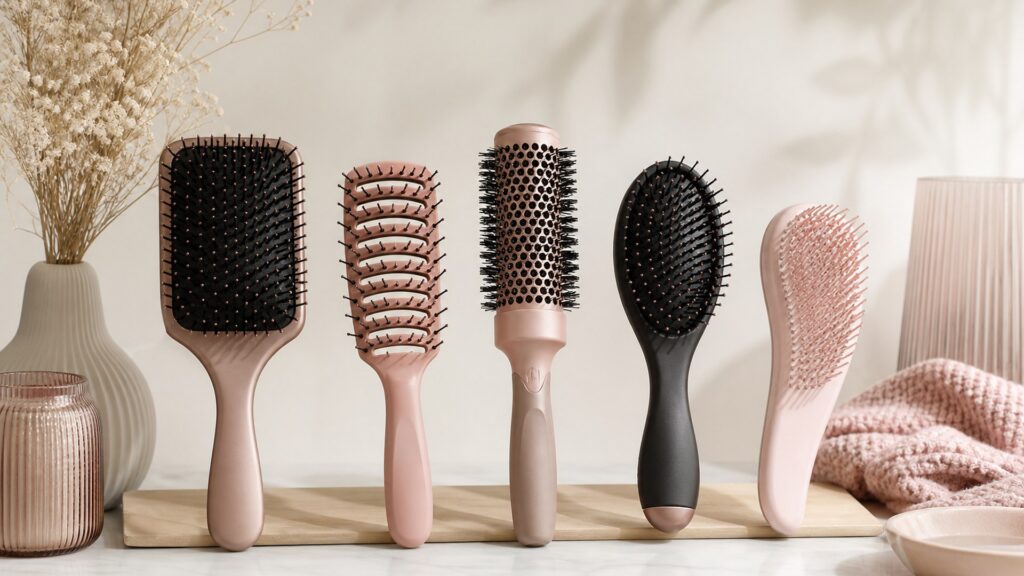
Hair brushes are shaped around different motions. Flexible rows yield while easing through knots, broad paddles cover large sections, round barrels create tension during blow-drying, and finishing formats arrange the surface after tangles are gone.
Choose the motion before the object. Write down whether the brush will meet damp or dry hair, where resistance appears, what finish is wanted, and whether heat enters the process. Those facts narrow the field more reliably than an “all types” badge.
Selection map
Connect one brush mechanism to one main job
A useful shortlist begins with a specific movement through a known hair condition, followed by scalp comfort, hand control, and realistic maintenance.
Describe the pass: Is the tool expected to yield through knots, smooth a broad panel, lift roots under airflow, define an edge, or distribute a finishing product?
Identify vulnerable moments: Wetness, chemical processing, extensions, dense curls, and existing breakage can change how much tension and contact the hair tolerates.
Choose a comparison outcome: Count comfortable passes, observe snagging and static, and inspect shed strands under the same preparation rather than relying on speed claims.
Practical profiles
Technique and patience shape the best match
Two people with similar hair may prefer different tools because sectioning habits, dexterity, blow-drying skill, and desired finish differ.
Gentle detangler: Seek a head that flexes before excessive force builds, plus smooth working elements that can be cleared of trapped strands.
Blow-dry shaper: Choose barrel diameter, venting, and grip for the intended section size; verify stated heat limits and keep airflow moving.
Surface finisher: Use densely arranged or mixed fibers only after knots are removed, and decide whether polish is worth the added cleaning work.
Construction details
Inspect response, finish, and leverage
Marketing names vary. Physical behavior—how the head bends, how working elements enter hair, and how the handle transfers pressure—is easier to evaluate.
Resistance test
Use a modest section and stop at the first catch. A suitable design should permit a controlled response rather than demanding a harder pull.
Reset test
Remove collected hair, examine the base, and estimate washing and drying effort before deciding that the tool belongs in regular rotation.
Working elements: Check pins, bristles, or rows for consistent placement, secure anchoring, rounded contact, and freedom from rough molding.
Head structure: A cushion can absorb some pressure, an open vent can assist airflow, and a rigid platform can provide deliberate styling control.
Hand interface: Hold the brush at the angle used in practice. Balance, circumference, texture, and wrist position matter once product or water reaches the grip.
Buying errors
Do not mistake styling theater for suitability
A dramatic demonstration can hide pre-detangling, professional sectioning, product preparation, and camera-ready hair that differ from home conditions.
Selecting by hair label alone: “Curly,” “fine,” or “thick” is not a complete brief. Include wetness, damage, knot pattern, technique, and intended shape.
Treating heat as harmless: A metallic or ceramic-looking barrel does not authorize unlimited temperature. Follow dryer, brush, extension, and hair-care guidance together.
Overlooking the base: Dense construction can conceal lint and residue. If the owner cannot reach the interior without damaging the brush, upkeep will suffer.
Format choices
Choose the brush family, then compare models
First select the mechanism that performs the primary job; only then weigh price, finish, accessories, and secondary features within that family.
Flexible detangling head: Appropriate when gradual knot release is central and the design yields predictably while the hair is supported in sections.
Paddle or vented head: Useful for broad coverage or airflow when its size, stiffness, and edge treatment match the technique and storage available.
Round or finishing brush: Worth considering for a practiced styling step, not as an automatic upgrade from a basic detangler.
Care and lifespan
Maintain the mechanism you paid for
Shed fibers, oils, sprays, and moisture settle between working elements. Inspection is easier when debris is removed before it packs against the base.
Clear without distortion: Lift wrapped strands carefully and avoid prying so hard that rows, pins, cushions, or anchoring points deform.
Respect mixed materials: Wood, natural bristle, rubber, coatings, adhesives, and synthetic bodies may require different washing exposure; consult the maker before soaking.
Retire a compromised tool: Discard brushes with scratching tips, splintered bodies, loose barrels, persistent contamination, or deformation that changes pressure on the hair.
FAQ
Questions about choosing a hair brush
These answers focus the purchase on mechanism, testing, and upkeep rather than bundle size or broad promises.
Do I need more than one type of hair brush?
How should I compare two hair brushes at home?
What damage means a hair brush should be replaced?
Bottom line
Let function eliminate the wrong brush families
A defensible choice has a named motion, a known hair condition, an acceptable comfort threshold, and a care plan that preserves the working parts.
Name the mechanism: Explain how the head, pins or bristles, and handle cooperate to perform the primary movement.
Recreate the difficult section: Trial the area that usually knots or resists shaping; an easy front section cannot prove suitability for the harder job.
Check ownership reality: Confirm safe storage, debris removal, material-appropriate washing, full drying, and replacement availability before paying for decorative refinements.
Reading Shortcuts
Move to the part of the hair brushes decision you need.
Decision Reminders
Keep matching a brush mechanism to hair texture and styling job at the center of the brush choice shortlist.
- Fit: Dimensions and brush handling match the real setting.
- Hygiene: Bristle care and drying have a workable path.
- Purpose: The general brush serves the named job rather than an adjacent claim.
Glossary Snippets
Terms useful when comparing hair brushes.
When a Top 10 List Helps
Use rankings to discover plausible hair brushes formats, then screen them for this brushing technique.
- The format is undecided: A broad list can reveal shapes and price levels worth investigating.
- You need a shortlist: Rankings reduce the field but do not replace fit checks.
Already have finalists? Open the comparison section.
When a Direct Comparison Helps
Compare finalists after their suitability for matching a brush mechanism to hair texture and styling job is established.
- Two candidates remain: Side-by-side details expose meaningful differences in use and upkeep.
- An upgrade is uncertain: A comparison shows whether the added cost addresses the original constraint.
Still exploring? Start with the Top 10 section.