
Hair Care Products Buying Guide: How to Choose the Right One
Build a hair-care routine by scalp needs, cleansing interval, strand diameter, curl pattern, porosity behavior, damage, conditioning, styling, and buildup.
The hair-care routine worksheet pairs cleansing strength with conditioning slip, then reviews formula weight beside hold and humidity response. It holds heat-protection directions apart from packaging and dose so one strength cannot conceal another. The final route is checked through the oily-scalp dry-end user, the frequent washer, the low-frequency washer, the heat styler, and the mixed-household buyer; each route earns a distinct configuration rather than a demographic label. Hair-Care Routine roadmap: Separate scalp and fiber jobs; Map the wash cycle; Change one category; Set escalation limits; The oily-scalp dry-end user; The frequent washer; The low-frequency washer; The heat styler; The mixed-household buyer; Cleansing strength; Conditioning slip; Formula weight; Hold and humidity response; Heat-protection directions; Packaging and dose; Buying a matching line automatically; Treating hair type as one label; Stacking every treatment; Scrubbing lengths with shampoo; Ignoring technique; For balanced simple care; For oily roots and dry ends; For buildup-prone routines; For heat styling; For unexplained scalp or shedding changes; Keep a wash log; Clean tools and containers; Watch opening dates; Retest seasonally.
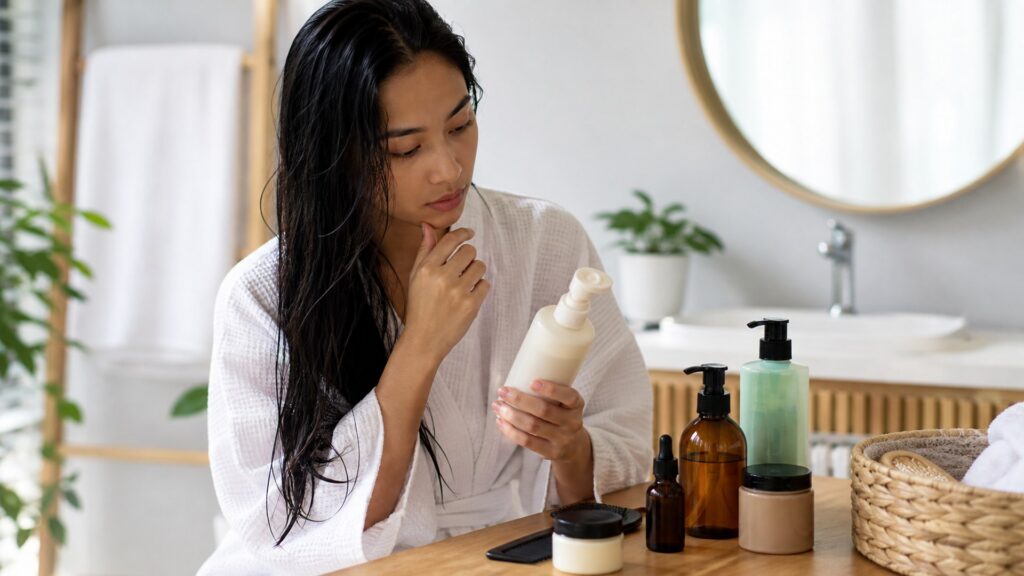
Buying framework
Separate scalp and fiber jobs
Build the hair-care routine purchase around its title-specific routine.
Separate scalp and fiber jobs: Choose cleansing for scalp oil, sweat, flakes, and residue while matching conditioning and styling to lengths and ends.
Map the wash cycle: Record days between washes, product layers, exercise, water exposure, detangling, drying, and desired style life.
Change one category: Test shampoo, conditioner, leave-in, treatment, or styler separately so the source of buildup or improvement stays visible.
Set escalation limits: Persistent itching, sores, sudden shedding, patchy loss, or scalp pain deserves qualified evaluation rather than endless cosmetic swapping.
Who should buy what
Match the hair-care routine system to the actual user
These hair-care routine profiles require materially different configurations.
The oily-scalp dry-end user: Needs scalp-focused cleansing plus targeted midlength conditioning instead of one heavy formula applied everywhere.
The frequent washer: Should prioritize mild repeatable cleansing, efficient conditioning, and a routine that does not require many corrective layers.
The low-frequency washer: Needs a buildup and scalp-hygiene plan that accounts for oils, gels, dry shampoo, sweat, and protective styles.
The heat styler: Should verify labeled heat protection, tool temperature, sectioning, and friction reduction rather than relying on shine as proof.
The mixed-household buyer: Benefits from separate products when scalp, texture, chemical service, fragrance tolerance, or styling goals materially differ.
What to pay attention to
Read the characteristics that change hair-care routine
Translate hair-care routine label language into observable use consequences.
Cleansing strength: Judge removal of scalp oil and accumulated styling product without turning squeakiness into the goal.
Conditioning slip: Assess wet detangling force, distribution, rinse behavior, residue, and whether ends remain manageable after drying.
Formula weight: Fine strands, dense curls, short hair, and long damaged ends can need different placement and amounts from the same product.
Hold and humidity response: Compare cast, flexibility, flaking, refresh behavior, frizz, and style durability in the actual climate.
Heat-protection directions: Confirm the claim, application amount, wet or dry use, coverage, and tool-temperature instructions on the exact product.
Packaging and dose: Pumps, jars, nozzles, refill formats, and concentrated formulas change contamination risk, portion control, and cost per wash.
Avoid these traps
Correct the shortcuts that undermine hair-care routine
Every hair-care routine mistake needs a concrete test or stopping rule.
Buying a matching line automatically: Shampoo, conditioner, mask, and styler should each earn a distinct job; brand uniformity is not routine logic.
Treating hair type as one label: Scalp condition, strand diameter, density, curl, damage, climate, and style goals can point in different directions.
Stacking every treatment: Protein, rich masks, oils, bonds, leave-ins, and silicones together can obscure which layer helps or creates residue.
Scrubbing lengths with shampoo: Routine cleansing usually centers on the scalp, with lather moving through lengths according to need and directions.
Ignoring technique: Excess heat, rough towel friction, tight styles, and aggressive detangling can overwhelm product changes.
Decision guidance
Choose the route that matches the dominant hair-care routine constraint
Use one hair-care routine path, then verify it under real conditions.
For balanced simple care: Start with scalp-appropriate shampoo, rinse-out conditioner, and one styler or leave-in tied to the goal.
For oily roots and dry ends: Clean the scalp thoroughly enough and keep richer conditioning away from roots unless directions support it.
For buildup-prone routines: Audit dry shampoo, oils, gels, hard-water exposure, and wash interval before adding moisture.
For heat styling: Pair labeled protection with lower effective temperature, fewer passes, and complete coverage.
For unexplained scalp or shedding changes: Pause cosmetic experimentation and seek professional diagnosis when warning signs persist or appear suddenly.
Ownership & compatibility
Keep the hair-care routine routine interpretable after purchase
Maintenance determines whether the hair-care routine product remains useful.
Keep a wash log: Track scalp comfort, wash interval, product amount, detangling, drying time, residue, and style life.
Clean tools and containers: Remove hair and residue from brushes, combs, caps, nozzles, and reusable applicators according to material.
Watch opening dates: Store products closed and dry, avoid adding water to containers, and discard changed or contaminated formulas.
Retest seasonally: Humidity, indoor heat, swimming, exercise, length, and chemical services can change placement or frequency needs.
FAQ
Hair Care Products Buying Guide: How to Choose the Right One FAQ
Answers tied to the exact hair-care routine category, routine, and ownership burden.
How should buyers evaluate cleansing strength for hair-care routine?
How should buyers evaluate conditioning slip for hair-care routine?
How should buyers evaluate formula weight for hair-care routine?
How should buyers evaluate hold and humidity response for hair-care routine?
How should buyers evaluate heat-protection directions for hair-care routine?
How should buyers evaluate packaging and dose for hair-care routine?
How should buyers evaluate buying a matching line automatically for hair-care routine?
How should buyers evaluate treating hair type as one label for hair-care routine?
How should buyers evaluate stacking every treatment for hair-care routine?
Bottom line
For balanced simple care
Make the hair-care routine decision from evidence gathered in its intended routine.
Set the baseline: Define what success means for hair-care routine before opening another product.
Run the decisive test: Use the hardest realistic hair-care routine condition to separate the finalists.
Own the result: Keep the hair-care routine routine measurable, maintainable, and within its stopping rules.
Reading Shortcuts
Navigate the hair-care routine decision.
Decision Reminders
Keep the hair-care routine comparison controlled.
- Hair-Care Routine baseline: Write the starting condition for hair-care routine before testing.
- One hair-care routine change: Alter only one hair-care routine variable in each comparison cycle.
- Hair-Care Routine stopping rule: Know when hair-care routine shopping should pause or escalate.
Glossary Snippets
Working terms for hair-care routine.
Using a Hair Care Top 10
Apply the hair-care routine baseline before accepting a ranked order.
- Apply hair-care routine: Remove options that fail the central hair-care routine requirement.
- Normalize hair-care routine: Compare finalists with the same hair-care routine method.
- Check hair-care routine burden: Include upkeep and repeat use in the hair-care routine score.
- Keep hair-care routine evidence: Record why each hair-care routine finalist advanced.
Popularity cannot replace the buyer’s hair-care routine baseline.
Comparing Hair-Care Routine Finalists
Hold the hair-care routine technique and context steady between candidates.
- Start hair-care routine equally: Use the same hair-care routine preparation for every candidate.
- Observe hair-care routine midway: Check performance after the hair-care routine opening impression fades.
- Stress the hair-care routine weak point: Test the condition most likely to break the hair-care routine routine.
- Review hair-care routine ownership: Price the full hair-care routine cycle rather than one use.
Restart when the hair-care routine baseline changes materially.