
Hair Masks Buying Guide: How to Choose the Right One
The right hair mask is not simply the richest one. A formula can soften dry ends yet flatten fine roots, improve detangling yet leave buildup, or fit damaged lengths but demand more time than your routine allows. Choose by the result you need, the zone that needs it, and the finish your hair can tolerate. This guide turns those tradeoffs into a repeatable purchase decision.
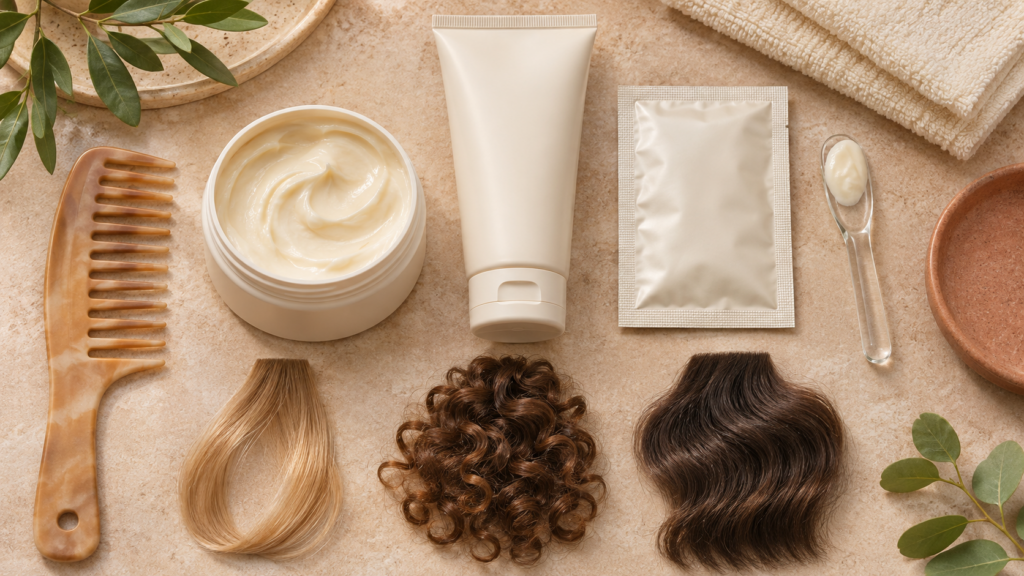
Buying framework
Start With the Job the Mask Must Do
Define the primary result before comparing ingredients or richness. One clear job makes weight, timing, and placement easier to judge.
Reduce detangling friction: Prioritize slip and a rinse-out finish that leaves sections easier to separate. Judge the mask during the same detangling method, not by softness alone.
Soften dry or rough lengths: Look for conditioning that lasts through drying without a waxy or coated feel. Target the driest zones instead of assuming roots need the same dose.
Support processed or heat-worn hair: Choose a formula whose directions fit the rest of the damage-care routine. A mask can support feel and manageability, but it does not replace lower exposure or heat protection.
Control weight and buildup: Fine, low-density, or easily coated hair may need a lighter formula, shorter contact time, or less frequent use rather than the richest texture on the shelf.
Make wash day easier to repeat: A ten-minute mask used consistently can be more useful than a complicated treatment that is skipped. Include application, detangling, rinse time, and cleanup in the choice.
Who this is for
Match the Mask to Hair Behavior
Hair type labels help only when they describe a real constraint such as coverage, weight tolerance, tangling, or uneven dryness.
Fine or easily weighed-down hair: Choose a lighter finish, controllable dose, and targeted mid-length application. Avoid treating thick texture as proof of better conditioning.
Curly or coily hair needing slip: Compare section-by-section spread, detangling feel, contact time, and the amount required for full coverage. A small jar may have a high cost per wash.
Color-treated or lightened lengths: Prioritize manageable feel, compatible timing, and clear directions. Keep color care and reduced chemical or heat exposure in the wider routine.
Dense or long hair: Packaging size, spreadability, and application time become purchase criteria. Estimate uses per container from your real dose rather than the suggested serving alone.
Combination hair with oily roots and dry ends: Favor targeted placement and a clean rinse. Apply where the dryness is instead of coating the scalp automatically.
What to pay attention to
Read the Details That Change the Result
Useful product details predict how the mask will behave in your shower, on your hair, and over several uses.
Weight-tolerance lens
After rinsing and drying, does the hair keep movement and volume, or feel coated and collapse?
Coverage-cost lens
How much product and time does one complete application require for your length, density, and sectioning method?
Conditioning weight: Richness can improve softness and slip, but more residue or reduced volume may follow. Match the finish to the heaviest result your hair tolerates well.
Treatment focus: Separate claims about moisture, smoothing, breakage reduction, color care, or scalp use. Choose the claim closest to the result you can observe.
Application zone: Check whether directions specify scalp, roots, mid-lengths, ends, or all-over use. Placement affects weight, coverage, and irritation risk.
Contact time: A three-minute mask and a twenty-minute treatment ask for different routines. Longer is not automatically better; follow the label.
Directed frequency: Weekly, every-wash, and occasional use create different buildup and cost patterns. Begin at the lowest directed frequency that fits the goal.
Container and usable dose: Jars make scooping easy, tubes limit water entry, and sachets suit trials. Compare the amount needed for your length and density, not package size alone.
Avoid these traps
Avoid Common Hair Mask Buying Mistakes
Most mismatches come from choosing by richness or hype while ignoring placement, dose, and the rest of wash day.
Assuming thicker means more effective: Texture in the jar does not predict the final balance of slip, softness, residue, or volume on your hair.
Buying one formula for every zone: Roots, processed ends, and the nape may need different amounts. Use controllable placement before replacing the product.
Leaving it on longer than directed: Extra time can increase inconvenience or coating without improving the result. Follow label timing and change one variable at a time.
Stacking mask, conditioner, and leave-ins automatically: Layering several rich steps can hide which product helps and which creates weight, residue, or tangling.
Ignoring cost per full application: A low shelf price can be expensive for long or dense hair if one jar provides only a few complete uses.
Treating scalp symptoms as a conditioning problem: Persistent itching, pain, sores, or sudden hair loss are not reasons to escalate a cosmetic mask. Seek appropriate professional guidance.
Decision guidance
Choose the Lightest Mask That Solves the Main Problem
Route the purchase by the first result you need, then use weight and coverage to break ties.
If detangling is the priority: Choose strong slip, enough spread for sectioning, and a rinse that leaves hair manageable without requiring several extra layers.
If dry ends are the priority: Target the driest lengths with a richer formula or longer label-directed contact time while keeping it away from roots that flatten easily.
If damage support is the priority: Compare the exact claim, sequence, and frequency. Keep conditioning needs, heat protection, and reduced exposure in the decision.
If volume disappears easily: Start with a lighter mask, smaller dose, shorter directed timing, or less frequent use. Evaluate on fully dry hair.
If coverage is expensive or slow: Favor spreadability, larger usable volume, and directions that fit your sectioning method. Cost per wash matters more than price per ounce alone.
Ownership & compatibility
Run a Controlled Three-Wash Trial
A short, consistent trial shows whether the mask earns a place in the routine without turning every wash into a new experiment.
Set the baseline: Record your usual cleanser, application zone, detangling method, styling products, dry-time feel, and next-day weight.
Use the directed dose and timing: Start with the label. Note the actual amount needed for coverage and whether the timing is realistic.
Keep neighboring steps steady: Avoid adding a new oil, leave-in, or clarifier during the trial unless a reaction requires stopping.
Compare after drying: Track slip, tangling, softness, movement, residue, frizz behavior, and how long the result lasts.
Adjust one lever: Change only dose, placement, or frequency. Stop if irritation occurs, and replace the mask if the main problem remains unsolved.
FAQ
Hair Mask Questions
These answers cover timing, placement, frequency, conditioner, and signs that a formula is a poor match.
How is a hair mask different from conditioner?
How often should I use a hair mask?
Should I apply a hair mask to my scalp?
Do I use conditioner after a hair mask?
Is a thicker hair mask better for very dry hair?
How long should I leave a hair mask on?
Can fine hair use a hair mask?
Can a hair mask repair split ends permanently?
How do I know a hair mask is too heavy?
Readiness check
Put the Hair Mask Decision in Order
The best match solves a defined problem without creating a larger one elsewhere in the routine.
Name the job: Choose detangling, softness, damage support, weight control, or coverage efficiency.
Set the zone: Decide whether roots, lengths, ends, or only processed areas need treatment.
Check routine fit: Compare timing, sequence, frequency, and cleanup.
Estimate real use: Measure dose and cost per complete application.
Judge the dry result: Keep the formula only if the benefit survives rinsing, drying, and normal styling.
Mask-Matching Shortcuts
Jump to the decision that matches your main constraint.
Six Mask Checks
Use these before choosing the richest formula.
- Job: Name the primary result.
- Weight: Protect movement and volume.
- Zone: Treat only where needed.
- Timing: Follow label contact time.
- Coverage: Estimate the real dose.
- Evidence: Judge after full drying.
Useful Hair Mask Terms
Plain language for comparing use and finish.
When a Top 10 List Helps
Use rankings after the mask job and finish are clear.
- The job is defined: Filter products by the result you need.
- Weight tolerance is known: Exclude finishes likely to flatten or coat.
- Directions fit: Keep timing and frequency realistic.
- Coverage is affordable: Compare cost per complete application.
Already have a shortlist? A Comparison can help resolve the remaining tradeoffs.
When a Comparison Helps
Compare finalists on the same hair and routine constraints.
- Finishes differ: Compare softness, slip, movement, and residue.
- Directions differ: Map timing and sequence into wash day.
- Packages differ: Estimate usable applications for your dose.
- Placement differs: Check whether scalp or length use is supported.
Still discovering options? Start with a Top 10 to build a relevant shortlist.