
Hair Oils Buying Guide for Damage Repair Goals
Damage is not one condition, and oil is not a universal repair. A measured oil can reduce friction, soften a rough finish, and help vulnerable ends move with less drag, but it cannot reverse split ends. Start with the damage pattern, choose protection, lubrication, or finishing, and keep oil in a routine that also controls heat, chemicals, detangling, and trimming.
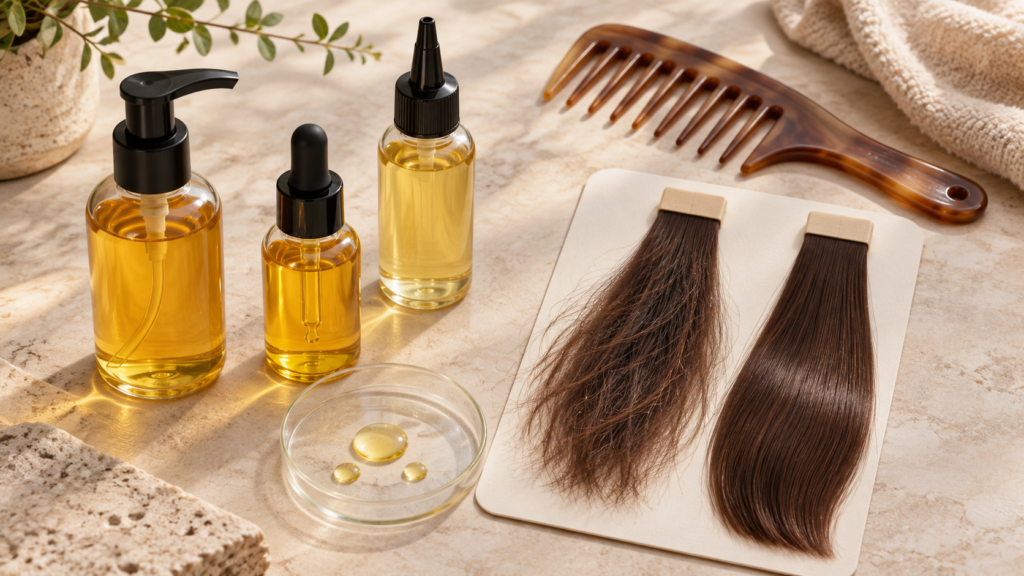
Buying framework
Define What “Repair” Means in This Routine
Choose the visible or handling problem first. Hair oil can support damaged lengths, but the useful role depends on whether the priority is friction, porosity, breakage risk, heat exposure, or cosmetic finish.
Reduce friction: Oil can improve slip between strands and against clothing or tools. This is a handling goal: easier separation and less snagging, not proof that internal structure has been rebuilt.
Smooth a porous surface: Worn cuticles can feel rough and lose shine. A small leave-on film may make the surface feel more even, while too much can create sticky sections that tangle differently.
Protect vulnerable ends: Ends have accumulated the most washing, weathering, heat, and chemical exposure. Controlled placement below the ears can support grooming without coating healthy roots.
Separate repair categories: Bond-building treatments, protein products, conditioners, heat protectants, and oils have overlapping marketing but different jobs. Do not substitute an oil for a directed treatment solely because both use the word repair.
Set the limit: Split ends cannot be permanently fused by a cosmetic oil. Persistent breakage, sudden texture change, or scalp symptoms calls for a broader routine review or appropriate professional advice.
Who this is for
Match Oil Use to the Damage Pattern
Damage history and routine load are more useful than a generic dry-hair label.
Bleached or highlighted lengths: Prioritize low-friction detangling and a tiny finishing dose on the most porous zones. Keep bleach aftercare, conditioning, and bond-focused steps distinct so oil does not hide ongoing snapping.
Frequent heat styling: Choose a controlled dose that will not encourage extra passes to correct greasiness. Do not assume an oil protects against heat unless the product directions explicitly cover the tool and temperature.
Mechanical wear and tangles: Use oil where collars, elastics, brushing, or textured strands create drag. Pair it with gentler tools and sectioning; lubrication cannot compensate for aggressive detangling.
Fine damaged hair: Favor a pump or restricted dropper and test one increment on the ends. The practical target is reduced catch without collapsed movement or repeated cleansing.
Curly, coily, or high-shrinkage hair: Use oil as one layer in a water-and-conditioning routine, not as hydration by itself. Define whether it supports takedown, sealing, wash-day detangling, or dry-end maintenance.
What to pay attention to
Compare Formula, Dose, and Repair Claims Together
A featured oil name reveals less than the complete formula, the amount applied, and the claim the label actually supports.
Damage-event lens
Where does wear happen: chemical processing, hot tools, detangling, fabric contact, or exposed ends?
Evidence lens
Is the goal observable slip and finish, or a structural claim that needs product-specific support?
Formula base: Plant oils, silicones, esters, and mixed serums can all reduce friction or add shine. Compare finished spread and residue instead of treating one ingredient family as automatically more reparative.
Dose control: Pumps, droppers, and narrow nozzles create different increments. Damaged hair may absorb unevenly, so start low and distribute across sections before adding more.
Protein or bond language: If a product also claims strengthening or bond support, read the directions and evidence provided for that finished formula. Do not transfer claims from one highlighted ingredient to every oil blend.
Heat-protection statement: Look for explicit temperature and use directions when heat protection is required. Shine, smoke point, or an oily feel is not a substitute for a validated heat-protectant claim.
Leave-on versus pre-wash: Leave-on oil gives a long, low-dose surface film. Pre-wash oil may reduce wash-day friction but uses more product and creates a removal task. Compare the stage that matches the damage event.
Scent and oxidation: Fragrance increases exposure complexity, while old or poorly stored oils can change odor and feel. Follow storage guidance and discard a product with a marked change in smell, color, or texture.
Avoid these traps
Avoid Damage-Repair Buying Traps
The biggest errors come from asking oil to replace another category or using surface shine as proof of recovery.
Reading shine as restored structure: A smooth reflective film can make hair look healthier immediately. Use breakage, tangling, wash recovery, and continued handling as separate observations.
Replacing heat protectant with oil: Unless the label explicitly supports the styling step, keep a proven heat protectant in the routine and use oil only at its directed stage.
Overloading porous zones: Damaged sections may take up product unevenly. Large doses can create clumps and extra shampooing, which makes the routine harder to evaluate.
Stacking every repair product: Protein, bond treatments, masks, leave-ins, serums, and oils can overlap or conflict. Add one change at a time and preserve the steps with the clearest job.
Ignoring ongoing damage: No finishing product offsets repeated high heat, overlapping bleach, rough towel friction, or tight styling. Reduce the cause while choosing supportive care.
Expecting split ends to heal permanently: Oil may temporarily smooth frayed ends, but trimming remains the dependable way to remove splits. Treat temporary appearance and permanent repair as different outcomes.
Decision guidance
Route the Purchase in Five Questions
A short sequence keeps the word repair from choosing the bottle for you.
What caused the wear?: Name chemical, thermal, mechanical, environmental, or mixed damage.
What must improve?: Choose one observable goal: less snagging, easier detangling, smoother ends, lower transfer, or better movement.
Where does oil belong?: Set pre-wash, damp-hair, or dry-end placement without duplicating every routine stage.
What claim needs evidence?: Treat slip and shine as cosmetic observations; require explicit product support for heat or structural repair claims.
What is the failure signal?: Greasy separation, lost volume, repeated shampooing, stiffness, irritation, or unchanged breakage means reduce, reposition, or reconsider the product.
Ownership & compatibility
Run a Controlled Damage-Care Trial
Keep the surrounding routine stable long enough to distinguish improved handling from a temporary glossy coating.
Record the baseline: Note damage history, current heat and chemical schedule, tangling points, breakage during handling, end roughness, and wash frequency.
Start with one measured increment: Spread the oil across both palms and apply to the most worn sections first. Count the pump or drops.
Hold other repair steps steady: Do not switch masks, bond treatments, tools, and oil simultaneously.
Review through the next wash: Check snagging, movement, transfer, residue, cleansing effort, and whether fragile zones still break during normal detangling.
Adjust the cause and the product: Reduce damaging exposure where possible. Change oil dose or stage only one control at a time.
FAQ
Hair Oil and Damage-Repair Questions
These answers separate supportive oil use from overstated repair claims.
Can hair oil repair damaged hair?
Which oil is best for bleached hair?
Can oil fix split ends?
Should I apply hair oil before or after heat styling?
Does hair oil prevent breakage?
Can I use oil with a bond-repair treatment?
Why does damaged hair absorb oil unevenly?
Is a natural oil better than a silicone hair oil?
How often should I oil damaged ends?
Readiness check
Choose Support, Not a Miracle Claim
The best oil earns a narrow, repeatable role in a damage-control routine.
Name the damage event: Chemical, thermal, mechanical, or mixed.
Choose one oil job: Friction reduction, pre-wash support, or finishing.
Require claim clarity: Separate cosmetic smoothing from structural or heat claims.
Measure the dose: Count drops or pumps and target worn zones.
Reduce the cause: Protective handling matters more than adding another glossy layer.
Damage-Care Shortcuts
Jump to the decision that changes the routine.
Six Damage-Care Checks
Use these before adding oil.
- Cause: What created the wear?
- Goal: What observable result matters?
- Stage: Pre-wash, damp, or dry?
- Dose: How many drops or pumps?
- Evidence: Cosmetic effect or supported repair claim?
- Stop rule: What result ends the trial?
Useful Damage-Care Terms
Plain language for repair decisions.
When a Top 10 List Helps
Use rankings after defining the damage-care job.
- The damage event is known: Filter for chemical, thermal, or mechanical wear.
- The routine slot is fixed: Compare pre-wash and leave-on products separately.
- The claim is clear: Do not equate shine with structural repair.
- The dose is controllable: Prioritize repeatable dispensers and washability.
Already have a shortlist? A Comparison can help resolve the remaining tradeoffs.
When a Comparison Helps
Compare finalists on the same damage-care variables.
- Formula bases differ: Compare plant oils, silicones, esters, and blends.
- Claims differ: Separate slip, heat protection, and bond language.
- Stages differ: Compare pre-wash and finishing roles separately.
- Cleanup differs: Compare residue and cleansing demand.
Still discovering options? Start with a Top 10 to build a relevant shortlist.