
Hair Oils Buying Guide for Wash Day Planning
A hair oil can make wash day easier or create another round of cleansing. Decide when it enters the routine, where it goes, how long it stays, and how much shampoo effort follows. Then choose a dispenser and formula that produce a repeatable result after the hair is fully dry.
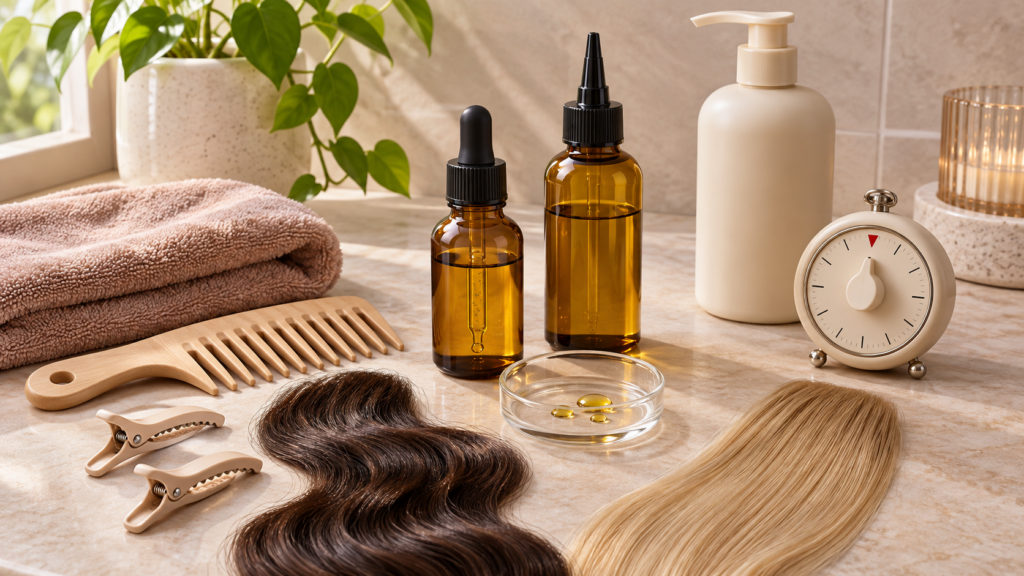
Buying framework
Build the Oil Step Around the Wash
Start with the routine constraint instead of the featured oil. Timing, placement, contact, and removal determine whether the product saves effort or adds it.
Choose the wash-day role: Set one job: pre-wash lubrication, detangling support, damp-hair sealing, or a dry-hair finish.
Place it precisely: Scalp, roots, mid-lengths, and ends tolerate different amounts and create different cleansing consequences.
Set a time boundary: Use the labeled contact period for pre-wash products. Longer contact is not automatically more useful.
Plan the next cleansing step: Estimate shampoo passes, water exposure, and whether residue will interfere with conditioner or styling.
Define the dry result: Judge softness, movement, shine, root freshness, tangling, and transfer only after the routine is complete.
Who this is for
Match the Oil to Your Wash Pattern
Frequency and sequence matter more than a broad hair-type label.
Frequent washers: Choose small, controllable doses that do not require an extra cleansing pass or delay drying.
Long wash intervals: Prioritize residue control and fabric transfer because a leave-on dose remains in the routine longer.
Pre-wash users: Look for explicit timing and rinse directions, a nozzle or dropper, and a dose that the usual shampoo can remove.
Layered curl routines: Decide whether oil follows a water-based leave-in, seals a cream, or finishes dry hair. Avoid adding it blindly to every layer.
Fine or easily coated hair: Begin on ends with the smallest repeatable amount and protect root volume until the dry result is known.
What to pay attention to
Compare Timing, Formula, and Package
The useful specification is the one that changes a wash-day decision.
Before shampoo
Check labeled contact time, scalp comfort, sectioning control, and whether the normal cleanser removes the measured dose.
After rinsing
Check detangling, conditioner slip, drying time, root freshness, movement, residue, and fabric transfer.
Pre-wash or leave-on direction: The label should make timing and rinse status clear. Do not infer scalp use from a picture of an oil dropper.
Dose control: Pumps, droppers, and narrow nozzles support repeatable trials. Wide openings make accidental overapplication easier.
Spread and weight: A product that spreads quickly can cover more hair with less. Compare finished movement rather than words such as lightweight.
Fragrance and aromatic oils: Scalp contact and long wear increase exposure. Choose within your tolerance and never apply concentrated essential oil neat.
Water and shampoo compatibility: A generous oil layer may change lather, rinse time, and conditioner feel. Test it with the actual cleanser used on wash day.
Storage and stability: Close the bottle, follow storage directions, and replace oil that develops a markedly changed odor, color, or texture.
Avoid these traps
Avoid Wash-Day Planning Errors
Most failed oil routines come from an undefined step or an unmeasured dose.
Oiling every zone at once: Scalp and ends need separate trials so irritation, residue, and improved slip have identifiable causes.
Extending contact overnight: Overnight use adds exposure and transfer. Use it only when directions support it and the cleanup fits the routine.
Adding shampoo until squeaky: Repeated harsh cleansing can erase the intended benefit. Reduce the next oil dose before escalating wash intensity.
Layering without an order: Oil before water-based products can change wetting and spread. Set a sequence and keep it stable during the trial.
Judging wet hair only: Wet slip can look successful while dry hair becomes flat or tacky. Finish the cycle before deciding.
Treating oil as a cure: Cosmetic oil can change grooming feel but does not diagnose scalp disease or explain sudden or patchy shedding.
Decision guidance
Use a Five-Step Wash-Day Check
Route the purchase through the routine you will actually repeat.
Name the step: Pre-shampoo, damp-hair, or dry finish.
Choose the zone: Scalp, lengths, ends, or a deliberately separated combination.
Measure the amount: Count drops or pumps and record hair section size.
Set contact and removal: Follow the directed time and use the planned cleanser rather than improvising.
Review the full cycle: Keep the product only if the dry result and next-wash burden both improve.
Ownership & compatibility
Run One Controlled Wash Cycle
A single-variable trial reveals fit faster than changing the whole routine.
Record the baseline: Note wash interval, shampoo passes, detangling time, drying time, root freshness, end roughness, and transfer.
Start with the lowest directed dose: Measure it and keep placement consistent.
Hold other products steady: Use the same shampoo, conditioner, leave-in, and styling amounts for the comparison.
Inspect after drying and before the next wash: Record movement, shine, residue, scalp comfort, tangling, and how soon cleansing feels necessary.
Use a stop rule: Rinse and discontinue for burning, swelling, sores, or worsening irritation; seek appropriate care when symptoms persist.
FAQ
Wash-Day Oil Questions
These answers keep timing, dose, and cleanup connected.
Should hair oil go before or after shampoo?
How much oil should I use before washing?
How long should pre-wash oil stay on?
Can I leave hair oil on overnight?
Do I apply oil to wet or dry hair?
Will hair oil make me shampoo twice?
Can I use oil instead of conditioner?
How do I prevent greasy roots on wash day?
How often should I use hair oil?
Readiness check
Choose the Oil That Fits the Cycle
A useful oil step improves the result without making wash day harder to repeat.
Set the role: Know when oil enters the routine.
Measure the dose: Count drops or pumps.
Control placement: Keep scalp and lengths distinct.
Check removal: Use the normal cleanser as the test.
Judge the whole cycle: Include the dry finish and next wash.
Wash-Day Shortcuts
Jump to the choice that changes timing or cleanup.
Six Wash-Day Checks
Use these before the first full cycle.
- Role: Pre-wash, damp, or dry finish?
- Zone: Scalp, lengths, or ends?
- Dose: How many drops or pumps?
- Contact: How long before rinsing?
- Removal: Will the normal shampoo remove it?
- Dry result: What improvement keeps it?
Useful Routine Terms
Plain language for oil timing and cleanup.
When a Top 10 List Helps
Use rankings after the wash-day role is fixed.
- Timing is known: Filter pre-wash products separately from finishers.
- Dose is measurable: Compare pump, dropper, and nozzle control.
- Cleanup is realistic: Include shampoo effort and rinse time.
- The result is observable: Use movement, slip, shine, and root freshness.
Already have a shortlist? A Comparison can help resolve the remaining tradeoffs.
When a Comparison Helps
Compare finalists within the same wash-day step.
- Sequences differ: Compare before-shampoo and leave-on directions.
- Packages differ: Compare the smallest repeatable amount.
- Wear times differ: Compare contact, transfer, and scalp exposure.
- Removal differs: Compare residue after the normal cleanser.
Still discovering options? Start with a Top 10 to build a relevant shortlist.