
Hair Oils Buying Guide: How to Choose the Right One
Hair oil is not one product type. A light finishing blend, a richer plant-oil mix, and a scalp treatment can share the name while behaving differently. Choose by job first: detangling, smoothing ends, adding shine, pre-wash lubrication, or a labeled scalp routine. Then compare formula base, dispenser, fragrance, application zone, and the smallest useful dose.
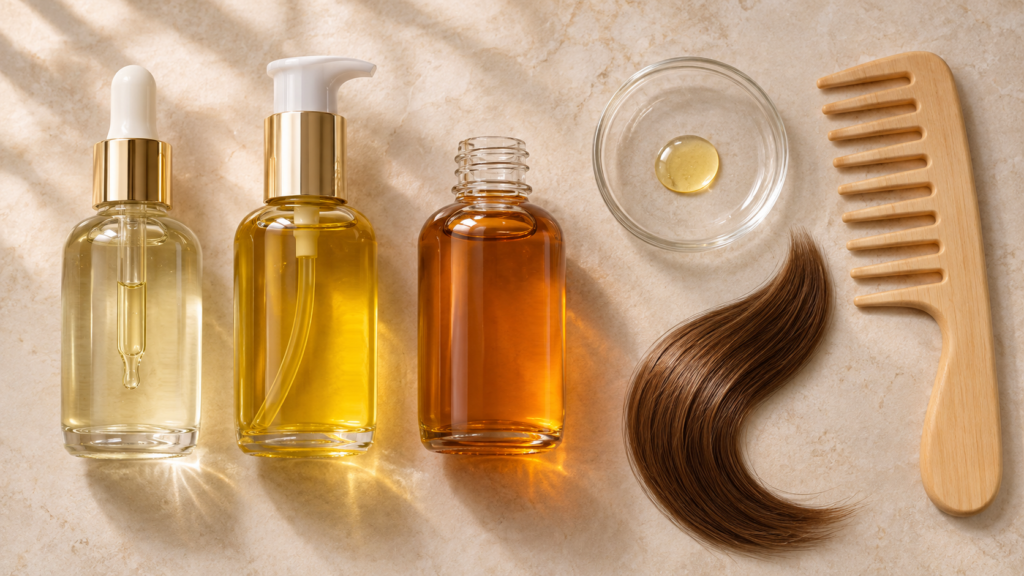
Buying framework
Start With the Job, Then Choose the Oil
The result and application zone narrow the field faster than a fashionable ingredient.
Define the job: Choose one primary task: pre-wash lubrication, wet-hair detangling, dry-end smoothing, shine finishing, or labeled scalp use.
Separate lengths from scalp: A formula that suits porous ends may feel excessive near roots; scalp use needs directions that support it.
Pick a finish: Decide whether you want nearly dry slip, visible gloss, or a richer pre-wash coating.
Set the dose ceiling: Fine, short, or easily coated hair benefits from a controlled dropper or pump.
Fit the routine: Count leave-in, heat protectant, cream, wash frequency, and cleansing strength before adding another film.
Who this is for
Match the Formula to Your Hair and Habit
Density, strand width, styling routine, and application discipline are more useful than a single hair-type label.
Fine or low-density hair: Favor fast spread, precise dispensing, and a low starting dose below the ear.
Dry, coarse, or high-friction lengths: Look for sustained slip and enough working time to cover sections without flooding the roots.
Curly or coily routines: Choose for a defined step: breaking a cast, sealing over leave-in, refreshing ends, or pre-wash detangling.
Heat-styled hair: Treat heat protection as a separate labeled claim; shine does not prove protective performance.
Fragrance-sensitive shoppers: Check the current full list and scent description because a small dose can linger near the face.
What to pay attention to
Compare the Details That Change Daily Use
Useful specifications describe handling and finish, not universal transformation.
Signals of a lighter finish
Fast spread, small controlled dose, dry-touch positioning, and mid-lengths-to-ends directions.
Signals of a richer treatment
Long contact time, section-by-section application, pre-wash directions, and generous coverage.
Formula base: Silicone-forward serums often emphasize slip and a drier finish; plant-oil-heavy blends may feel richer.
Viscosity and spread: Thin oils travel quickly and are easy to over-apply; thick oils stay placed but need sectioning.
Dispenser control: Droppers allow counting, pumps are quick but vary in output, and open-neck bottles are least repeatable.
Application directions: Verify wet, dry, pre-wash, scalp, or lengths-only use.
Packaging and storage: A secure closure and protection from light, heat, and air help preserve sensitive blends.
Bottle size and cost per use: A small bottle can last when one drop is enough; compare realistic applications, not volume alone.
Avoid these traps
Avoid Common Hair-Oil Mismatches
Amount, zone, and routine position usually matter more than a hero ingredient.
Buying by hero oil alone: A named oil does not reveal finished feel, concentration, or dispenser control.
Starting with a full pump: Begin with the smallest measurable amount and add only after checking movement.
Applying at the roots by default: Unless directions support scalp use, begin on the driest ends.
Confusing shine with moisture: Oil changes surface feel but does not replace water-based conditioning for every routine.
Assuming heat protection: Use an explicit heat-protection product when styling requires it.
Ignoring total buildup: Adjust oil beside masks, leave-ins, creams, sprays, and the cleansing plan.
Decision guidance
Use a Five-Step Buying Check
Turn a crowded shelf into comparable choices.
Step 1: name the job: Write the result and application zone you need most.
Step 2: choose finish weight: Select light, medium, or rich for strand width, density, and coating tolerance.
Step 3: inspect dose control: Prefer a dispenser that makes your likely amount repeatable.
Step 4: verify directions: Confirm wet or dry use, scalp suitability, heat claims, fragrance, and exclusions.
Step 5: compare real value: Estimate drops or pumps per use and expected frequency.
Ownership & compatibility
Test With a Dose Ladder
A controlled trial shows whether the oil improves feel without erasing movement.
Start on familiar hair: Keep the rest of the routine stable.
Use the smallest dose: Count one drop or partial pump and record placement.
Warm and distribute: Spread across palms and fingers before touching porous areas.
Check now and later: Assess slip, shine, separation, residue, scent, and next-day feel.
Adjust one variable: Change dose, placement, or timing before rejecting the formula.
FAQ
Hair Oil Questions
Quick answers for choosing and using hair oil.
Is hair oil the same as hair serum?
Which oil suits fine hair?
Wet or dry hair?
Can oil replace conditioner?
Can I use it on my scalp?
Does coconut oil suit everyone?
How do I avoid greasiness?
Is oil enough for heat protection?
How often should I use it?
Readiness check
Choose for Control, Placement, and Finish
A useful oil earns its place through repeatable use.
Name the job: Buy for one primary use.
Choose the finish: Match weight to hair and preference.
Control the dose: Favor repeatable dispensing.
Respect the zone: Keep scalp and lengths needs separate.
Review the routine: Let movement, residue, and next-day feel guide changes.
Hair-Oil Shortcuts
Jump to the decision that changes your match.
Six Oil Checks
Use these before choosing a bottle.
- Job: Define the result.
- Zone: Separate scalp from lengths.
- Finish: Choose light, medium, or rich.
- Dose: Prefer repeatable dispensing.
- Directions: Verify wet, dry, heat, or scalp use.
- Routine: Count other leave-in layers.
Useful Hair-Oil Terms
Plain language for comparing formulas.
When a Top 10 List Helps
Rank after setting criteria.
- Job fixed: Separate finishing from pre-wash oils.
- Finish defined: Filter by light, medium, or rich.
- Dose controlled: Compare droppers, pumps, and open necks.
- Directions fit: Confirm placement and timing.
Already have a shortlist? A Comparison can help resolve the remaining tradeoffs.
When a Comparison Helps
Compare repeatable daily use.
- Bases differ: Compare finished feel.
- Dispensers differ: Estimate the smallest dose.
- Uses differ: Separate wet, dry, scalp, and pre-wash.
- Value differs: Calculate applications per bottle.
Still discovering options? Start with a Top 10 to build a relevant shortlist.