
Hair Serums Buying Guide: How to Choose the Right One
Hair serum can mean a silicone-rich finisher, a water-based leave-in, or a scalp product. Start with the job and application zone, then compare formula base, finish, dose, layering order, and wash-out behavior. The best match is the one that improves control without flattening hair, irritating skin, or duplicating another styling step.
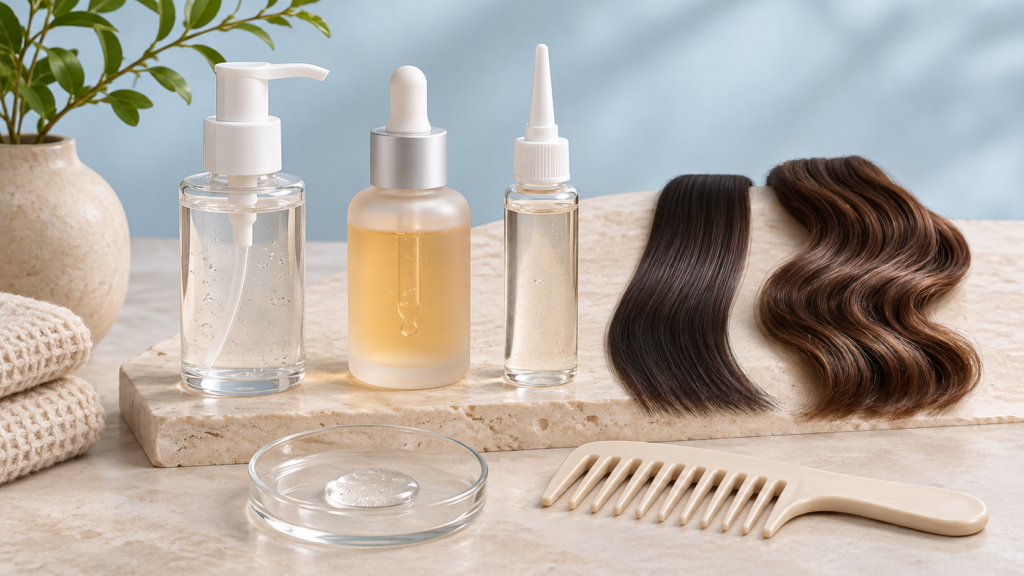
Buying framework
Start With the Serum’s Actual Job
The word serum describes a texture and package more than a single result. Define the target, placement, and finish before reading featured ingredients.
Choose strand or scalp placement: A mid-length finisher and a scalp serum have different bases, exposure, and directions. Treat them as separate product types even when both use droppers.
Name one primary result: Decide whether you need frizz control, shine, heat-styling support, detangling slip, or scalp hydration. One formula may help several, but its strongest job should match yours.
Account for hair density and strand behavior: Fine or low-density hair usually exposes excess coating quickly. Thick, coarse, curly, or porous hair may accept a richer film but still needs a measured starting dose.
Place it in the routine: A damp-hair leave-in sits under later stylers; a dry-hair finisher sits on top. Scalp products follow their own frequency and contact directions.
Define an acceptable finish: Choose the stopping point in advance: smoother ends with movement, controlled flyaways, or a comfortable scalp. More gloss is not automatically a better result.
Who this is for
Match the Formula to the Use Pattern
The useful buyer groups are defined by where coating appears, how hair is styled, and what the serum must coexist with.
Fine hair that loses volume: Look for a controllable pump or dropper and a low starting dose. Apply below the ears first, because root-adjacent coating can turn smoothing into collapse.
Thick, coarse, or porous lengths: A richer silicone, ester, or emollient blend can improve slip and surface alignment. Judge it by movement and residue after drying, not by thickness in the palm.
Humidity-driven frizz: Favor a formula positioned for a continuous smoothing film and follow the directed amount. Spot-treating only visible flyaways may not give even coverage through exposed lengths.
Frequent heat styling: Choose a serum only when the label explicitly states heat protection and gives application directions. A glossy finish or silicone ingredient alone does not establish a protection claim.
Scalp-focused use: Use products specifically directed to the scalp, with clear frequency and leave-on guidance. Cosmetic hydration or comfort claims do not replace assessment of persistent pain, sores, marked redness, or sudden shedding.
What to pay attention to
Read the Base, Film, and Dispenser Together
Ingredient order suggests what carries the formula, while the package determines how repeatably you can dose it. Neither tells the full story alone.
Formula and finish lens
What base creates the slip or film, and does the dried result preserve movement, volume, and touch?
Placement and dose lens
Where is the formula directed, how precisely can it be measured, and what happens when it is layered or reapplied?
Silicone-led finishers: Silicones can reduce friction, improve combing, and add gloss by forming a surface film. Different blends vary in spread, weight, volatility, and wash-out feel.
Water-based leave-ins: Water near the top of the list often signals a lighter fluid or gel format. Humectants, conditioning agents, and film formers then shape tack, softness, and humidity response.
Oils and esters: These can increase slip and richness, but a featured botanical oil may be only one part of the blend. Compare the finished texture rather than assuming it behaves like pure oil.
Proteins and bond-language ingredients: Small amounts may support feel or film properties, but front-label repair language can overstate what a leave-on serum changes. Match claims to directions and avoid treating cosmetic improvement as permanent structural repair.
Fragrance and scalp exposure: Scent may be pleasant on lengths yet objectionable with daily use or skin contact. Scalp placement raises the importance of the complete ingredient list and stop instructions.
Pump, dropper, or nozzle: Pumps suit repeatable hand dosing, droppers allow small increments, and nozzles target scalp parts. The best dispenser is the one that prevents the common overdose for your placement.
Avoid these traps
Avoid Serum Buying Traps
Most poor matches come from trusting the category label, hero ingredient, or wet feel instead of the dried result and routine fit.
Treating every serum as interchangeable: Scalp drops, heat-protective leave-ins, and shine finishers solve different problems. Confirm the labeled placement and timing before comparing ingredients.
Using a full pump as the minimum: Pump output varies by package. Start below the directed maximum, emulsify between the palms when appropriate, and add only after checking coverage.
Applying too close to the roots: A strand serum can migrate upward during brushing or sleep. Begin on ends and mid-lengths unless the product specifically directs root or scalp use.
Reading the featured ingredient in isolation: Argan oil, keratin, peptides, or hyaluronic acid do not predict the finished feel by themselves. The carrier system, film formers, fragrance, and dose determine the experience.
Assuming shine means heat protection: A smooth film can look protective without carrying a tested heat claim. Use only products that explicitly state the intended heat-styling use and follow their temperature or application guidance.
Stacking duplicate smoothing products: Leave-in conditioner, cream, oil, and serum may all add coating. Add one step at a time so limpness, tack, or buildup can be traced to the correct layer.
Decision guidance
Choose by Finish, Placement, and Routine
Use these routes to narrow the category before comparing marketing claims.
If volume disappears first: Choose the lightest controllable strand formula and test one small dose on damp ends. Favor even spread over a richer texture.
If roughness and tangling dominate: Prioritize slip, coverage, and a flexible dried film. A richer blend may suit the lengths if it does not leave tack or force extra shampooing.
If humidity is the trigger: Look for explicit anti-frizz positioning and directions for complete, even application. Judge performance across a full day rather than immediately after styling.
If heat tools drive the purchase: Make the explicit heat-protection claim non-negotiable, then compare finish, layering compatibility, and whether the directed dose reaches all exposed sections.
If the concern begins at the scalp: Move to a scalp-directed serum and follow its contact and frequency instructions. Persistent or worsening scalp symptoms and sudden or patchy hair loss deserve appropriate professional guidance rather than a cosmetic product swap.
Ownership & compatibility
Build a Repeatable Serum Trial
A short controlled trial reveals dose and layering problems that an ingredient list cannot predict.
Keep the starting dose fixed: Count drops or pumps and note hair dampness. A repeatable amount makes the next adjustment meaningful.
Change one layer at a time: Test the serum without adding a new cream, oil, or spray in the same wash cycle. That isolates coating, tack, and hold interactions.
Track the dried result: Check volume, movement, flyaways, end roughness, and touch after the hair is fully dry. Wet slip can exaggerate the apparent benefit.
Inspect the next wash: Notice whether roots feel coated, lengths need extra cleanser, or residue transfers to brushes and pillowcases. Wash-out burden is part of routine fit.
Protect the formula and dispenser: Close the cap, store as directed, keep scalp nozzles from touching skin, and stop using a product whose odor, color, or texture changes markedly.
FAQ
Hair Serum Questions Before You Buy
These answers resolve common uncertainties about formula, timing, placement, and claims.
What is the difference between hair serum and hair oil?
Should hair serum go on wet or dry hair?
Can I put hair serum on my scalp?
Will serum make fine hair greasy or flat?
Does every hair serum protect against heat?
Can hair serum repair split ends permanently?
How much hair serum should I use?
Can I layer serum with leave-in conditioner or styling cream?
How do I know a serum is building up?
Readiness check
Choose the Serum You Can Dose and Place Correctly
Start with the product type, not the featured ingredient. Then choose the lightest formula that delivers the needed result without undermining movement, comfort, or the rest of the routine.
Separate scalp and strand products: Placement determines the relevant formula, dispenser, exposure, and directions.
Match the claim to the job: Frizz, shine, heat styling, detangling, and scalp care require different evidence and use patterns.
Judge the dried finish: Slip in the palm matters less than volume, movement, touch, and residue after drying.
Control dose before changing products: Drops and pumps are adjustable; an overdose can make a suitable formula look wrong.
Count wash-out and layering costs: The right serum should improve the target result without forcing an unnecessarily complicated cleansing or styling routine.
Serum-Choice Shortcuts
Jump to the decision that changes the formula or routine.
Six Serum Checks
Use these before the first full application.
- Zone: Scalp, roots, mid-lengths, or ends?
- Job: Frizz, shine, heat, slip, or scalp care?
- Base: Water, silicone, ester, oil, or a blend?
- Dose: How many drops or pumps?
- Layer: What goes beneath or above it?
- Finish: What dried result counts as enough?
Useful Serum Terms
Plain language for formula and finish decisions.
When a Top 10 List Helps
Use rankings after defining the result and placement.
- The job is fixed: Filter scalp, heat, frizz, and shine formulas separately.
- Hair behavior is known: Shortlist for volume preservation or richer coating.
- Dose matters: Compare pump, dropper, and nozzle control.
- The routine is mapped: Check how each finalist layers and washes out.
Already have a shortlist? A Comparison can help resolve the remaining tradeoffs.
When a Comparison Helps
Compare finalists on the same serum-use variables.
- Bases differ: Compare water, silicone, ester, and oil-led films.
- Claims differ: Separate cosmetic smoothing from explicit heat use.
- Finishes differ: Compare volume, movement, touch, and gloss.
- Cleanup differs: Compare residue, transfer, and wash-out effort.
Still discovering options? Start with a Top 10 to build a relevant shortlist.