
Hair Spray Buying Guide for Color-Treated Hair Needs
Color-treated hair does not need a special hold scale; it needs a spray whose film, finish, and removal fit the condition of the hair and the wash routine that protects the color. Compare control with flexibility, residue, comfort, and the amount of cleansing needed to reset the style.
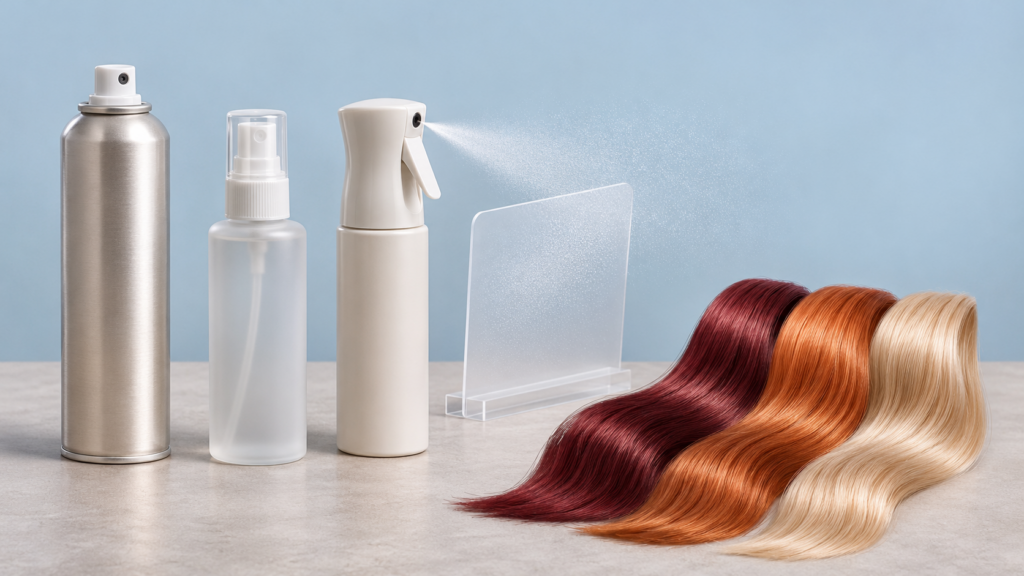
Buying framework
Protect the Routine, Not Just the Shade
Color longevity depends on the full care routine. Hair spray belongs in that system when its hold can be removed without turning every style into a heavy-cleansing event.
Start with current hair condition: Freshly colored, lightened, porous, or heat-stressed lengths may feel rough sooner under a rigid film. Let dryness, breakage, and surface feel set the tolerance for stiffness and brushing—not the shade name.
Define the styling job: Separate a light finishing veil, root support, flyaway control, and event-level setting. A narrow job usually needs less film, which limits residue and the effort required to remove it.
Set the acceptable reset: Count how often the hair is washed, which cleanser is normally used, and whether spray must brush out between wash days. Strong hold is a poor bargain when it repeatedly forces an earlier or harsher wash.
Choose finish deliberately: Gloss can make color look more dimensional, while excess shine can expose oily roots or coated strands. Matte texture may add grip but can make dry, pale, or highly lightened hair look duller.
Treat claims as starting points: Words such as color-safe, UV-protective, moisturizing, or humidity-resistant do not reveal dose, film feel, or washout. Use them to form a shortlist, then judge the complete formula and instructions.
Who this is for
Match the Spray to the Color-Care Pattern
The useful buyer profiles come from processing history, styling frequency, and wash cadence rather than hair color alone.
The low-wash-frequency wearer: Prioritize brushability, low residue, and clean layering so the style can be refreshed without accumulating a brittle or dull film before the next planned wash.
The lightened-lengths wearer: Look for a fine mist and flexible set that do not exaggerate roughness. Apply where control is needed instead of saturating the most porous ends.
The vivid-color wearer: Choose enough control for the style with the easiest reliable removal in the existing routine. Avoid assuming a stronger film protects pigment simply because it feels more substantial.
The heat-styled finisher: Keep heat protection and hold as separate jobs unless the label clearly supports both. Apply each product as directed so layering does not create tack or uneven surface shine.
The scalp-sensitive color client: Fragrance, alcohol, propellants, and other ingredients can matter to individual comfort. Compare the full ingredient list, ventilation directions, and a controlled first use instead of relying on a broad color-safe label.
What to pay attention to
Read the Film, Finish, and Washout
The best comparison translates package language into what will happen during wear and at the next reset.
Wear lens
Does the film preserve the style without making processed lengths look dull, feel rigid, or collect visible residue?
Reset lens
Can the product be brushed, refreshed, and washed out within the normal color-care routine?
Mist pattern and dose: A fine, broad mist can distribute a thin film without wet patches; a focused spray offers precision at roots or pins. Delivery affects coating more directly than a color-care phrase on the front label.
Film flexibility: Flexible polymers let strands move and are less likely to make already dry lengths feel rigid. Firmer films provide stronger structure but may fracture, catch during brushing, or demand more thorough cleansing.
Hold and humidity resistance: Humidity control can help preserve a blowout or curl set, but stronger resistance may bring more film or tack. Buy for the exposure that actually disrupts the style rather than maximum protection by default.
Finish and color appearance: A natural or satin finish can support shine without making roots look coated. Very glossy films emphasize reflection; matte or texturizing finishes can mute luminosity, especially on lightened or high-contrast color.
Alcohol, fragrance, and comfort: Ingredient position alone does not predict the finished feel, and not every alcohol performs the same role. Use the full formula, directions, personal sensitivity history, and actual dry feel to compare options.
Residue and removal: Brushability, flaking, water resistance, and cleanser compatibility determine how disruptive removal will be. A spray that releases in the normal wash is often easier to fit into a color-maintenance routine.
Avoid these traps
Avoid Color-Safe Shortcuts
A reassuring label can hide the actual tradeoff. Compare application, film behavior, and removal before treating any one claim as decisive.
Buying by the front label alone: Color-safe is not a standardized description of hold, residue, comfort, or cleansing needs. Read directions and ingredients, then compare the product on the specific job it must do.
Mistaking stiffness for protection: A rigid coating can preserve shape, but it does not repair or shield color-treated hair by default. Extra stiffness may instead increase tangling and brushing friction on vulnerable lengths.
Coating every strand equally: Roots, mids, ends, and hairline often need different amounts. Direct firm hold at structural points and use a lighter veil elsewhere to avoid needless buildup on porous ends.
Layering shine over residue: Adding glossy spray can temporarily brighten dull-looking hair while increasing coating. If color looks muted after several uses, reset the buildup rather than repeatedly covering it.
Using spray as heat protection: Hold products and heat protectants have different jobs. Do not assume a hair spray protects from hot tools unless the manufacturer provides explicit directions for that use.
Changing cleanser to serve the spray: A product that regularly requires aggressive removal may not suit a color-conscious wash plan. Change the spray or dose before reorganizing the entire routine around its residue.
Decision guidance
Choose by the First Compromise
The earliest unwanted change shows which product variable to adjust while keeping the rest of the routine stable.
If color looks dull before wash day: Reduce coating, target the spray more narrowly, or choose a cleaner natural finish. Dullness after repeated applications points first to residue or finish, not necessarily fading.
If lightened ends feel hard: Keep firm hold away from the ends, use a more flexible film, or shorten the burst. Preserve structure at roots and pins instead of treating fragile lengths as the anchor.
If humidity defeats the style: Increase resistance or reinforce exposed sections while monitoring tack and removal. The goal is enough barrier for the climate, not the heaviest film available.
If the scalp or airways feel irritated: Stop use and follow the product warning. Compare fragrance, aerosol delivery, ventilation needs, and ingredients before another trial; severe or persistent symptoms warrant appropriate professional advice.
If removal disrupts the routine: Try a lower dose or more brushable formula. When normal cleansing cannot remove the film comfortably, the ownership cost outweighs a modest gain in hold.
Ownership & compatibility
Keep Application and Removal Predictable
Consistent trials make it easier to separate fading, dryness, residue, and styling failure.
Test after a routine wash: Start with clean hair and change one variable at a time. Old film, dry shampoo, oil, and heat protectant can distort both hold and shine.
Protect the most porous areas: Apply fewer passes to ends that absorb product quickly. Use controlled distance and movement so a fine mist does not become a concentrated wet spot.
Track buildup by behavior: Note declining shine, gritty feel, flakes, tack, or slower wetting in the shower. These cues are more useful than an arbitrary number of uses.
Clean and store the package safely: Follow label directions for nozzle care, ventilation, heat, flames, storage, and disposal. A sputtering nozzle changes dose and distribution even when the formula is unchanged.
Reassess after color service: Processing can change porosity, texture, and styling needs. A spray that suited untreated hair may require a lighter dose or different film after lightening or repeated coloring.
FAQ
Hair Spray Questions for Color-Treated Hair
These answers separate color-care priorities from claims a styling product cannot establish on its own.
Does hair spray fade hair color?
What does color-safe hair spray mean?
Should color-treated hair avoid alcohol in hair spray?
Is flexible hold better for color-treated hair?
Can hair spray make dyed hair look dull?
Does hair spray protect color from UV exposure?
How do I remove hair spray without over-washing?
Can I use hair spray after a salon color appointment?
When should I stop using a hair spray?
Readiness check
Buy for a Clean Reset
The right spray supports the style without forcing color-treated hair into extra stiffness, buildup, or unnecessary cleansing.
Name the styling job: Choose a finishing veil, root support, flyaway control, or firm set.
Respect current condition: Use less film where processed hair is driest or most porous.
Choose the finish: Balance shine with the risk of coated roots or muted color.
Test the compromise: Watch for dullness, hardness, irritation, flakes, or early collapse.
Confirm the reset: Keep the product only if it leaves within the normal wash plan.
Color-Treated Hair Spray Shortcuts
Jump to the choice that affects wear or reset.
Six Color-Care Spray Checks
Use these before adding another pass.
- Job: Name the section that needs control.
- Condition: Notice dryness and porosity first.
- Film: Choose flexible or firm intentionally.
- Finish: Check shine without coating.
- Buildup: Watch layering across wash days.
- Reset: Confirm normal cleansing removes it.
Useful Color-Care Spray Terms
Plain language for the dried film and reset.
When a Top 10 List Helps
Use rankings after defining condition and reset.
- The job is clear: Separate light finishing from firm setting.
- The film is clear: Prioritize flexibility or structure deliberately.
- The finish is clear: Choose shine without unwanted coating.
- The reset is clear: Filter for residue and washout that fit.
Already have a shortlist? A Comparison can help resolve the remaining tradeoffs.
When a Comparison Helps
Compare finalists with dose and wash routine held steady.
- Mist differs: Check evenness and porous-end saturation.
- Film differs: Compare movement, hardness, and flakes.
- Finish differs: Observe shine, dullness, and coated roots.
- Removal differs: Check brushing, buildup, and normal washout.
Still discovering options? Start with a Top 10 to build a relevant shortlist.