
Hair Spray Buying Guide for Wash Day Planning
Hair spray can solve today’s styling problem while creating tomorrow’s wash-day problem. Plan the purchase around your full cycle: how often you shampoo, how many refreshes you expect, where residue accumulates, and how easily the film releases. The best fit provides enough support without forcing an earlier wash than your hair and schedule need.
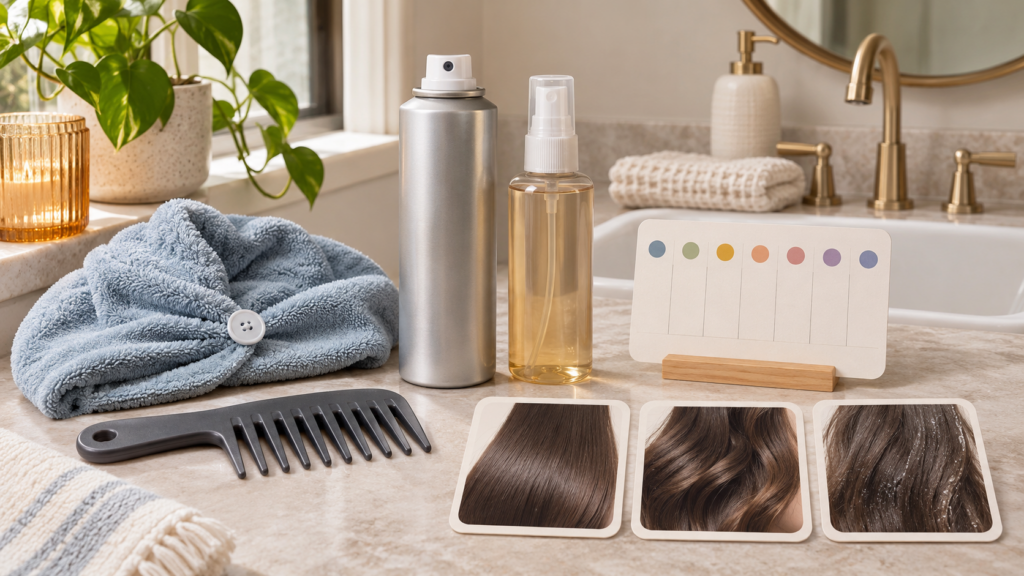
Buying framework
Plan the Whole Wash-to-Wash Cycle
The right spray is not only the one that holds on day one. It should fit every step from clean hair through refreshes and eventual cleansing.
Start with the interval: Count the typical days between shampoos and the number of styled days inside that window. A formula used once before washing can be richer or firmer than one layered through several refreshes.
Assign the spray a job: Separate working grip, final hold, root support, and flyaway control. Targeted jobs use less product than an all-over veil, which can reduce the amount that must be brushed or cleansed away.
Budget the layers: Decide whether you need one application or repeated touch-ups. Each pass adds film, so a spray that feels light initially may become tacky, dull, or rigid after the third refresh.
Protect the next style: Think about what happens tomorrow: brushing, heat-free reshaping, a ponytail, or another curl set. A brushable flexible film preserves more options than a rigid coat that fractures when disturbed.
Define the wash-day limit: Choose the residue, tangling, and cleansing effort you will tolerate. If the product routinely makes you shampoo early or cleanse twice, its hold is costing more time than the label suggests.
Who this is for
Match the Formula to Your Wash Rhythm
Wash frequency matters, but so do placement, refresh habits, scalp comfort, and the styles you rotate between cleanses.
The frequent washer: If hair spray is usually followed by shampoo that evening or the next morning, fast set and firm control may matter more than multi-day brushability. Removal still needs to fit the cleanser you normally use.
The multi-day refresher: Prioritize a fine mist, low tack, clean layering, and a film that can be brushed or reshaped. Test whether the second and third light applications change feel more than they improve hold.
The targeted user: Root lift, hairline control, or pin support can be applied only where needed. Precision delivery limits residue elsewhere and keeps more of the hair available for a different next-day style.
The protective-style planner: For sets, wraps, or pinned styles worn across several days, consider friction, re-covering, and selective reinforcement. A firm all-over coat can make later adjustment and detangling unnecessarily difficult.
The buildup-sensitive routine: If residue quickly makes hair look dull, feel coated, or lose movement, choose lower-deposit applications and fewer passes. Keep scalp symptoms separate from ordinary cosmetic buildup and stop use if irritation occurs.
What to pay attention to
Read the Film for Layering and Release
Hold labels describe only part of the wash-day decision. Delivery, dried-film behavior, and removal determine whether the product fits a multi-day routine.
Cycle lens
How many applications, disturbances, and style changes occur before the next planned shampoo?
Removal lens
Can the accumulated film be detangled and cleansed with the products and time already built into wash day?
Mist distribution: A broad fine mist spreads a small dose over a large area; a narrow or wetter pattern concentrates product. Even coverage can reduce hot spots, while precision is useful when only roots or edges need support.
Film flexibility: A flexible film bends during brushing, wrapping, or restyling. Firmer films preserve structure but can resist manipulation, create comb marks, or break into visible particles when disturbed.
Layering behavior: Look for guidance about workable or brushable use, then judge each additional coat after it dries. Useful layering increases support without a disproportionate rise in tack, clumping, dullness, or stiffness.
Finish over time: Shine, matte effect, and strand separation can change as natural oils and new product accumulate. A finish that looks polished on clean hair may read as coated after several days.
Brush-out and transfer: A film that releases cleanly from the hair may simplify a refresh, while one that transfers to brushes, pillowcases, or hands creates extra maintenance. Brushability is not the same as complete removal.
Cleanser compatibility: Hair spray ingredients and doses vary, so no single wash rule fits every product. Use package directions, start with your normal shampoo, and reserve stronger or repeated cleansing for residue that actually remains.
Avoid these traps
Avoid Borrowing Trouble From the Next Wash Day
Most cycle problems begin with unnecessary coverage, rushed layering, or treating residue as proof that more cleansing is always better.
Coating hair for a local problem: An all-over pass adds film everywhere when only the hairline, crown, or pinned section needs help. Apply to the failing area or to a brush when the product directions allow controlled placement.
Refreshing before checking the film: Oil, humidity, flattened shape, and lost hold need different responses. Adding spray to hair that is already coated can increase stiffness without restoring the style.
Stacking wet passes: New coats are hard to judge before the prior film sets. Let a small application dry, move or brush the section as planned, and reinforce only where support is still missing.
Using maximum hold by default: A stronger film can be useful for event structure, but everyday rigidity may shorten the usable cycle by limiting brushing and restyling. Match hold to the longest realistic demand, not the highest label number.
Scrubbing harder at every wash: More aggressive cleansing is not automatically better. Follow product and cleanser directions, rinse thoroughly, and adjust only when residue remains; friction and repeated washing add their own handling burden.
Treating discomfort as buildup: Visible film and dullness are cosmetic residue issues; burning, swelling, breathing difficulty, or pronounced itching are not routine buildup. Stop use and seek appropriate help for serious or persistent reactions.
Decision guidance
Choose by the First Cycle Failure
The earliest point where the routine breaks tells you whether to change placement, dose, film type, or removal plan.
If day one is good but day two feels coated: Reduce the first application or move to targeted placement before changing hold. If a light coat still accumulates quickly, compare a more brushable, lower-tack film.
If refreshes stop improving the style: Brush or reset the shape before spraying again. When added film produces stiffness rather than support, stop layering and plan the next application for the weak area only.
If the next style will not form: Choose a more flexible product or use less on the first style. A multi-day routine needs enough release to change direction without flaking, clumping, or forcing a wash.
If wash day repeatedly takes two cleanses: Check dose, frequency, and placement first. Then compare a product whose removal directions align with your normal cleanser rather than making repeated cleansing the permanent workaround.
If strong hold is only occasionally necessary: Keep a lighter everyday spray for refresh cycles and reserve the firmer setter for events or exposed conditions. One product does not have to serve incompatible cycle demands.
Ownership & compatibility
Keep the Cycle Observable
Simple records and clean tools make it easier to tell whether the spray, the dose, or the routine caused the problem.
Trial on a normal cycle: Start a new spray after your usual wash and keep the styling pattern typical. Changing shampoo, tools, and spray at once makes buildup and removal impossible to attribute.
Count applications, not just days: A four-day interval with one targeted pass differs from four days of all-over refreshing. Note where and how often product was added before judging washout.
Clean brushes and tools: Transferred film can return to clean hair and make a new trial look coated early. Clean tools according to their material and manufacturer directions.
Watch the actuator: A clogged or sputtering nozzle deposits larger wet patches and changes the dose. Follow the package cleaning instructions rather than extending the burst to compensate.
Store and dispose safely: Hair sprays may be pressurized or flammable. Follow label directions for ventilation, heat, flame, storage, and disposal, and never puncture or incinerate an aerosol container.
FAQ
Wash-Day Planning Questions
Use these answers to set expectations for layering, refreshes, and removal without inventing a universal cleansing rule.
Should I wash my hair every time I use hair spray?
How many days can hair spray stay in my hair?
Can I add hair spray on the second or third day?
Does brushable hair spray wash out more easily?
Why does hair spray make clean hair look dirty later?
Can dry shampoo and hair spray be used in the same cycle?
Should I clarify after using hair spray?
How can I refresh without creating flakes?
What should I track during a hair-spray trial?
Readiness check
Buy for the Next Wash, Not Just Today
A wash-day-friendly hair spray earns its place by supporting the style while leaving the rest of the cycle manageable.
Map the interval: Count styled days and expected refreshes before shampoo.
Limit the footprint: Put film only where the style needs support.
Test the second day: Judge brushability, finish, and new-style options after sleep or wear.
Watch accumulation: Stop layering when feel worsens faster than hold improves.
Confirm removal: Make sure the final wash fits your normal cleanser, tools, and time.
Wash-Cycle Shortcuts
Jump to the choice that changes the days between shampoos.
Six Wash-Day Checks
Use these before adding another pass.
- Interval: Count days until the next shampoo.
- Job: Name the exact section that needs hold.
- Layers: Count applications, not only days.
- Movement: Check tomorrow’s style options.
- Residue: Notice dullness, tack, and transfer.
- Removal: Fit cleansing to actual buildup.
Useful Cycle Terms
Plain language for film accumulation and reset behavior.
When a Top 10 List Helps
Use rankings after defining your complete styling cycle.
- The interval is clear: Filter for single-day or multi-day use.
- The placement is clear: Prioritize broad mist or targeted control.
- The refresh plan is clear: Look for layering and brushability evidence.
- The wash limit is clear: Exclude options that demand unwanted cleansing effort.
Already have a shortlist? A Comparison can help resolve the remaining tradeoffs.
When a Comparison Helps
Compare finalists across the same number of applications.
- Day-one dose differs: Track coverage before judging residue.
- Day-two feel differs: Compare tack, dullness, and movement.
- Restyling differs: Brush and reset with the same method.
- Washout differs: Use the same cleanser and record extra steps.
Still discovering options? Start with a Top 10 to build a relevant shortlist.