
Hair Spray Buying Guide: How to Choose the Right One
Hair spray is easiest to choose when you stop treating hold as one number. The useful match combines droplet size, spray distance, flexibility, finish, climate demands, and washout. Start with the job—setting shape, controlling flyaways, or adding working grip—then choose the lightest film that keeps that job intact.
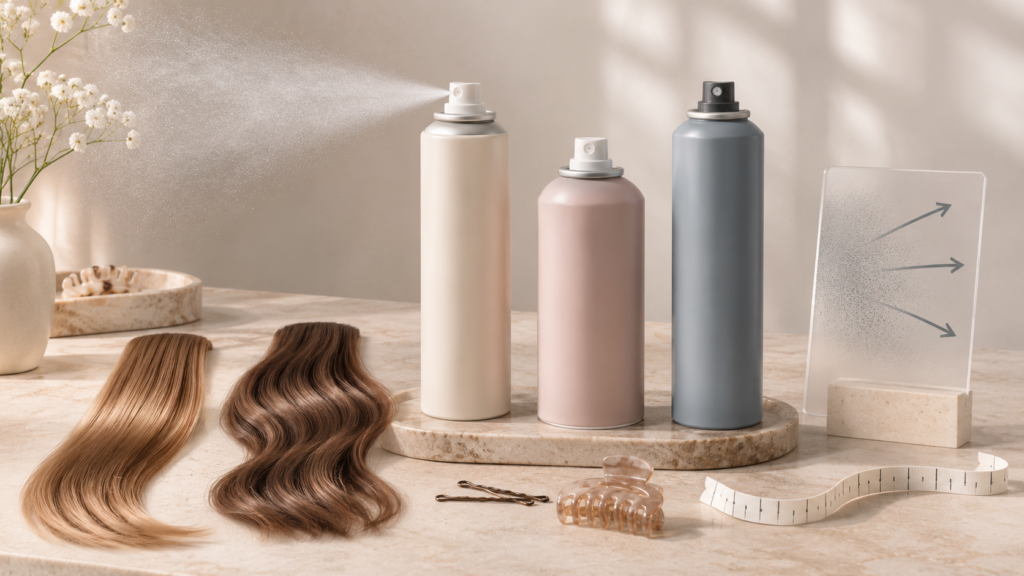
Buying framework
Choose the Job Before the Hold Level
A spray that succeeds at one styling stage can be frustrating at another. Define when and where the film must work.
Name the stage: Working sprays add grip while the style is still moving; finishing sprays preserve the completed shape. A flexible formula can do both lightly, but a firm fast-drying spray is less forgiving during construction.
Map the target area: Decide whether you need an all-over veil, lift at the roots, control at the hairline, or support around a curl set. The target determines the nozzle, distance, and section size that will feel manageable.
Set the movement limit: Touchable movement, controlled bounce, and locked structure are different outcomes. Choose the least rigid film that survives the expected motion so the style does not feel crispier than necessary.
Account for the environment: Humidity, wind, hats, heat, and long wear can change the required film. Increase protection only for the condition that causes failure instead of making maximum hold the everyday default.
Plan the reset: Consider how the spray brushes, flakes, layers, and washes out. A formula is not convenient if a minor restyle requires heavy reapplication or the next wash becomes disproportionately difficult.
Who this is for
Match the Spray to the Styling Pattern
Use conditions reveal more than broad hair labels because they show how the product will be applied and disturbed.
The flexible finisher: If the style should move naturally, prioritize a fine even mist, low tack, and brushable hold. The goal is shape memory without visible strand welding.
The structured-set wearer: Updos, sculpted waves, and event styles need stronger anchoring and deliberate placement. Look for controlled spray output so added hold does not turn into wet spots or a rigid halo.
The root-lift builder: Choose a nozzle that can reach small sections without soaking them. Fast drying helps preserve lift, but an overly concentrated blast can collapse the root before the film sets.
The flyaway controller: A broad, light mist or product applied first to a brush can tame surface hairs with less coating. Strong all-over hold is usually unnecessary for a narrow surface job.
The frequent restyler: Prioritize low residue, clean brushing, and predictable layering. A spray that becomes tackier each time it is disturbed will be hard to refresh through a full day.
What to pay attention to
Read the Mist, Film, and Finish
The label may name the hold, but the application system and dried film determine what you actually notice.
Application lens
Does the nozzle deliver the right amount to the intended section without wet spots, drift, or awkward reach?
Wear lens
Does the dried film provide enough shape memory while keeping the desired movement, finish, and reset behavior?
Mist width and droplet size: A broad fine cloud covers large areas evenly; a narrow wetter stream offers precision but can create concentrated patches. Match the pattern to the size of the section, not to an assumption that finer is always stronger.
Drying speed: Fast set helps preserve lifted or sculpted shapes, while a slightly longer working window allows repositioning. Too slow can dampen the style; too fast can freeze uneven placement before it is corrected.
Film flexibility: Flexible films bend with the hair and suit touchable styles. Firmer films resist movement better, but they can feel crisp, make comb marks, or fracture into visible residue when the style is disturbed.
Tack and strand separation: Some grip helps curls and pins hold, yet excess tack can join strands into shiny groups and catch lint. Judge the dry feel after a minute rather than the first wet moment.
Finish and reflectivity: Natural, glossy, and matte-looking results change how texture and density appear. A high-shine film can read as polished on a set style but oily on fine roots.
Humidity and removal claims: Resistance and washout depend on the complete formula, dose, layering, climate, and cleansing routine. Treat label language as a comparison cue, then verify how the spray behaves in your normal use.
Avoid these traps
Avoid Solving Every Failure With More Spray
Application errors often look like weak hold. Correct the pattern and dose before escalating the formula.
Spraying too close: Close range concentrates wet product in one spot, which can flatten volume and create stiffness. Use the labeled distance and move continuously unless the nozzle is designed for precision work.
Holding the nozzle still: A stationary blast creates a hard patch beside under-protected hair. Sweep across the target or work section by section so the film is distributed with intention.
Choosing maximum hold for daily wear: Extra rigidity may outlast the style but reduce movement, brushability, and easy washout. Reserve firmer hold for shapes and conditions that actually need it.
Layering before the first coat dries: Repeated wet passes make it hard to judge coverage and can increase tack. Let a light application set, check the first weak point, then reinforce only that area.
Confusing shine with healthy hair: Reflective film can make the surface look smoother, but it does not repair damage or establish hair condition. Choose finish for appearance and manage care needs separately.
Ignoring the actuator: A clogged, sticky, or uncomfortable nozzle changes distribution. If the spray pattern becomes uneven, follow package cleaning directions rather than compensating with longer bursts.
Decision guidance
Diagnose the First Failure
The earliest problem usually indicates whether to change technique, spray pattern, or film strength.
If the style falls but feels clean: Improve section coverage or step up hold slightly while keeping dose and distance consistent. Clean collapse suggests insufficient support rather than excess coating.
If the hair feels wet or clumped: Increase distance, shorten the burst, or choose a finer, broader mist. More hold will not fix concentrated delivery.
If movement turns crunchy: Use less product, select a more flexible film, and stop layering once the shape survives normal motion. Firmness beyond that point adds feel without useful control.
If humidity changes the shape: Compare humidity resistance while holding the style and application method steady. Reinforce exposed areas instead of coating every strand equally.
If restyling creates flakes: Avoid aggressive brushing through a rigid film and compare a more brushable formula for routines that require resets. Visible fracture is a film-behavior mismatch, not a cue to add another coat.
Ownership & compatibility
Keep the Spray Pattern Reliable
Storage, nozzle care, and clean trials preserve the delivery system and make comparisons more meaningful.
Check the nozzle before styling: Test the pattern away from the face and hair. A sputtering actuator can deposit large droplets even when the formula previously produced a fine mist.
Follow container directions: Hair spray containers can be pressurized and flammable. Observe label instructions for ventilation, heat, flames, storage, and disposal; do not puncture or incinerate the container.
Protect nearby surfaces: Overspray can settle on mirrors, floors, eyewear, and tools. Apply with controlled direction and clean residue according to the surface and product instructions.
Reset between formula trials: Use one spray on a clean style with a consistent distance and number of passes. Mixing films makes hold, tack, flaking, and washout hard to attribute.
Track useful life by behavior: A can that feels full may still deliver poorly if pressure or the actuator changes. Replace it when the labeled use life ends or when safe cleaning no longer restores an even pattern.
FAQ
Hair Spray Questions Buyers Ask
These answers focus on selection and use behavior rather than promises a label alone cannot establish.
What hold level should I choose?
Is aerosol or pump hair spray better?
How far away should I hold hair spray?
Can hair spray stay flexible?
Why does hair spray sometimes flake?
Does stronger hold always last longer?
How do I keep hair spray from making roots look greasy?
Can I layer hair spray during styling?
When should I stop using a hair spray?
Readiness check
Buy for Delivery First, Hold Second
A dependable hair spray puts the right film on the right section without making the rest of the style harder to live with.
Define the job: Choose working grip, flexible finishing, targeted lift, or firm setting.
Match the mist: Use broad fine coverage or precise delivery according to section size.
Limit the film: Keep the movement and finish the style is meant to have.
Test the weak point: Adjust the first area that falls, clumps, flakes, or feels coated.
Count the reset: Include brushing, layering, nozzle care, overspray, and washout in the decision.
Hair Spray Reading Shortcuts
Jump to the choice that changes application or wear.
Six Hair Spray Checks
Use these before adding another pass.
- Job: Name what the film must preserve.
- Pattern: Match mist width to section size.
- Distance: Follow the package application range.
- Dry time: Let a light pass set before judging.
- Movement: Stop when the style holds naturally.
- Reset: Include flakes, layering, and washout.
Useful Hair Spray Terms
Plain language for delivery and dried-film behavior.
When a Top 10 List Helps
Use rankings after defining the job and finish.
- The stage is clear: Filter working sprays from final setters.
- The pattern is clear: Look for delivery suited to your sections.
- The movement is clear: Choose flexible or firm hold intentionally.
- The climate need is clear: Prioritize resistance only when it matters.
Already have a shortlist? A Comparison can help resolve the remaining tradeoffs.
When a Comparison Helps
Compare finalists with distance and dose held steady.
- Mist differs: Check coverage and wet-spot control.
- Film differs: Compare flexibility, tack, and finish.
- Wear differs: Observe the first failure under the same conditions.
- Reset differs: Check layering, brushing, residue, and washout.
Still discovering options? Start with a Top 10 to build a relevant shortlist.