
Hair Styling Products Buying Guide: How to Choose the Right One
Hair styling products work by changing grip, alignment, shape memory, shine, separation, or resistance to moisture. Choose the job first; a strong formula is not useful when the desired result is soft movement or touchable volume.
Match hold and finish to hair texture, density, length, damage, climate, and drying method. Then evaluate format, dose, placement, working time, restyling, residue, fragrance, packaging, and how completely the product washes out.
Buying framework
Define the general selection job before comparing hair styling products
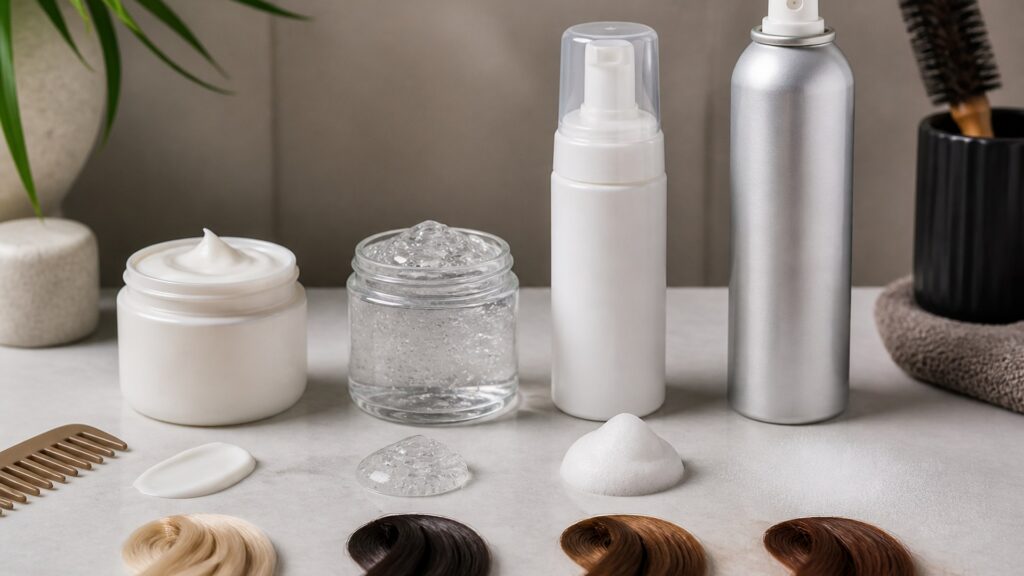
Describe the finished shape, movement, shine, texture, and expected wear time before comparing gels, creams, sprays, foams, or waxes.
Recreate the setting: Flexible hold allows movement and reshaping, while firm hold resists change but may feel crisp or show flakes when disturbed.
Write a pass condition: Fine hair often benefits from lighter distribution, whereas dense or coarse hair may need stronger control without excessive coating.
Set the rejection line: Foam spreads through larger areas, sprays offer directional coverage, and pastes or waxes support targeted separation and edge work.
Use profiles
Match the hair styling product to the person and frequency
Apply small amounts in sections because adding product is easier than removing a heavy layer without restarting the routine.
The low-maintenance buyer: Check whether directions call for damp or dry hair and whether heat, air drying, or tension activates the intended behavior.
The careful experimenter: Working time matters: fast-setting formulas reward prepared sectioning, while slower products allow adjustment before the shape locks.
The targeted upgrader: Test humidity performance and indoor comfort separately instead of assuming anti-humidity claims guarantee every climate or hair pattern.
Specifications
Read hair styling product specifications through real use
Evaluate roots, lengths, hands, clothing, and pillow contact for transfer, tackiness, visible residue, fragrance, and stiffness.
Evidence from the first trial
Wash the product out with the normal cleanser to learn whether repeated use creates buildup or requires stronger clarification.
Evidence after repetition
Packaging should dispense a controlled amount, protect aerosols from heat, and remain usable with damp or product-coated hands.
Working behavior: Stop using a formula that causes persistent scalp irritation, unusual breakage, respiratory discomfort, or residue the routine cannot remove.
Contact and comfort: Describe the finished shape, movement, shine, texture, and expected wear time before comparing gels, creams, sprays, foams, or waxes.
Package and control: Flexible hold allows movement and reshaping, while firm hold resists change but may feel crisp or show flakes when disturbed.
Common mistakes
Avoid shortcuts that distort the general selection decision
Fine hair often benefits from lighter distribution, whereas dense or coarse hair may need stronger control without excessive coating.
Rewarding the loudest claim: Foam spreads through larger areas, sprays offer directional coverage, and pastes or waxes support targeted separation and edge work.
Testing under ideal conditions: Apply small amounts in sections because adding product is easier than removing a heavy layer without restarting the routine.
Ignoring the boundary: Check whether directions call for damp or dry hair and whether heat, air drying, or tension activates the intended behavior.
Decision guidance
Decide when basic, premium, or no purchase makes sense
Working time matters: fast-setting formulas reward prepared sectioning, while slower products allow adjustment before the shape locks.
Choose a basic option: Test humidity performance and indoor comfort separately instead of assuming anti-humidity claims guarantee every climate or hair pattern.
Upgrade for evidence: Evaluate roots, lengths, hands, clothing, and pillow contact for transfer, tackiness, visible residue, fragrance, and stiffness.
Wait when uncertainty remains: Wash the product out with the normal cleanser to learn whether repeated use creates buildup or requires stronger clarification.
Ownership & compatibility
Keep the hair styling product reliable after purchase
Packaging should dispense a controlled amount, protect aerosols from heat, and remain usable with damp or product-coated hands.
Build the reset step: Stop using a formula that causes persistent scalp irritation, unusual breakage, respiratory discomfort, or residue the routine cannot remove.
Watch compatibility: Describe the finished shape, movement, shine, texture, and expected wear time before comparing gels, creams, sprays, foams, or waxes.
Know the retirement signal: Flexible hold allows movement and reshaping, while firm hold resists change but may feel crisp or show flakes when disturbed.
FAQ
Questions about hair styling products for general selection
Fine hair often benefits from lighter distribution, whereas dense or coarse hair may need stronger control without excessive coating.
What should I check first when choosing a hair styling product for general selection?
How long should I test the hair styling product?
When is a more expensive hair styling product worthwhile?
Bottom line
Finish the general selection choice with observable proof
Foam spreads through larger areas, sprays offer directional coverage, and pastes or waxes support targeted separation and edge work.
Restate the actual role: Apply small amounts in sections because adding product is easier than removing a heavy layer without restarting the routine.
Rehearse an ordinary day: Check whether directions call for damp or dry hair and whether heat, air drying, or tension activates the intended behavior.
Write the purchase reason: Working time matters: fast-setting formulas reward prepared sectioning, while slower products allow adjustment before the shape locks.
Reading Shortcuts
Move directly to the general selection decision stage you need.
Decision Reminders
Keep the evidence for general selection visible while comparing.
- Role: The hair styling product serves the named task.
- Proof: The trial observes controllable shape, touchable movement, suitable finish, and reliable washout.
- Care: Close the package, keep applicators clean, and remove accumulated film on schedule.
Glossary Snippets
Useful language for comparing hair styling products.
When a Top 10 List Helps
Use rankings to discover credible hair styling products, then screen them for general selection.
- The format is undecided: A broad list reveals plausible forms and price levels.
- A shortlist is needed: Rankings narrow discovery but do not replace fit testing.
Have finalists already? Open the comparison section.
When a Direct Comparison Helps
Compare finalists after establishing their suitability for general selection.
- Two candidates remain: Side-by-side evidence exposes meaningful tradeoffs.
- An upgrade is uncertain: Compare whether added cost corrects the original weakness.
Still exploring? Start with the Top 10 section.