
Hair Treatments Buying Guide for Fine Hair
Fine hair describes strand diameter, not the amount of hair on the head. It can be sparse or dense, straight or curly, oily at the roots or dry through bleached lengths. Treatment weight and placement therefore matter as much as the ingredient story.
Choose one observable target: less breakage, easier detangling, softer ends, improved elasticity, or cleaner-feeling roots. Test a measured amount without changing the entire routine, then judge the fully dried hair for movement, residue, static, tangling, and shape.
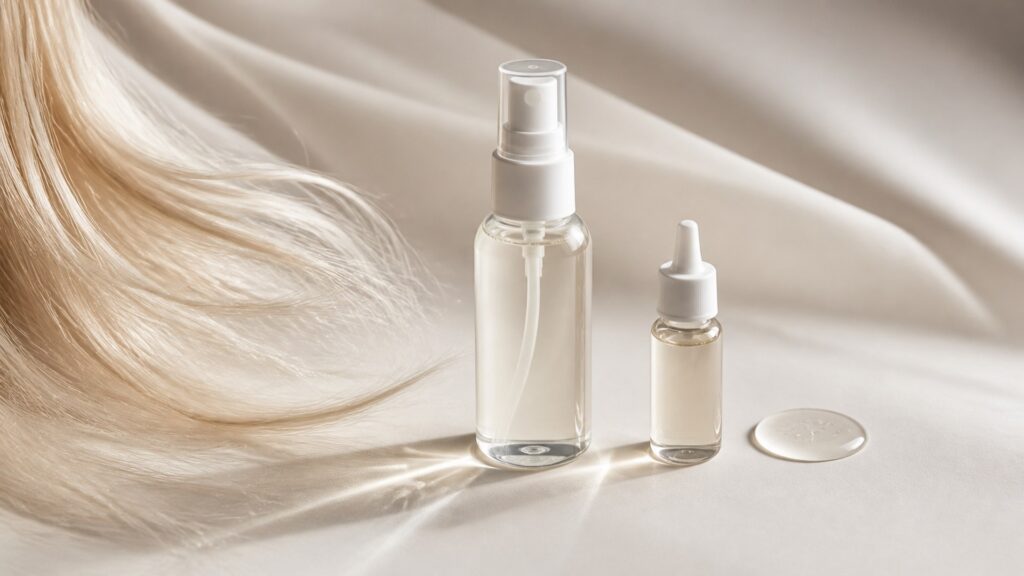
Strand assessment
Separate fine diameter from low density
A lightweight-looking formula can still overwhelm dense fine hair, while damaged ends may need more conditioning than an oily scalp. Map each area before buying.
Check root behavior: Note how soon roots collapse or feel coated after washing, and whether dry shampoo, scalp oils, or styling films contribute.
Inspect vulnerable lengths: Look for split ends, white breakage points, rough sections, tangling, and reduced elasticity around color-treated or heat-styled areas.
Choose one success measure: Define improvement in passes needed to detangle, number of broken strands, softness, fullness, or time until buildup returns.
Fine-hair profiles
Match concentration and placement to the routine
Different combinations of density, oil, damage, texture, and styling mean that one universal “weightless” mask cannot fit every fine-haired user.
Oily-root user: Keep rich treatment on mid-lengths and ends unless scalp application is stated, and choose a rinse profile that does not leave roots slick.
Bleached fine lengths: Consider targeted strengthening and conditioning where damage is visible, using conservative frequency to avoid stiffness or loss of movement.
Dense fine texture: Section thoroughly for even slip, then rinse carefully; large amounts applied only to the surface can create coating without helping interior tangles.
Formula details
Evaluate weight, slip, strengthening, and washout
The same ingredient may behave differently with concentration, vehicle, amount, and companion products. Finished-hair results are more useful than a blacklist.
Wet-stage evidence
A successful treatment improves controlled detangling without making the roots or scalp feel waxy immediately after rinsing.
Dry-stage evidence
Look for softness with lift, natural movement, reduced snapping, and compatibility with the usual styling routine rather than temporary shower slip.
Conditioning vehicle: Light lotions, milks, sprays, masks, and oils deliver different film levels. Match the format to damage and the user’s tolerance for residue.
Protein or bond support: Read the claimed purpose and schedule. Fine damaged strands may benefit, but unnecessary repeated use can leave some hair rigid or rough.
Dose instructions: A concentrated treatment may require very little. Packaging that dispenses a controllable amount helps prevent accidental overapplication.
Common mistakes
Do not solve every concern with a heavier mask
Fine hair can feel dry because of damage, hard-water deposits, styling films, harsh cleansing, or static. Additional richness addresses only some causes.
Applying from roots to ends: Treat the areas that need it. Coating healthy roots to reach damaged ends can flatten the style and shorten clean-feeling time.
Stacking leave-ons afterward: A mask, leave-in, oil, cream, and heat protectant can create cumulative weight. Test the treatment within the complete product load.
Judging before drying: Excellent wet slip may become limpness or residue. Wait until hair is fully dry and styled before deciding the formula worked.
Treatment choice
Choose lightweight moisture, targeted strength, or clarification
The strongest evidence comes from damage history, buildup patterns, strand response, and a controlled trial—not from volume claims printed on the front.
Choose light conditioning: Use it when tangling or roughness improves with slip and the formula rinses clean enough to preserve desired movement.
Choose targeted strengthening: Consider it for chemical or mechanical damage, applying mainly to affected lengths and monitoring for new stiffness or tangling.
Clarify first: When water beads, products stop behaving normally, and roots remain coated, remove appropriate buildup before adding another conditioning layer.
Application control
Measure small amounts and protect fragile strands
Fine hair can be vulnerable to repeated manipulation. A careful sectioning and rinsing method matters alongside the formula itself.
Start below the roots: Unless directions specify scalp use, distribute a modest amount through needy lengths and add more only where slip is absent.
Detangle without force: Use small supported sections, begin below knots, and choose fingers or a suitable wide-tooth tool rather than pulling from the roots.
Rinse and clean tools: Remove the amount directed, then wash clips, combs, and brushes that collect films capable of transferring back to clean hair.
FAQ
Fine-hair treatment questions
These answers connect strand diameter, damage, product load, and finished-hair evidence to a controlled treatment choice.
How often should fine hair use a deep treatment?
Can fine hair use oils and rich masks?
Does fine hair need protein treatments?
Bottom line
Choose repair without sacrificing movement
A well-matched fine-hair treatment improves the chosen concern at a small repeatable dose and leaves fully dried hair clean-feeling, flexible, and manageable.
Document the baseline: Note density, root oil, damaged areas, tangling, breakage, current product layers, and the normal shape after drying.
Run a measured trial: Keep cleanser, styling, amount, placement, contact time, and drying method stable enough to make the treatment’s effect interpretable.
Keep only repeatable gains: Continue when several uses improve the target without persistent buildup, root collapse, stiffness, scalp discomfort, or added detangling difficulty.
Reading Shortcuts
Move directly to the fine hair decision stage you need.
Decision Reminders
Keep the evidence for fine hair visible while comparing.
- Role: The hair treatment serves the named task.
- Proof: The trial observes improved manageability, reduced breakage, comfortable strands, and no heavy residue.
- Care: Protect the formula from shower water, follow timing directions, and monitor cumulative effects.
Glossary Snippets
Useful language for comparing hair treatments.
When a Top 10 List Helps
Use rankings to discover credible hair treatments, then screen them for fine hair.
- The format is undecided: A broad list reveals plausible forms and price levels.
- A shortlist is needed: Rankings narrow discovery but do not replace fit testing.
Have finalists already? Open the comparison section.
When a Direct Comparison Helps
Compare finalists after establishing their suitability for fine hair.
- Two candidates remain: Side-by-side evidence exposes meaningful tradeoffs.
- An upgrade is uncertain: Compare whether added cost corrects the original weakness.
Still exploring? Start with the Top 10 section.