
Hair Treatments Buying Guide for Scalp Care
Scalp care starts by describing what is happening, not by buying the strongest treatment. Loose dry flakes, oily scale, product buildup, itch, tenderness, pimples, and sudden shedding can look related while requiring very different responses.
Use shopping guidance for routine cosmetic care, not diagnosis. Record the location, duration, triggers, wash schedule, styling products, and any recent chemical service. Painful, spreading, infected-looking, bleeding, or persistent problems deserve assessment from a qualified clinician.
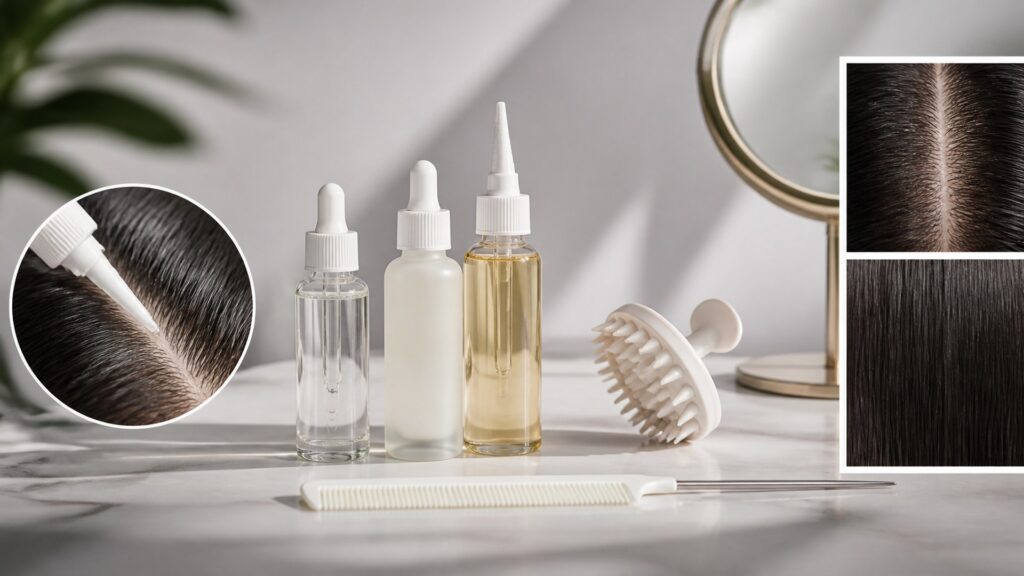
Scalp assessment
Define the pattern before selecting a formula
A useful treatment has a clear target, suitable application method, and stopping rule. Vague promises to “detox” or “balance” provide little help without observable symptoms.
Describe flakes and oil: Note whether scale is powdery or adherent, whether roots become oily quickly, and whether the pattern changes after washing or styling.
Locate discomfort: Map itch, tightness, burning, bumps, or tenderness, including the hairline, crown, behind the ears, and areas beneath protective styles.
Set a referral boundary: Seek professional advice for severe pain, open skin, pus, expanding redness, patchy loss, sudden shedding, or symptoms that resist careful routine changes.
Routine profiles
Match the format to scalp and hair needs
The scalp may need thorough contact while colored, curled, dry, or fragile lengths need protection from repeated cleansing and harsh handling.
Buildup-prone user: A rinse-out clarifying step may help when heavy oils, dry shampoo, waxes, or styling films accumulate, provided frequency does not strip the hair.
Dry-feeling scalp: Choose gentle cleansing and a lightweight compatible leave-on only after ruling out irritation from fragrance, essential oils, or existing actives.
Protective-style wearer: Prioritize precise nozzle access, low-residue application, and a realistic cleaning schedule that does not leave damp product trapped for long periods.
Formula details
Read actives, vehicle, and directions together
An ingredient is useful only at an appropriate strength, in a format that reaches the scalp, for a contact time the user can follow safely.
First-use evidence
A small controlled trial reveals immediate burning, difficult rinsing, residue, tangling, or an application nozzle that cannot reach the scalp.
Multiweek evidence
Consistent photographs and notes show whether flaking, oil, itch, and comfort improve without creating breakage or worsening irritation.
Active purpose: Check whether the formula is intended for cleansing buildup, loosening scale, reducing oil, moisturizing, or another stated cosmetic function.
Contact and rinse instructions: Follow labeled timing exactly. A pre-wash exfoliant, medicated shampoo, mask, and leave-on serum are not interchangeable delivery systems.
Fragrance and sensitizers: A cooling or tingling sensation is not proof of action. Review fragrance, essential oils, and other known personal triggers before applying widely.
Common mistakes
Avoid creating a second problem while treating the first
Overwashing, scratching, stacking exfoliants, and coating the scalp heavily can damage the barrier or hide the response to any single change.
Introducing several actives: Change one treatment variable at a time so improvement, dryness, or irritation can be attributed and the routine can be simplified.
Using fingernails to lift scale: Scratching can break skin and increase inflammation. Loosen material only with gentle technique and products used according to their directions.
Applying hair masks to the scalp: A rich treatment designed for lengths may leave unwanted residue at the roots unless the manufacturer specifically indicates scalp use.
Treatment choice
Choose cleansing, rinse-out, leave-on, or professional guidance
The appropriate next step depends on the observed pattern, current routine, tolerance, and whether any warning sign makes self-directed cosmetic care unsuitable.
Adjust cleansing first: Consider wash frequency, technique, water temperature, and buildup sources when symptoms track closely with an overloaded or inconsistent routine.
Add one targeted treatment: Select a clearly labeled product whose active purpose and format fit the documented concern, then follow its stated schedule without improvising.
Pause self-treatment: Stop and seek qualified care when symptoms are severe, rapidly changing, associated with hair loss, or repeatedly worsened by over-the-counter products.
Application and upkeep
Keep the scalp routine controlled and hygienic
Nozzle contact, shared applicators, wet tools, and residue around caps can contaminate a product or make dosing increasingly inconsistent.
Section before applying: Create clean partings so treatment reaches skin rather than coating hair, and use only the labeled amount for the intended area.
Clean contact points: Wipe nozzles and caps without touching them directly to irritated skin, and do not share scalp applicators between people.
Protect hair lengths: Direct active cleansing to the scalp, handle wet hair gently, and condition the lengths as appropriate to reduce tangling and breakage.
FAQ
Scalp-care hair treatment questions
These answers help separate routine cosmetic shopping from symptoms that need individualized medical assessment.
How do I choose a hair treatment for an itchy scalp?
Can I use scalp exfoliating treatments every day?
When should scalp problems be checked by a professional?
Bottom line
Treat the observed scalp, not the marketing story
A defensible purchase has a specific cosmetic job, transparent directions, tolerable ingredients, and a trial plan that protects both scalp skin and hair lengths.
Record the baseline: Photograph consistent partings and note symptoms, washing, styling, and recent services before changing the routine.
Trial one variable: Use the product exactly as labeled for a reasonable interval while watching comfort, flakes, oil, residue, and hair handling.
Escalate appropriately: Discontinue products that worsen symptoms and obtain professional assessment when warning signs appear or careful cosmetic care is not enough.
Reading Shortcuts
Move directly to the scalp care decision stage you need.
Decision Reminders
Keep the evidence for scalp care visible while comparing.
- Role: The hair treatment serves the named task.
- Proof: The trial observes improved manageability, reduced breakage, comfortable strands, and no heavy residue.
- Care: Protect the formula from shower water, follow timing directions, and monitor cumulative effects.
Glossary Snippets
Useful language for comparing hair treatments.
When a Top 10 List Helps
Use rankings to discover credible hair treatments, then screen them for scalp care.
- The format is undecided: A broad list reveals plausible forms and price levels.
- A shortlist is needed: Rankings narrow discovery but do not replace fit testing.
Have finalists already? Open the comparison section.
When a Direct Comparison Helps
Compare finalists after establishing their suitability for scalp care.
- Two candidates remain: Side-by-side evidence exposes meaningful tradeoffs.
- An upgrade is uncertain: Compare whether added cost corrects the original weakness.
Still exploring? Start with the Top 10 section.