
Hair Treatments Buying Guide: How to Choose the Right One
Hair treatment is a broad label covering rinse-out masks, leave-ins, oils, protein formulas, bond-focused products, scalp treatments, and medicated products. Choose the exact problem and application zone before comparing impressive claims.
A cosmetic treatment may improve slip, flexibility, appearance, or manageability, but it cannot permanently heal dead fiber. Scalp disease, sudden shedding, sores, or severe breakage may require qualified assessment rather than another beauty product.
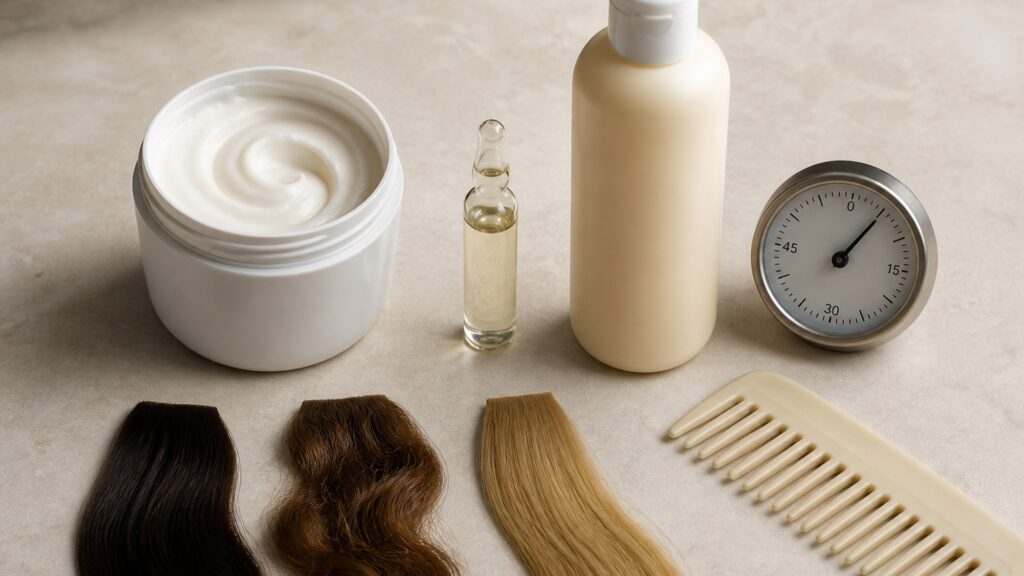
Buying framework
Define the general selection job before comparing hair treatments
Define one target such as wet tangling, rough ends, chemical damage, heat protection, buildup, scalp symptoms, or color maintenance.
Recreate the setting: Rinse-out masks provide concentrated conditioning, while leave-ins extend lubrication or protection between washes and require careful dosing.
Write a pass condition: Protein can support some weakened hair but may feel rigid when frequency or the wider routine supplies more than needed.
Set the rejection line: Bond-focused language varies across brands, so judge directions and repeated outcomes instead of assuming every formula uses the same mechanism.
Use profiles
Match the hair treatment to the person and frequency
Oils reduce friction and add shine but do not hydrate hair by themselves or reconnect split ends permanently.
The low-maintenance buyer: Scalp products need explicit placement directions, sensitivity review, hygienic application, and honest separation between cosmetic and medicated purposes.
The careful experimenter: Change only one treatment during the trial while keeping shampoo, conditioner, heat, and styling technique stable.
The targeted upgrader: Track wet slip, breakage, elasticity, dried softness, residue, volume, scalp comfort, and whether benefits survive the next wash.
Specifications
Read hair treatment specifications through real use
Follow frequency and contact-time directions; leaving a mask longer or using it daily does not guarantee stronger results.
Evidence from the first trial
Check overlap among masks, leave-ins, proteins, bonds, oils, and stylers so cumulative coating or stiffness has a clear source.
Evidence after repetition
Packaging should protect the formula from shower water, deliver a repeatable amount, and suit the intended scalp or length placement.
Working behavior: Stop for swelling, hives, severe burning, breathing difficulty, worsening scalp symptoms, or unusual breakage and seek appropriate help.
Contact and comfort: Define one target such as wet tangling, rough ends, chemical damage, heat protection, buildup, scalp symptoms, or color maintenance.
Package and control: Rinse-out masks provide concentrated conditioning, while leave-ins extend lubrication or protection between washes and require careful dosing.
Common mistakes
Avoid shortcuts that distort the general selection decision
Protein can support some weakened hair but may feel rigid when frequency or the wider routine supplies more than needed.
Rewarding the loudest claim: Bond-focused language varies across brands, so judge directions and repeated outcomes instead of assuming every formula uses the same mechanism.
Testing under ideal conditions: Oils reduce friction and add shine but do not hydrate hair by themselves or reconnect split ends permanently.
Ignoring the boundary: Scalp products need explicit placement directions, sensitivity review, hygienic application, and honest separation between cosmetic and medicated purposes.
Decision guidance
Decide when basic, premium, or no purchase makes sense
Change only one treatment during the trial while keeping shampoo, conditioner, heat, and styling technique stable.
Choose a basic option: Track wet slip, breakage, elasticity, dried softness, residue, volume, scalp comfort, and whether benefits survive the next wash.
Upgrade for evidence: Follow frequency and contact-time directions; leaving a mask longer or using it daily does not guarantee stronger results.
Wait when uncertainty remains: Check overlap among masks, leave-ins, proteins, bonds, oils, and stylers so cumulative coating or stiffness has a clear source.
Ownership & compatibility
Keep the hair treatment reliable after purchase
Packaging should protect the formula from shower water, deliver a repeatable amount, and suit the intended scalp or length placement.
Build the reset step: Stop for swelling, hives, severe burning, breathing difficulty, worsening scalp symptoms, or unusual breakage and seek appropriate help.
Watch compatibility: Define one target such as wet tangling, rough ends, chemical damage, heat protection, buildup, scalp symptoms, or color maintenance.
Know the retirement signal: Rinse-out masks provide concentrated conditioning, while leave-ins extend lubrication or protection between washes and require careful dosing.
FAQ
Questions about hair treatments for general selection
Protein can support some weakened hair but may feel rigid when frequency or the wider routine supplies more than needed.
What should I check first when choosing a hair treatment for general selection?
How long should I test the hair treatment?
When is a more expensive hair treatment worthwhile?
Bottom line
Finish the general selection choice with observable proof
Bond-focused language varies across brands, so judge directions and repeated outcomes instead of assuming every formula uses the same mechanism.
Restate the actual role: Oils reduce friction and add shine but do not hydrate hair by themselves or reconnect split ends permanently.
Rehearse an ordinary day: Scalp products need explicit placement directions, sensitivity review, hygienic application, and honest separation between cosmetic and medicated purposes.
Write the purchase reason: Change only one treatment during the trial while keeping shampoo, conditioner, heat, and styling technique stable.
Reading Shortcuts
Move directly to the general selection decision stage you need.
Decision Reminders
Keep the evidence for general selection visible while comparing.
- Role: The hair treatment serves the named task.
- Proof: The trial observes improved manageability, reduced breakage, comfortable strands, and no heavy residue.
- Care: Protect the formula from shower water, follow timing directions, and monitor cumulative effects.
Glossary Snippets
Useful language for comparing hair treatments.
When a Top 10 List Helps
Use rankings to discover credible hair treatments, then screen them for general selection.
- The format is undecided: A broad list reveals plausible forms and price levels.
- A shortlist is needed: Rankings narrow discovery but do not replace fit testing.
Have finalists already? Open the comparison section.
When a Direct Comparison Helps
Compare finalists after establishing their suitability for general selection.
- Two candidates remain: Side-by-side evidence exposes meaningful tradeoffs.
- An upgrade is uncertain: Compare whether added cost corrects the original weakness.
Still exploring? Start with the Top 10 section.