
Hair Wax Buying Guide for Hair Type and Texture
Hair wax works through contact with the hair, so the same scoop can disappear into dense coils, overwhelm fine straight strands, or sit unevenly on coarse waves. Start with strand diameter, density, curl pattern, and the amount of surface area you need to coat. Then choose texture, finish, and hold that can be distributed in a small, controllable dose without flattening movement or creating visible residue.
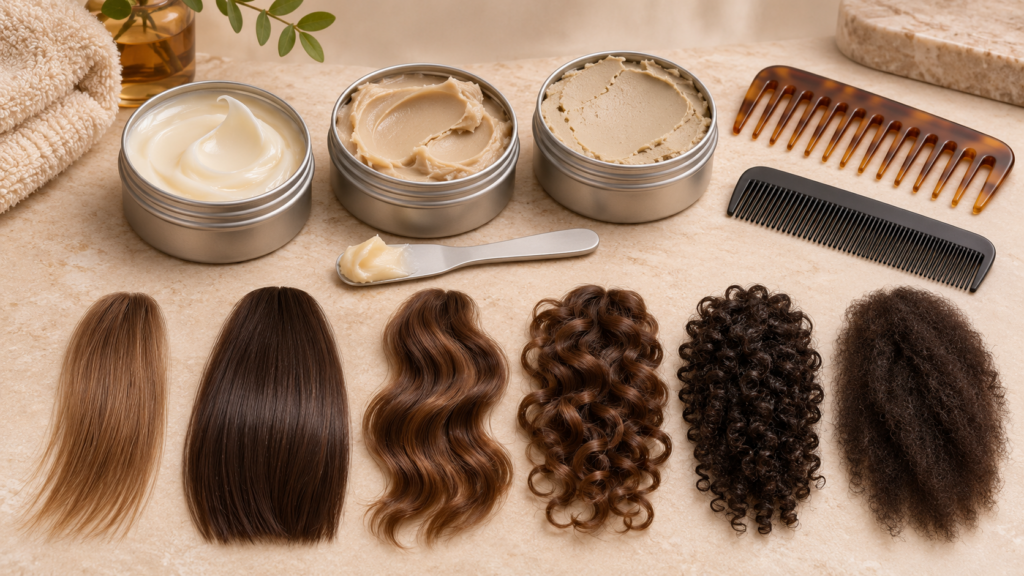
Buying framework
Read Hair in Four Layers
Hair type is useful only when it changes the product decision. Separate strand diameter, density, curl pattern, and current condition before comparing waxes.
Strand diameter sets the weight limit: Fine strands show separation and residue quickly, so a light, low-dose wax is easier to control. Coarse strands can usually carry a denser film, but they still need enough slip for even distribution.
Density sets the distribution job: Low-density hair needs restraint because concentrated wax can expose gaps and collapse lift. High-density hair needs sectioning and deliberate spread so product does not remain on the outer layer.
Curl pattern changes surface area: Waves, curls, and coils create more bends and contact points than straight hair. A pliable product can define selected areas, while a hard wax may catch unless it is warmed and applied in very small amounts.
Porosity changes how the finish reads: Porous or weathered areas can look dull or grab product unevenly. A wax with some sheen and slip may smooth those spots, while a dry matte formula can make roughness more visible.
Style geometry decides placement: A cropped textured style, slick side part, separated fringe, twist definition, and flyaway control do not need the same coverage. Buy for the exact zones and movements the style requires.
Who this is for
Match Wax to the Hair You Actually Style
Use conditions matter more than a broad label such as curly or thick. Start with the constraint most likely to make the wax fail.
Fine or low-density hair: Look for a wax that emulsifies easily and works in a trace amount. Apply from the back or underside first, keeping heavy product away from roots unless deliberate separation is the goal.
Thick or high-density hair: Choose enough glide and working time to spread through sections before the product sets. Density increases the coverage job, but adding a large scoop at once usually creates an uneven outer coat.
Straight hair needing separation: A light wax can create piece definition and tame ends without making the whole style rigid. Match finish carefully because shine, clumping, and oily-looking roots are more visible on straight strands.
Wavy or curly hair needing selective definition: Prioritize pliability and low drag. Use wax on chosen bends, ends, or surface flyaways rather than replacing the water-based styling layer across every strand.
Coily, coarse, or highly textured hair: A softer wax with slip may suit edge control, part definition, or selected twists. Check for white cast, tugging, and buildup, especially where product is concentrated and refreshed repeatedly.
What to pay attention to
Translate the Jar Into Hair Behavior
Texture words on the label are only starting points. The useful question is how the formula spreads, grips, reflects light, and releases on your hair.
Fiber-load lens
How much product can each strand carry before movement, volume, or clean separation disappears?
Distribution lens
Can the formula reach the intended strands evenly without tugging, clumping, white cast, or a heavy surface coat?
Scoop resistance and melt: A hard wax offers concentrated control but needs more warming. A creamier wax spreads faster and lowers tugging risk, though it may provide less structural separation on stubborn short sections.
Tack and grip: Tack helps short pieces stay grouped, yet too much can pull fine hair, collect lint, or make curls stick together. Test the smallest amount between fingertips before committing to broad coverage.
Slip and spreadability: Slip determines whether a tiny dose travels across several strands or stays where it first lands. Dense, curly, and coarse hair generally benefits from controlled spread because uneven deposits are harder to disguise.
Finish and residue visibility: Matte wax can reduce obvious shine but may show as dustiness on dark, porous, or tightly textured hair. Shinier wax can smooth the look of rough areas but may read greasy on fine straight hair.
Set, reworkability, and memory: Some waxes remain pliable for reshaping; others firm up after application. Reworkability helps styles changed by hats or touch, while a stronger set better preserves deliberate separation.
Water response and washout: Traditional waxy films can resist water, while hybrid formulas may rinse or shampoo out more readily. Follow the product directions and judge removal at your real dose, not at a fingertip sample.
Avoid these traps
Avoid the Type-and-Texture Traps
Most mismatches come from treating one hair label as the whole diagnosis or using dose to compensate for poor distribution.
Buying for curl pattern alone: Two people with the same curl pattern may have different diameter, density, porosity, length, and style goals. Use curl pattern to predict distribution, then check the other constraints.
Starting with a full scoop: Wax is easier to add than remove. Begin with a film that nearly disappears across the fingertips, apply to the least visible target area, and increase only after seeing the dried finish.
Applying hard wax without warming it: Unsoftened product catches and lands in patches. Warm a small amount as directed; if it still drags through your hair, choose a softer consistency rather than pulling harder.
Coating the roots for all-over control: Root application can collapse fine hair, expose low density, and accelerate a greasy look. Keep most wax on mid-lengths, ends, or specific short sections unless root direction is intentional.
Using wax as a universal curl styler: Wax can refine selected curls, coils, twists, or edges, but broad coverage may add weight and buildup. Keep hydration, set, and hold jobs separate when one heavy layer cannot do them well.
Ignoring contrast on dark or porous hair: A dry product that looks invisible in the jar can turn pale or dusty when spread. Check residue in natural light and on the most porous area before using it across the style.
Decision guidance
Choose by the First Visible Failure
The first mismatch usually identifies whether you need less weight, more spread, a different finish, or a different styling category.
If fine hair loses lift: Reduce dose and move application away from roots. If a trace amount still collapses the style, compare a lighter cream-wax or another low-deposit styler.
If dense hair looks coated outside and untouched inside: Work in smaller sections with a softer, more spreadable wax. Do not solve uneven distribution by adding more product to the surface.
If curls or coils lose grouping: Use wax only to refine selected pieces, ends, edges, or twists. A more flexible formula, or a water-based styler underneath, may preserve pattern better than an all-over wax film.
If coarse strands spring out of place: Choose more tack or set only after confirming the product can be warmed and distributed without drag. Concentrate control where the style breaks rather than increasing the whole-head dose.
If residue appears before useful hold: Change finish or consistency, not simply the amount. A translucent, softer wax may suit dark or porous hair better than a pale, very dry paste.
Ownership & compatibility
Keep Application Predictable
Wax performance depends on dose, clean tools, temperature, and what is already on the hair. Small controls make comparisons more reliable.
Trial on a defined section: Use the same clean, dry or lightly damp section each time and record the fingertip amount. A controlled test reveals weight, drag, finish, and washout sooner than a full-style experiment.
Close the jar promptly: Open jars collect dust and can change consistency as volatile components escape. Keep the rim clean, close the lid firmly, and follow label storage directions.
Use clean, dry hands or a tool: Water and debris introduced into the jar can change texture or contaminate the product. Scoop with clean hands or a clean spatula and avoid double-dipping after touching the hair.
Clean combs and brushes: Wax transfers to teeth, bristles, and handles, then returns to clean hair. Clean tools according to their material and manufacturer instructions before judging a new formula.
Track removal at the real dose: A wax that seems easy to wash from fingertips may behave differently after repeated use on dense or textured hair. Note shampoo steps, residue, tangling, and comfort across normal use.
FAQ
Hair Type and Texture Questions
These answers resolve common uncertainties without turning broad hair labels into guarantees.
Is hair wax suitable for fine hair?
What type of wax works for thick hair?
Can I use hair wax on curly hair?
Does hair wax work on coily hair?
Should straight hair use matte or shiny wax?
How much hair wax should I use?
Should hair be wet or dry before applying wax?
Why does hair wax leave a white cast?
How do I remove hair wax from textured hair?
Readiness check
Choose Distribution Before Hold
The best wax is the one your strands can carry and your texture can distribute without hiding movement or leaving visible residue.
Name the strand limit: Decide how much weight fine, medium, or coarse strands can tolerate.
Map the coverage job: Account for density, length, curl bends, and the exact zones being styled.
Choose the consistency: Balance scoop resistance, melt, tack, and slip against the need for even spread.
Check the finish: View shine, matte effect, clumping, and white cast on the actual hair.
Confirm the full routine: Make sure reworking, tool cleanup, buildup, and washout fit normal use.
Hair-Match Shortcuts
Jump to the trait that changes wax performance.
Six Hair-Wax Checks
Use these before adding another fingertip.
- Diameter: Set the strand weight limit.
- Density: Plan the coverage and sectioning.
- Pattern: Protect bends and grouping.
- Spread: Warm and distribute without drag.
- Finish: Check shine, dustiness, and cast.
- Removal: Judge washout at the real dose.
Useful Texture Terms
Plain language for matching wax to hair.
When a Top 10 List Helps
Use rankings after defining the hair and style constraints.
- The strand limit is clear: Exclude waxes likely to overwhelm fine hair.
- The coverage job is clear: Prioritize spread for dense or curled hair.
- The finish is clear: Filter matte, natural, or shiny results.
- The wash routine is clear: Compare buildup and removal expectations.
Already have a shortlist? A Comparison can help resolve the remaining tradeoffs.
When a Comparison Helps
Compare finalists with the same fingertip dose and target section.
- Melt differs: Note warming time and remaining granules.
- Spread differs: Track drag and coverage before adding more.
- Finish differs: Check volume, separation, shine, and cast.
- Release differs: Compare reworking and washout after wear.
Still discovering options? Start with a Top 10 to build a relevant shortlist.