
Hair Wax Buying Guide for Wash Day Planning
Hair wax can keep a style workable for several days, but every fingertip adds another film to the hair, hands, and tools. Plan the purchase backward from wash day: how many applications you expect, which zones need wax, whether tomorrow's style must move, and how much residue your normal cleanse can remove. A good match preserves control without turning every refresh into another full coat.
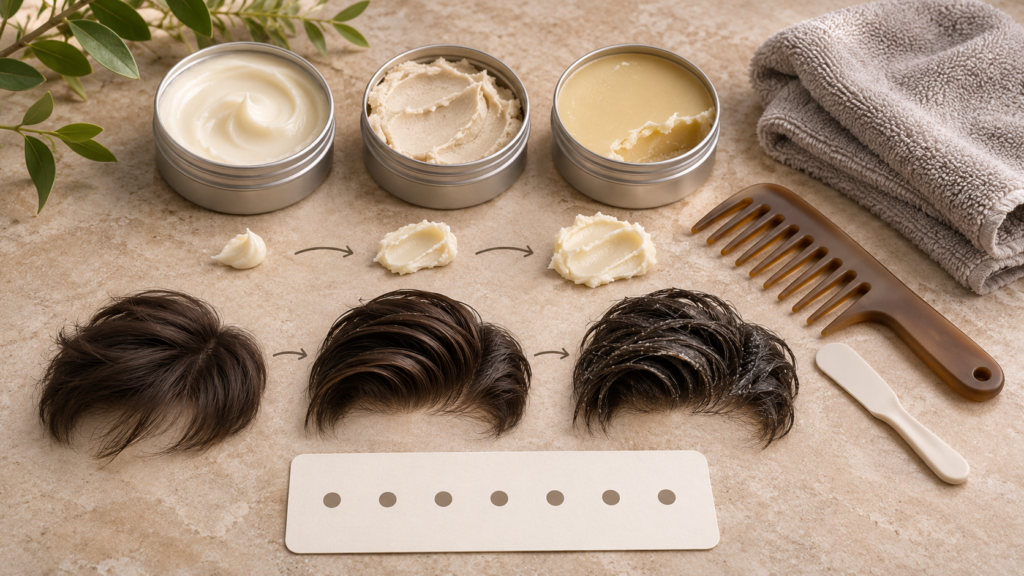
Buying framework
Plan Wax From Clean Hair to Cleanse
Treat the jar as part of a cycle rather than a one-day hold purchase. Dose, placement, reworking, transfer, and release all shape the next wash.
Set the wash interval: Count the realistic days and styled occasions before shampoo. One event application creates a different removal job from daily fingertip refreshes across a week.
Give each dose an address: Name the zones that need grip: fringe, ends, edges, crown, or selected pieces. Local placement keeps the rest of the hair available for brushing, reshaping, and easier cleansing.
Separate reworking from reloading: Wax already on the hair may reactivate with warm hands or a comb. Try redistributing the existing film before adding more; a new scoop should solve missing grip, not merely restore shape.
Protect the next style: A pliable wax can support a new part or piece pattern, while a hard, high-tack film may lock yesterday's direction. Buy for the most demanding restyle expected before washing.
Define the release limit: Decide how much shampooing, detangling, and tool cleaning fits your routine. If normal use repeatedly requires an unwanted extra cleanse, the practical dose or formula is mismatched.
Who this is for
Match the Jar to Your Styling Cycle
The useful profiles are application patterns. Choose the routine that describes how wax enters, moves through, and leaves your hair.
Single-style washer: When wax is used for an event and shampoo follows soon after, concentrated grip can be worthwhile. Confirm that the intended dose releases with the cleanser and time already planned.
Multi-day reworker: Choose a wax that stays pliable and can be redistributed in a trace amount. Reworkability matters more than maximum initial hold when the part, fringe, or texture changes between washes.
Targeted detail user: A small amount on ends, flyaways, edges, or short pieces limits the residue footprint. Precision can make a firmer wax practical without coating the full head.
Layered-product routine: If leave-in, cream, oil, gel, or dry shampoo is already present, wax becomes one layer in a stack. Favor a small compatible dose and evaluate the combination, not the wax alone.
Buildup-sensitive planner: If hair quickly turns dull, separated into heavy clumps, or hard to detangle, prioritize low-dose spread and easy redistribution. Stop use if discomfort or irritation appears rather than treating it as ordinary buildup.
What to pay attention to
Read the Wax for Accumulation and Release
Jar texture and hold labels do not show the whole cycle. These characteristics predict how quickly a film builds and how much work it creates later.
Dose ledger
How much wax is added, where is it placed, and can existing product be reworked before another fingertip is used?
Release ledger
What film remains on hair and tools, and what cleansing or detangling work is required to remove it?
Concentration per fingertip: A firm wax can place a large amount on a small section. Products that emulsify into a thin, even film make dose changes easier to see before too much accumulates.
Tack after handling: Initial tack helps strands group, but persistent stickiness can collect lint, transfer to hands, and resist restyling. Check how the product feels after it has been warmed, applied, and left to set.
Reworkability without reload: A pliable film can be moved back into shape with fingers or a tool. That reduces repeat dosing, which often matters more to wash-day effort than whether the first application feels light.
Layer compatibility: Water-based stylers, oils, dry shampoo, and wax can alter one another's spread and finish. A clean-looking single-product test does not guarantee that the full stack will stay clean-looking.
Transfer and particle pickup: Wax can migrate to combs, brushes, hats, pillowcases, and fingers, then return to the hair. Low visible transfer simplifies the cycle, while tacky deposits require more tool and fabric maintenance.
Release during cleansing: Removal depends on the formula, total dose, hair coverage, and cleanser method. Follow label directions, evaluate your normal shampoo first, and change the routine only when residue remains.
Avoid these traps
Avoid Turning Refreshes Into Buildup
Most wash-day problems begin before the shower, when more wax is used to fix shape, oil, flattening, or residue that needs a different response.
Adding wax before redistributing it: Sleep or a hat can move yesterday's style without removing yesterday's product. Warm and reshape a test section first; add product only if grip is actually missing.
Refreshing the entire head: A weak fringe or lifted edge does not require another all-over coat. Target the failing zone so clean sections do not inherit unnecessary film.
Stacking wax over an unclear base: Oil, cream, gel, and dry shampoo can change tack and appearance. Record what is already present, then test a tiny area instead of blaming the newest jar for every interaction.
Using shampoo difficulty as a hold score: A film that resists removal is not automatically better at styling. Judge useful control separately from the time, tangling, and repeat cleansing it creates.
Scraping a large scoop for speed: Concentrated wax is difficult to distribute evenly once it lands. Build several nearly invisible fingertip films and stop as soon as the target section responds.
Calling irritation normal buildup: Dullness, heavy separation, and coated tools can indicate residue; burning, swelling, or pronounced itching are different. Discontinue the product and get suitable guidance when a reaction is severe or does not resolve.
Decision guidance
Choose by the First Cycle Failure
The earliest failure reveals whether the problem is dose, placement, reworkability, product stacking, or release.
If day two needs more shape but still feels waxy: Do not reload immediately. Redistribute the existing film with warm hands or a suitable clean tool; compare a more pliable wax if reshaping remains difficult.
If roots collapse before the next wash: Move wax away from the root area and reduce total coverage. Use it on selected lengths or pieces, and choose another product for root lift if the jobs conflict.
If tools become coated before hair does: Use a smaller dose and clean tools between trials. Heavy transfer can recirculate old product and make a fresh application look as though it built up instantly.
If a product stack turns dull or clumpy: Test wax over fewer underlying layers and give each product a separate job. When overlap is essential, compare a softer, lower-tack wax in the same controlled section.
If wash day repeatedly needs an extra pass: Reduce application count and footprint first. If residue still survives the product-directed cleanse, choose a formula whose release behavior better fits the normal routine.
Ownership & compatibility
Keep the Wax Cycle Measurable
Clean tools, controlled scoops, and simple notes prevent old residue from distorting the next product test.
Track fingertips and zones: Record each small addition and where it went. Days alone hide the difference between one targeted application and repeated full-style coating.
Use a clean scoop: A spatula or clean dry fingertip keeps water, dust, and loose hair out of the jar. Close the lid promptly and follow storage directions.
Degrease tools before retesting: Wax lodged between comb teeth or brush bases transfers back to clean hair. Clean according to the tool material and allow it to dry before a new trial.
Change one layer at a time: Keep shampoo, leave-in products, and styling method stable while evaluating a wax. Otherwise, accumulation and washout differences cannot be attributed reliably.
Log the actual release: After cleansing, note remaining tack, coated sections, tangling, and tool residue. Use those observations to adjust dose or product rather than adopting stronger cleansing automatically.
FAQ
Wash-Day Planning Questions
These answers address repeat use, product stacks, and removal without inventing a universal wash schedule.
Do I need to wash my hair every time I use hair wax?
Can I refresh hair wax on the second or third day?
Does reworkable wax create less buildup?
Can I use dry shampoo and hair wax between washes?
Why does hair wax look greasy after a few days?
Should I clarify every time I use hair wax?
How can I tell whether wax is still in my hair?
How much wax should I use during a multi-day cycle?
What should I record during a hair-wax trial?
Readiness check
Buy for the Last Day of the Cycle
A wash-day-friendly wax provides useful control while keeping later reshaping, tools, and cleansing manageable.
Map the interval: Count likely applications and style changes before shampoo.
Shrink the footprint: Put wax only on the zones that need grip.
Rework before reloading: Use the existing film before adding another fingertip.
Watch the stack: Track how wax behaves over other products and natural oils.
Confirm release: Choose a dose and formula that fit normal cleansing and detangling.
Wax-Cycle Shortcuts
Jump to the choice that changes the next wash.
Six Wax-Cycle Checks
Use these before taking another scoop.
- Interval: Count days until the next wash.
- Footprint: Name the exact zones needing grip.
- Dose: Count every fingertip addition.
- Rework: Redistribute before reloading.
- Transfer: Check hands, tools, and fabric.
- Release: Fit removal to normal cleansing.
Useful Cycle Terms
Plain language for wax accumulation and removal.
When a Top 10 List Helps
Use rankings after defining the whole wax cycle.
- The interval is clear: Filter for one-day or repeat styling.
- The footprint is clear: Match broad texture or precise detailing.
- The reload limit is clear: Prioritize useful reworkability.
- The release limit is clear: Exclude unwanted cleansing effort.
Already have a shortlist? A Comparison can help resolve the remaining tradeoffs.
When a Comparison Helps
Compare finalists across the same dose ledger.
- Starting dose differs: Measure the fingertip film and placement.
- Day-two rework differs: Reshape before either product is reloaded.
- Transfer differs: Inspect tools and hands after the same wear.
- Release differs: Use the same cleanser and record extra steps.
Still discovering options? Start with a Top 10 to build a relevant shortlist.