
Hair Wax Buying Guide: How to Choose the Right One
Hair wax is best chosen by the kind of control you need after application, not by the biggest hold claim on the jar. Decide whether you want separated texture, polished control, or a reshapeable finish, then match the formula’s firmness, shine, distribution, and washout to your haircut and styling method.
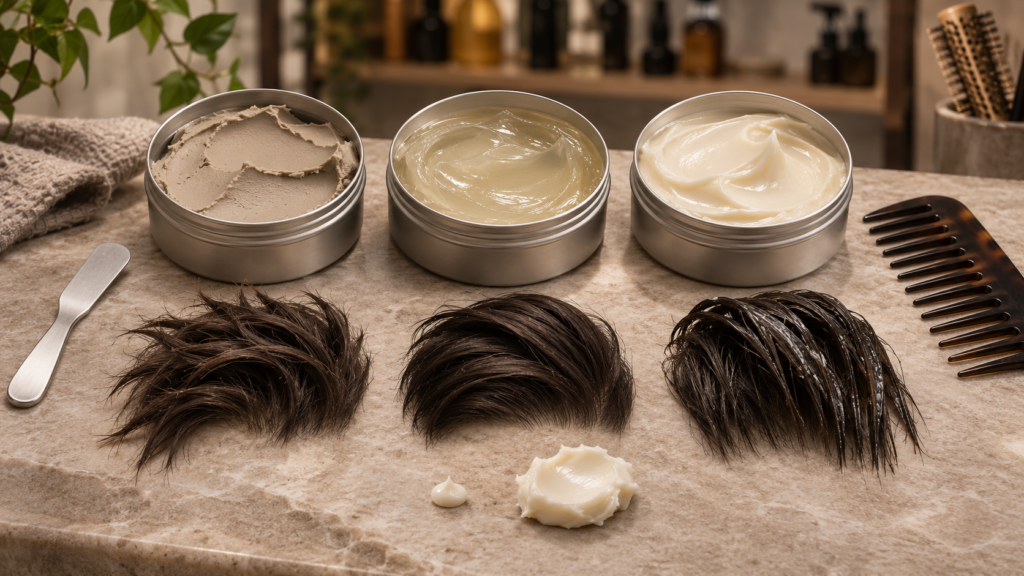
Buying framework
Start With the Style You Need to Control
Hair wax works as a thin, distributed film. The right choice depends on where that film must add grip, how visible it can be, and whether the style needs to move again.
Name the styling job: Separated pieces, a smooth side part, controlled flyaways, and a lifted crop ask for different combinations of grip and sheen. Pick the job before comparing strength labels.
Choose movement or lock: Pliable waxes let you pinch and redirect sections during the day. Firmer products protect a shape better, but they can make combing, restyling, and even distribution less forgiving.
Set the finish limit: Matte formulas can make texture look drier and more expanded; glossy formulas deepen color and polish but reveal overapplication quickly. Natural finish sits between those effects.
Match the footprint: Short styles often need product through much of the top, while longer hair usually benefits from selective use at ends, flyaways, or a defined section. More coverage raises weight and washout demands.
Test the minimum dose: Warm a very small amount, spread it until the hands look nearly clean, and build only where control is missing. Wax that works only in a heavy coat is usually a poor match for the intended style.
Who this is for
Match the Wax to Your Styling Pattern
Use pattern matters more than a generic hair label. Identify how you apply, reshape, finish, and remove the product.
Short textured styles: Look for controlled grip that separates small sections without collapsing volume. A drier finish can emphasize texture, but too much drag makes distribution patchy and ends look dusty.
Polished side parts and slick shapes: A smoother, more spreadable wax with natural or higher shine can refine comb lines and surface flyaways. Check that the hold survives movement without turning greasy at the roots.
Fine or easily weighed-down hair: Favor low-dose control and a finish that does not make strands group into sparse-looking sections. Application at the mid-lengths or ends may be safer than coating the root area.
Thick or resistant short hair: A firmer wax can supply enough grip to redirect sections, but working time becomes important. Warm it thoroughly and compare how evenly it moves through dense hair before it sets.
Frequent restylers: Prioritize pliability and clean reactivation with dry hands or a small amount of water only when directions allow. The best option restores shape without repeated heavy layering.
What to pay attention to
Read What the Formula Changes in Use
The useful characteristics are sensory and mechanical: how the product leaves the tin, spreads, grips, finishes, and releases.
Control lens
How much grip remains after the style is moved, compressed, or separated again?
Visibility lens
At the useful dose, does the wax preserve natural density and movement or make strands look coated and grouped?
Firmness in the container: A hard wax can deliver concentrated grip but needs more warming. A softer cream-wax spreads quickly and evenly, though it may provide less resistance for sharply separated pieces.
Grip and drag: Grip helps strands stay grouped; drag is the resistance felt during application. Useful grip appears after distribution. Excessive drag can snag, create clumps, or leave some sections overloaded.
Pliability after setting: Pliability describes whether the style can be reshaped without cracking, flaking, or losing all support. It matters more than raw hold when hands, hats, or weather will disturb the style.
Finish and strand grouping: Matte, natural, and glossy are not merely cosmetic labels. Finish changes how density, texture, and separation read, especially under direct light and on darker hair.
Application state: Some waxes distribute best through fully dry hair; others allow specific damp-hair use. Follow the label because water changes spread, dilution, final texture, and the amount that reaches each strand.
Removal behavior: Waxier or heavily layered films may need more deliberate shampooing than lighter applications. Compare washout using your normal routine and judge the total dose, not a promise inferred from product texture.
Avoid these traps
Avoid the Application Errors That Mimic a Bad Formula
Many disappointing results come from dose, distribution, or timing. Correct those before deciding that every wax is too greasy or too weak.
Scooping before testing firmness: A soft wax and a dense paste do not deliver equal doses by volume. Start smaller than expected, warm completely, and add a second trace only after the first is distributed.
Applying from one fingertip: A concentrated blob creates a shiny or stiff patch. Spread product across palms and fingertips, then approach the hair from underneath or the back before refining visible sections.
Starting at the roots by default: Root application can flatten fine hair and expose shine. Begin where control is needed, often through mid-lengths and ends, and use residue on the hands for the root area.
Using wax as a heat protectant: Styling control does not establish heat protection. If heat is part of the routine, use a product specifically labeled for that purpose and follow its directions.
Adding product when the shape is wrong: More wax cannot replace sectioning, drying direction, or the right tool. Reset the shape first, then use wax to reinforce separation, surface control, or a chosen bend.
Ignoring irritation: A coated feel is different from burning, swelling, or persistent itching. Stop use if a reaction occurs, avoid contact with eyes, and seek appropriate help for serious or continuing symptoms.
Decision guidance
Choose With a Five-Step Jar Test
Compare finalists with the same small dose and the same hairstyle. The first meaningful difference usually reveals the better fit.
Check pickup: A product should be removable in a controlled amount. If the surface is so hard that you gouge unpredictably, or so soft that you overscoop, daily dosing will be difficult.
Check hand spread: Warm the sample and watch whether lumps disappear before it reaches the hair. Even hand spread reduces patches and makes the useful dose easier to repeat.
Check first-pass distribution: Apply to one planned area. Reject a formula that tugs excessively, deposits immediately on the surface, or needs a heavy coat before the style responds.
Check the settled finish: Wait for the look to stabilize, then inspect in direct and diffuse light. Compare separation, volume, shine, stiffness, and whether individual pieces still look like hair.
Check reshape and washout: Move the style later, then cleanse with the routine you actually use. The winner should meet the control goal without creating unwanted buildup, extra product layers, or disproportionate removal work.
Ownership & compatibility
Keep the Product Predictable After Opening
Wax performance changes when the jar, hands, tools, or storage conditions introduce contamination or alter the product surface.
Use clean, dry hands or a tool: Water and debris transferred into an open jar can change the surface and hygiene. Close the lid promptly and follow any package directions for applicators.
Protect the formula from heat: Storage heat can soften, separate, or melt some waxes and make the next dose unreliable. Use the labeled storage conditions rather than leaving the jar in a hot car or sunny window.
Clean combs and brushes: Wax accumulates on teeth, bristles, and edges, then transfers back to clean hair. Clean each tool according to its material and let it dry before use.
Notice formula changes: A marked change in odor, color, texture, or separation can signal that the product is no longer behaving as intended. Follow the label for period-after-opening and disposal guidance.
Review the routine when buildup rises: If control now requires more product, clean tools and reassess drying and application before increasing the dose. A larger daily layer can conceal a technique problem while worsening washout.
FAQ
Hair Wax Questions
These answers cover the choices shoppers commonly face after they understand hold, finish, application, and cleanup.
Is hair wax the same as pomade?
Should hair wax go on wet or dry hair?
How much hair wax should I use?
Can hair wax make fine hair look thinner?
What is the difference between matte and shiny wax?
Can I restyle hair wax during the day?
Does stronger hold always last longer?
How do I wash hair wax out?
When should I stop using a hair wax?
Readiness check
Buy the Wax That Disappears Into the Style
The best wax creates the intended shape while calling as little attention as possible to the product itself.
Define the job: Choose texture, polish, flyaway control, or flexible reshaping.
Set the finish: Decide how much shine and strand grouping the style can tolerate.
Match the working feel: Balance firmness and grip against easy, even distribution.
Prove the dose: Test the minimum amount that produces reliable control.
Finish the trial: Judge the settled look, later reshape, and normal washout before committing.
Hair Wax Shortcuts
Jump to the choice that changes the finished style.
Six Hair Wax Checks
Use these before choosing a jar.
- Job: Name the exact control the style needs.
- Firmness: Check pickup and warming effort.
- Spread: Reject lumps and patchy deposit.
- Finish: Inspect shine and strand grouping.
- Movement: Test reshaping after the wax settles.
- Removal: Confirm cleanup at the useful dose.
Useful Wax Terms
Plain language for how wax behaves.
When a Top 10 List Helps
Use rankings only after defining the styling job.
- The finish is known: Filter matte, natural, or glossy choices.
- The movement is known: Separate reshapeable control from firm lock.
- The dose is comparable: Judge performance at similar application amounts.
- The routine is known: Include normal application and washout effort.
Already have a shortlist? A Comparison can help resolve the remaining tradeoffs.
When a Comparison Helps
Compare two waxes on the same style.
- Pickup differs: Note how easily a repeatable dose leaves the jar.
- Spread differs: Compare warming, drag, and deposit.
- Finish differs: Inspect volume, shine, and grouping in two lights.
- Reset differs: Move the style later and record what remains.
Still discovering options? Start with a Top 10 to build a relevant shortlist.