
Hand Masks Buying Guide for Dryness, Roughness, and Comfort
Occlusive gloves can make dry hands feel dramatically softer immediately after removal, but that temporary water retention does not prove lasting barrier improvement. Rough knuckles, callus, fissures, and active dermatitis also need different care rather than one intensive serum.
Choose a mask for comfortable intact dryness and judge it after normal hand use resumes. Persistent relief through washing and tasks matters more than a glossy post-mask surface or the sensation of a thick coating.
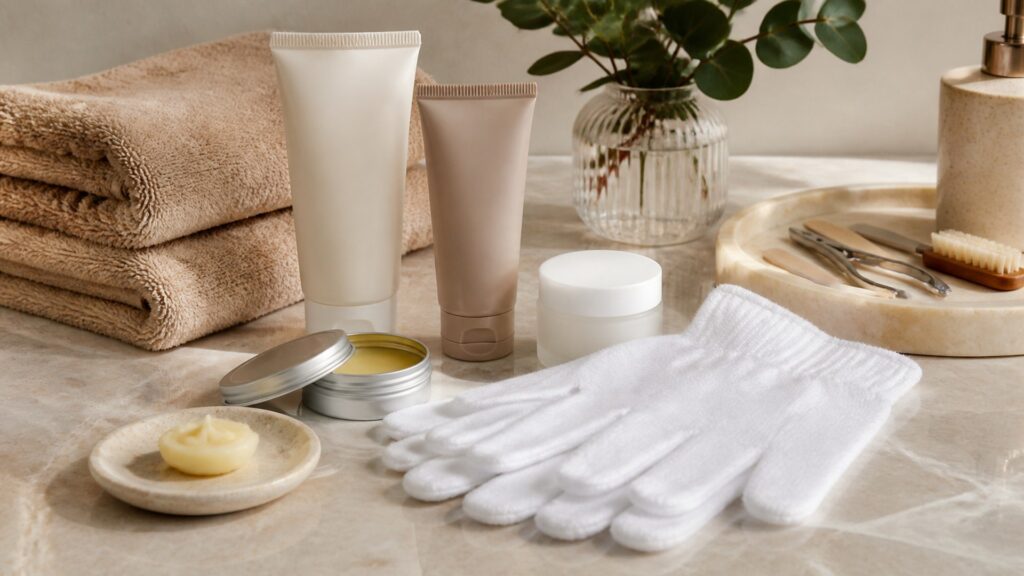
Buying framework
Define the dryness, roughness, and comfort routine before comparing products
Use the setting, frequency, and skin priorities to narrow hand masks logically.
Start with the use case: Separate tight dry skin, rough knuckles, callus, fissures, and inflammatory rash.
Rank the practical tradeoffs: Use broad mask exposure only when every enclosed zone is suitable.
Check instructions early: Measure comfort after dry-down, task resumption, and the next washing cycle.
Use profiles
Match hand masks to the person and pace
Three shopper profiles expose different priorities for dryness, roughness, and comfort.
Routine-focused buyer: A uniformly dry-hand user may benefit from a balanced moisturizing serum.
Performance-focused buyer: A localized rough-knuckle user may prefer targeted urea cream and breathable gloves.
Occasional or flexible user: A fissured or inflamed user needs appropriate barrier care rather than an aggressive spa mask.
Specifications
Read the specifications through a dryness, roughness, and comfort lens
Translate technical language into visible routine benefits.
Handling lens
Compare softness after one subsequent wash.
Ownership lens
Inspect cracks and web spaces before deciding whether to repeat.
Mask Format: Humectants increase surface water during enclosed contact.
Featured Ingredients: Emollients improve flexibility and reduce rough feel.
Contact Time: Occlusion slows evaporation while increasing web-space moisture.
Glove Fit And Containment: Urea or acids may sting fissures and thin enclosed zones.
Aftercare Needs: Glove pressure and seams affect comfort at knuckles and cuticles.
Common mistakes
Avoid shortcuts that undermine dryness, roughness, and comfort
A good purchase can still disappoint when selection or use is based on the wrong assumption.
Buying from one metric: Do not equate post-occlusion plumpness with repaired dermatitis.
Skipping compatibility checks: Avoid acids across open fingertip splits or irritated web spaces.
Ignoring post-use care: Do not scrub softened rough skin immediately after mask removal.
Decision guidance
Choose the simplest option that covers the real need
Use these decision rules to finish a shortlist for dryness, roughness, and comfort.
Choose the basic format when: Choose a hydrating mask for broad uncomplicated dry hands and planned downtime.
Choose the flexible format when: Use targeted cream when roughness is limited to knuckles or fingertips.
Pause before upgrading when: Seek care for painful fissures, spreading rash, swelling, drainage, or persistent irritation.
Ownership & compatibility
Plan for clean, repeatable ownership
The best value remains convenient after the first few uses.
Consumables and replacements: Dry web spaces and restore grip before normal tasks.
Cleaning and storage: Protect the improvement by reducing harsh washing and exposure.
Routine compatibility: Wait for complete response before repeating an intensive session.
FAQ
Hand Masks Buying Guide for Dryness, Roughness, and Comfort FAQ
Practical answers about choosing and owning hand masks for dryness, roughness, and comfort.
What matters most when choosing hand masks for dryness, roughness, and comfort?
Is the most expensive option better for dryness, roughness, and comfort?
How should I compare two similar hand masks options?
Bottom line
Buy for repeatable dryness, roughness, and comfort results
A focused shortlist is easier to own and use well.
Prioritize fit: Judge comfort after use resumes, not immediately after occlusion.
Verify the limits: Use targeted treatment when roughness is not uniform.
Count ownership costs: Protect web spaces and fissures from unnecessary intensity.
Reading Shortcuts
Jump to the key hand masks decisions.
Decision Reminders
Keep these checks beside your shortlist.
- Check mask format: Follow the labeled contact time and do not use on broken or actively irritated skin.
- Check featured ingredients: Patch test unfamiliar formulas when appropriate and stop if burning or persistent irritation develops.
- Check contact time: Keep hands away from eyes and slippery surfaces while mask gloves or rich formulas are in use.
Glossary Snippets
Plain-language hand masks terms.
When to Use a Top 10 Review
Use a ranked list to identify a manageable set of strong candidates.
- You are still exploring: A ranked list can reveal the main formats and price tiers.
- You want a shortlist: Start broad, then confirm fit with this buying guide.
Have finalists? Use a Comparison.
When to Use a Comparison
Use a direct comparison when only a few candidates remain.
- Features are close: Side-by-side details clarify meaningful differences.
- Prices overlap: Compare ownership value, not only purchase price.
Still exploring? See the Top 10.