
Hand Masks Buying Guide for Skin Type and Texture Needs
A hand mask covers dry knuckles, thinner web spaces, fingertips, cuticles, palms, and wrists with one formula and one level of occlusion. That broad exposure can be useful for uniform dryness but poorly matched to localized cracks, sweaty palms, rash, or task-related callus.
Choose according to the least tolerant enclosed area. A targeted cream may outperform a glove when hand conditions are mixed, because formula strength and richness can be placed only where needed without sacrificing grip or trapping moisture elsewhere.
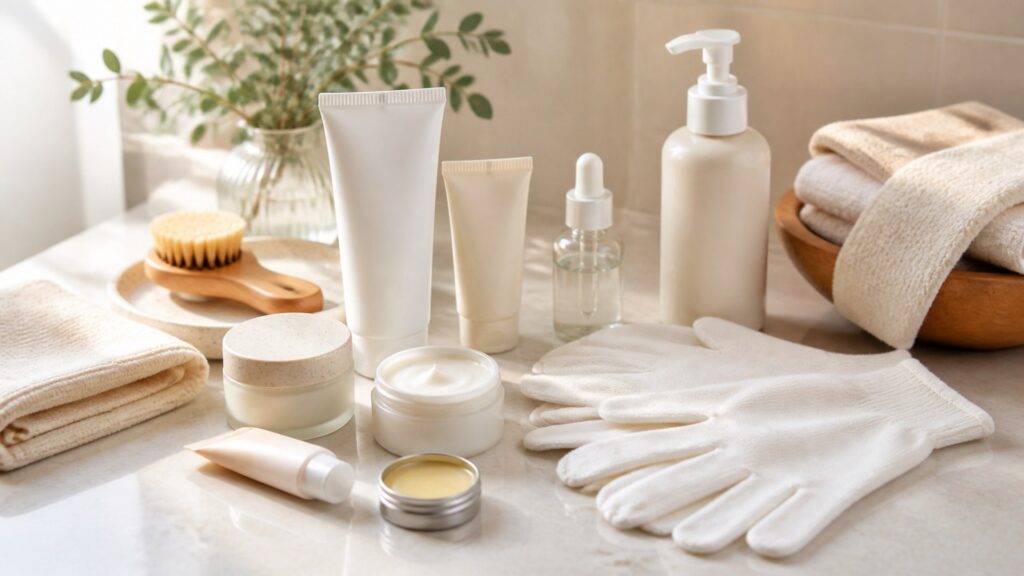
Buying framework
Define the skin type and texture needs routine before comparing products
Use the setting, frequency, and skin priorities to narrow hand masks logically.
Start with the use case: Inspect palms, backs, knuckles, cuticles, fingertips, web spaces, and wrists.
Rank the practical tradeoffs: Separate broad dryness from fissures, callus, sweat, dermatitis, and unexplained peeling.
Check instructions early: Match whole-hand occlusion to the most vulnerable zone inside the glove.
Use profiles
Match hand masks to the person and pace
Three shopper profiles expose different priorities for skin type and texture needs.
Routine-focused buyer: A uniformly dry-hand user may benefit from a simple moisturizing glove.
Performance-focused buyer: A cracked-fingertip user may need targeted ointment rather than fragranced whole-hand serum.
Occasional or flexible user: A sweaty-palmed user should avoid prolonged occlusion that increases moisture and discomfort.
Specifications
Read the specifications through a skin type and texture needs lens
Translate technical language into visible routine benefits.
Handling lens
Use the most reactive hand zone as the exposure ceiling.
Ownership lens
Check palm moisture and web spaces immediately after removal.
Mask Format: Serum-filled gloves distribute formula regardless of local need.
Featured Ingredients: Cotton gloves over chosen cream allow zone-specific dosing beneath them.
Contact Time: Plastic liners retain more heat and moisture than breathable fabric.
Glove Fit And Containment: Finger length and wrist fit determine pooling and contact pressure.
Aftercare Needs: Roughness actives can reach thin web spaces along with thick knuckles.
Common mistakes
Avoid shortcuts that undermine skin type and texture needs
A good purchase can still disappoint when selection or use is based on the wrong assumption.
Buying from one metric: Do not use one strong formula uniformly for localized rough knuckles.
Skipping compatibility checks: Avoid masking over active dermatitis, open fissures, or unidentified peeling.
Ignoring post-use care: Do not assume thick palms make every enclosed surface equally tolerant.
Decision guidance
Choose the simplest option that covers the real need
Use these decision rules to finish a shortlist for skin type and texture needs.
Choose the basic format when: Choose moisturizing gloves for broad uncomplicated dryness and a quiet interval.
Choose the flexible format when: Prefer targeted cream when conditions differ sharply by hand zone.
Pause before upgrading when: Seek appropriate care for persistent rash, pain, swelling, drainage, or deep cracks.
Ownership & compatibility
Plan for clean, repeatable ownership
The best value remains convenient after the first few uses.
Consumables and replacements: Dry web spaces after removal and before returning to gloves or work.
Cleaning and storage: Wash reusable gloves thoroughly and allow complete drying.
Routine compatibility: Delay another occlusive session until the entire hand remains calm.
FAQ
Hand Masks Buying Guide for Skin Type and Texture Needs FAQ
Practical answers about choosing and owning hand masks for skin type and texture needs.
What matters most when choosing hand masks for skin type and texture needs?
Is the most expensive option better for skin type and texture needs?
How should I compare two similar hand masks options?
Bottom line
Buy for repeatable skin type and texture needs results
A focused shortlist is easier to own and use well.
Prioritize fit: Let the most vulnerable enclosed zone set mask intensity.
Verify the limits: Use targeted care when hand conditions are uneven.
Count ownership costs: Inspect moisture-trapping areas after every glove session.
Reading Shortcuts
Jump to the key hand masks decisions.
Decision Reminders
Keep these checks beside your shortlist.
- Check mask format: Follow the labeled contact time and do not use on broken or actively irritated skin.
- Check featured ingredients: Patch test unfamiliar formulas when appropriate and stop if burning or persistent irritation develops.
- Check contact time: Keep hands away from eyes and slippery surfaces while mask gloves or rich formulas are in use.
Glossary Snippets
Plain-language hand masks terms.
When to Use a Top 10 Review
Use a ranked list to identify a manageable set of strong candidates.
- You are still exploring: A ranked list can reveal the main formats and price tiers.
- You want a shortlist: Start broad, then confirm fit with this buying guide.
Have finalists? Use a Comparison.
When to Use a Comparison
Use a direct comparison when only a few candidates remain.
- Features are close: Side-by-side details clarify meaningful differences.
- Prices overlap: Compare ownership value, not only purchase price.
Still exploring? See the Top 10.