
Hand Repair Balms Buying Guide for Dryness, Roughness, and Comfort
Dry rough hands can benefit from the staying power of a balm, but comfort requires more than the thickest possible film. Too much wax or oil may increase drag, trap irritants, reduce grip, and discourage reapplication after washing.
Use balm to protect selected intact areas after broad moisturization. Rough knuckles, cuticle edges, and fingertip borders may need different amounts, while open splits, persistent rash, or painful inflammation deserve appropriate care rather than stronger occlusion.
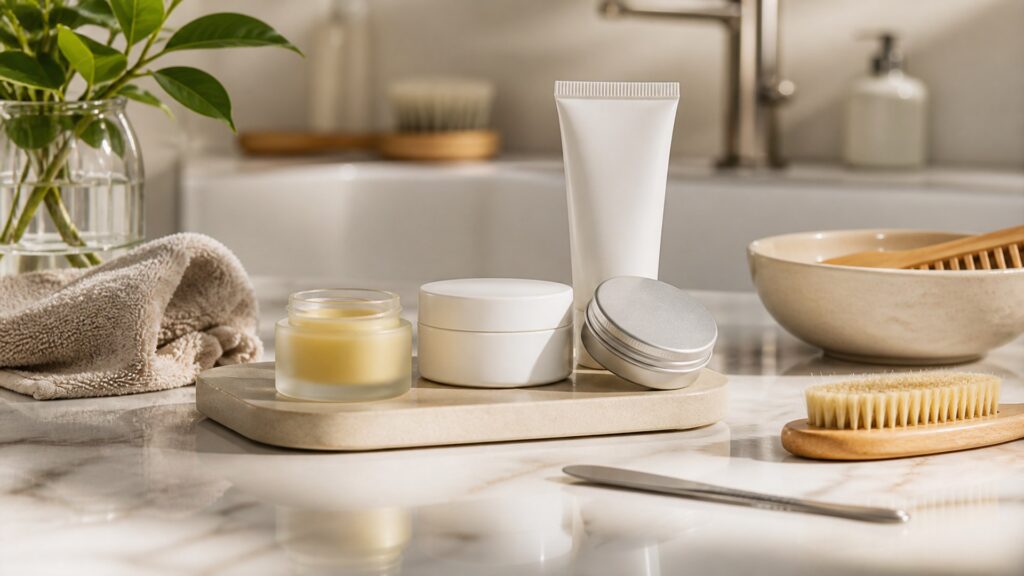
Buying framework
Define the dryness, roughness, and comfort routine before comparing products
Use the setting, frequency, and skin priorities to narrow hand repair balms logically.
Start with the use case: Separate tightness, scale, callus, fissures, rash, and exposure-related soreness.
Rank the practical tradeoffs: Use lighter cream for broad hydration and balm where water loss is greatest.
Check instructions early: Evaluate protected flexibility after work and washing, not only immediate softness.
Use profiles
Match hand repair balms to the person and pace
Three shopper profiles expose different priorities for dryness, roughness, and comfort.
Routine-focused buyer: A rough-knuckle user needs a thin durable film that bends comfortably.
Performance-focused buyer: A fingertip-edge user benefits from precision dosing that preserves tactile control.
Occasional or flexible user: A fissured-hand user should avoid fragranced actives and seek care if damage persists.
Specifications
Read the specifications through a dryness, roughness, and comfort lens
Translate technical language into visible routine benefits.
Handling lens
Flex the knuckles and fingertips after the film settles.
Ownership lens
Check condition again after one wash and a normal work interval.
Occlusive And Emollient Blend: Petrolatum strongly reduces water loss but leaves noticeable residue.
Texture And Spreadability: Waxes improve film durability and can increase application drag.
Fragrance Profile: Butters soften rough surfaces while varying in melting and transfer.
Wash Resistance: Urea or acids may help intact callus but sting open splits.
Tin Or Tube Hygiene: Silicones reduce tack and support smoother object handling.
Common mistakes
Avoid shortcuts that undermine dryness, roughness, and comfort
A good purchase can still disappoint when selection or use is based on the wrong assumption.
Buying from one metric: Do not scrub hands before applying balm to make them feel smoother.
Skipping compatibility checks: Avoid trapping cleaning residue beneath an occlusive layer.
Ignoring post-use care: Do not equate the thickest wax film with the best barrier recovery.
Decision guidance
Choose the simplest option that covers the real need
Use these decision rules to finish a shortlist for dryness, roughness, and comfort.
Choose the basic format when: Choose plain balm for localized intact dryness and protected rest.
Choose the flexible format when: Use a lighter film when daytime grip and repeated washing dominate.
Pause before upgrading when: Seek care for bleeding fissures, spreading dermatitis, swelling, drainage, or severe pain.
Ownership & compatibility
Plan for clean, repeatable ownership
The best value remains convenient after the first few uses.
Consumables and replacements: Apply small regular layers to clean skin.
Cleaning and storage: Protect hands from the exposure that repeatedly removes or contaminates the film.
Routine compatibility: Track flexibility, sting, grip, cracks, and protected hours separately.
FAQ
Hand Repair Balms Buying Guide for Dryness, Roughness, and Comfort FAQ
Practical answers about choosing and owning hand repair balms for dryness, roughness, and comfort.
What matters most when choosing hand repair balms for dryness, roughness, and comfort?
Is the most expensive option better for dryness, roughness, and comfort?
How should I compare two similar hand repair balms options?
Bottom line
Buy for repeatable dryness, roughness, and comfort results
A focused shortlist is easier to own and use well.
Prioritize fit: Use balm to reinforce selected dry zones, not replace broad hydration.
Verify the limits: Measure comfort during bending, grip, and washing.
Count ownership costs: Protect damaged skin from exposure before adding heavier film.
Reading Shortcuts
Jump to the key hand repair balms decisions.
Decision Reminders
Keep these checks beside your shortlist.
- Check occlusive and emollient blend: Patch test unfamiliar formulas and stop if persistent irritation develops.
- Check texture and spreadability: Do not rely on cosmetic balm for deep cracks, infection, or a worsening skin condition.
- Check fragrance profile: Apply with clean hands and keep jar or tin packaging free from water and contamination.
Glossary Snippets
Plain-language hand repair balms terms.
When to Use a Top 10 Review
Use a ranked list to identify a manageable set of strong candidates.
- You are still exploring: A ranked list can reveal the main formats and price tiers.
- You want a shortlist: Start broad, then confirm fit with this buying guide.
Have finalists? Use a Comparison.
When to Use a Comparison
Use a direct comparison when only a few candidates remain.
- Features are close: Side-by-side details clarify meaningful differences.
- Prices overlap: Compare ownership value, not only purchase price.
Still exploring? See the Top 10.