
Home Gym Equipment Buying Guide for Garage Gyms
Garage gym equipment operates inside a space designed first for vehicles, storage, utilities, and a large exterior door. Temperature swings, moisture, dust, slab slope, overhead tracks, and changing clearance can affect fit and ownership even when the floor area looks generous.
Map the garage with the door open and closed, vehicles parked and moving, and equipment in stored, loaded, and operating states. Verify slab level, floor system, anchoring, ceiling hardware, power, ventilation, drainage, weather exposure, and delivery. Choose materials and maintenance that match the environment, then inspect corrosion, rubber, upholstery, cables, electronics, and fasteners seasonally. Preserve access to panels, shutoffs, doors, and service routes rather than turning every wall into storage.
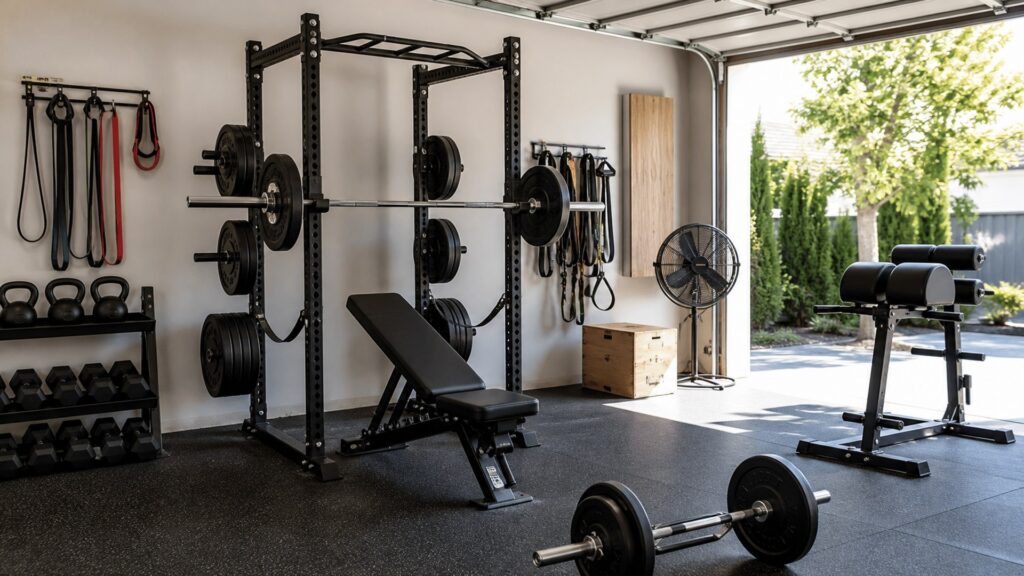
Buying framework
Treat the garage as a changing operating environment
A successful garage gym coordinates training, vehicles, door movement, structure, slab, weather, utilities, storage, and maintenance across every season.
Map vehicles and door states: Draw parked vehicles, backing and door-swing routes, charging cables, garage-door panels, tracks, springs, opener, and emergency release. Repeat the map with training equipment expanded and users moving.
Survey slab and water behavior: Check slope, cracks, joints, drains, low points, seepage, condensation, snow or rain entry, and cleaning water. Equipment feet and mats must remain level and dry according to instructions.
Record the environmental range: Observe seasonal temperature, humidity, direct sun, windblown dust, road salt, pests, and ventilation. Compare those conditions with equipment storage, operation, battery, display, upholstery, and lubricant requirements.
Verify structure and utilities: Locate framing, masonry, ceiling members, outlets, circuits, lights, fans, panels, shutoffs, and drainage. Use qualified help for structural or electrical questions and follow equipment installation instructions.
Protect service and emergency access: Keep garage-door controls, electrical panels, utility equipment, exits, fire-safety equipment, serial labels, fasteners, and wear parts reachable. Do not let plate trees or wall storage conceal required access.
Who this is for
Match equipment to the garage's competing jobs
A dedicated bay, shared vehicle bay, hot or cold climate, moisture-prone space, and heavy barbell setup impose different floor, storage, and maintenance demands.
Dedicated garage bay: Use the permanent room plan to verify racks, cables, cardio equipment, open floor, storage, and service. Dedicated space still needs clear door hardware, utilities, moisture control, and seasonal inspection.
Vehicle-sharing gym: Favor equipment with predictable conversion, protected wheels or latches, secure vertical storage, and no pieces in tire or door paths. Rehearse the transition with the actual vehicle and driver.
Hot-climate garage: Check operating temperature, direct sun, ventilation, fan placement, hydration access, upholstery, electronics, adhesives, and battery storage. Clothing and schedule help, but equipment still must remain within manufacturer conditions.
Cold or wet-climate garage: Plan snow and water boundaries, condensation, drying, corrosion inspection, cold-contact comfort, electronics, rubber behavior, and warm-up of the space where permitted. Keep equipment away from runoff and salt.
Heavy free-weight garage: Verify slab and floor interfaces, rack installation, platform level, plate and bar storage, overhead lift clearance, impact and vibration paths, neighbors, and a clear failed-lift zone.
What to pay attention to
Read garage specifications against weather and structure
Equipment dimensions and ratings must be combined with slab geometry, overhead systems, vehicles, environmental limits, utilities, corrosion exposure, and realistic service access.
Slab level and floor system: Measure slope where equipment feet, racks, benches, platforms, and cardio decks sit. Follow instructions for leveling, anchoring, mats, load distribution, seams, drainage, moisture, and floor protection.
Door, ceiling, and vehicle clearance: Check open and closed door panels, tracks, springs, opener, lights, rafters, storage, antennas, trunks, mirrors, bars, pull-up positions, cable arms, screens, and the tallest user movement.
Temperature and humidity limits: Read operating and storage conditions for electronics, batteries, displays, lubricants, belts, rubber, upholstery, adhesives, and finishes. Test where sun, exterior air, and vehicle heat alter the local environment.
Corrosion and contamination resistance: Inspect coatings, exposed steel, fasteners, cables, pulleys, bearings, electrical contacts, foam, and fabric around sweat, condensation, road salt, dust, and cleaning. No finish eliminates maintenance.
Power and ventilation: Verify outlets, circuit and grounding requirements, charger locations, cord protection, equipment air gaps, fans, and network access. Keep wiring away from tires, doors, water, weights, and temporary walking routes.
Storage load and retrieval: Confirm wall, ceiling, rack, tree, shelf, and cabinet capacity plus substrate and fasteners. Store heavy equipment below unstable overhead items and outside vehicle, door, platform, and utility paths.
Delivery, assembly, and service: Measure driveway grade, doorway, vehicle removal, component turns, ceiling, tools, helpers, packaging, and assembly area. Preserve space to inspect, clean, repair, replace parts, and eventually remove the equipment.
Avoid these traps
Avoid treating the garage like a climate-controlled room
Garage equipment fails early when slab slope, water, door movement, vehicle traffic, environmental limits, and corrosion are treated as background details.
Placing equipment over a sloped slab: A garage designed to drain may make racks, benches, and machines rock or track unevenly. Measure level and follow approved leveling or installation methods before loading.
Measuring with the door in one position: An open door can lower overhead clearance while a closed door changes ventilation and exit routes. Test equipment and user movement with every permitted door and vehicle state.
Sealing moisture beneath flooring: Large mats can hide seepage, condensation, cleaning water, or salt. Choose a floor plan that allows inspection and drying, and address the building moisture source rather than covering it.
Running temporary cords through traffic: Extension wiring across vehicle, door, weight, or walking paths adds damage and trip risks. Follow equipment instructions and obtain qualified electrical help for a suitable permanent plan when needed.
Assuming coated steel cannot corrode: Scratches, fasteners, welds, sleeves, cable ends, and contact points still need cleaning and inspection. Remove salt and moisture promptly and follow the manufacturer's finish and lubrication guidance.
Decision guidance
Rehearse the garage through every operating state
The comparison should survive vehicles, door movement, realistic weather, training, cleanup, inspection, and service without blocking the building's other essential functions.
Draw a state-by-state garage map: Include each vehicle, door position, equipment state, user, bar, cable, plate route, utility, outlet, drain, storage load, panel, and exit. Mark seasonal snow, water, and sun zones.
Measure level and overhead movement: Survey equipment contact points and tape the tallest and widest operating paths. Open doors, trunks, hoods, windows, cabinets, and garage hardware while checking conflicts.
Run a weather-aware trial: Test realistic heat, cold, humidity, ventilation, light, and noise when safe and permitted. Observe grip, upholstery, screens, battery behavior, condensation, dust, and the user's ability to stop or leave.
Complete vehicle and workout transitions: Move from parked state to training, set up and use representative equipment, reset all loads, and restore the vehicle. Count heavy lifts, wheels, latches, temporary piles, cords, and cleaning steps.
Audit maintenance and service: Reach fasteners, anchors, belts, cables, electronics, serial labels, and replacement paths. Confirm manuals, parts, recall status, warranty conditions, technician access, and environmental exclusions before commitment.
Ownership & compatibility
Inspect the garage gym with the seasons
Environmental and room interfaces change across heat, cold, storms, vehicle use, and storage changes, so the original setup needs recurring verification.
Run a seasonal condition audit: Record temperature, humidity, water entry, condensation, dust, salt, pests, and sun around equipment. Adjust permitted storage, ventilation, cleaning, and inspection without exceeding product environmental guidance.
Inspect floors and anchors: Check cracks, seams, mats, compression, trapped moisture, level, equipment feet, fasteners, and mounting surfaces. Stop use when shifting or deterioration makes the verified station uncertain.
Clean road and training residue: Separate vehicle dirt, salt, fluids, chalk, sweat, and outdoor debris. Use approved methods for each equipment material and keep contamination away from belts, bearings, cables, electronics, grips, and upholstery.
Protect power and moving doors: Inspect cords, plugs, outlets, chargers, fans, lights, and network devices while confirming the garage door, overhead hardware, power unit, and manual release retain clear travel and access. Address changes before the next workout.
Update storage and vehicle rules: Recheck complete loads, fasteners, retrieval, overhead placement, tire paths, mirrors, children, and new vehicles or equipment. A safe dedicated bay can become conflicted after one storage addition.
FAQ
Garage gym equipment questions
These answers cover garage suitability, flooring, slab slope, temperature, moisture, rust, door and vehicle clearance, power, and ongoing seasonal maintenance.
Is a garage suitable for home gym equipment?
What flooring should a garage gym use?
How does garage slab slope affect equipment?
Can gym equipment stay in a hot or cold garage?
How can I protect garage gym equipment from moisture?
How do I prevent rust in a garage gym?
What garage-door clearances should a gym keep?
How should garage gym power be planned?
How often should garage gym equipment be inspected?
Bottom line
Choose equipment for the garage you actually have
The right garage-gym equipment remains level, clear of doors and vehicles, inside environmental limits, supported by suitable utilities, and accessible for seasonal inspection and service.
Map competing motion: Combine vehicles, doors, bars, cables, users, storage, utilities, and exits in every state.
Measure the environment: Check slab level, water, temperature, humidity, dust, salt, sun, and ventilation.
Verify support: Follow flooring, anchoring, power, clearance, assembly, environmental, and service instructions.
Inspect seasonally: Recheck corrosion, mats, fasteners, cords, moving doors, storage loads, and records.
Reading Shortcuts
Jump to the garage-environment framework, space profiles, slab and weather specifications, or common floor, temperature, moisture, door, and power questions.
Decision Reminders
Keep slab level, water, door and vehicle states, ceiling hardware, temperature, moisture, corrosion, floor support, power, ventilation, storage, and service visible.
- States: Map vehicles, doors, equipment, users, storage, utilities, and exits together.
- Slab: Check slope, cracks, joints, drainage, mats, level, anchors, and moisture.
- Climate: Verify temperature, humidity, sun, dust, salt, ventilation, and product limits.
- Access: Preserve panels, shutoffs, door controls, serial labels, inspection, and part removal.
Glossary Snippets
Terms for understanding the building, floor, and environmental interfaces of garage gym equipment.
When a Top 10 Helps
Use garage-equipment rankings after mapping training, vehicles, doors, slab, floor system, ceiling, environment, power, ventilation, storage, delivery, maintenance, and service.
- Environment filter: Reject products whose operating or storage limits do not fit measured garage conditions.
- Clearance filter: Rank only equipment verified against doors, vehicles, ceilings, users, utilities, and service.
A garage-gym ranking cannot establish slab level, structural capacity, electrical suitability, environmental control, or vehicle clearance at your property.
When a Comparison Helps
Compare finalists across the same garage states, seasons, slab points, door and vehicle movements, power plan, complete workout, cleanup, inspection, and service access.
- Training state: Compare level, clearance, grip, environment, noise, controls, ventilation, and user movement.
- Garage state: Inspect vehicle return, doors, cords, moisture, storage, utilities, cleaning, corrosion, and service.
Choose the equipment that remains supportable after the garage door, weather, vehicles, and maintenance needs are included.