
Hot Brushes Buying Guide for Curl Definition
Hot brushes usually create bends, waves, or reinforced curl shape rather than compact curls. Barrel size, bristle release, and the ability to control the ends determine whether definition looks intentional or turns into stretched frizz.
Treat curl definition as a compatibility test with your existing pattern. The device should organize selected sections without erasing all texture, trapping the tips, or requiring a temperature that the hair cannot tolerate comfortably.
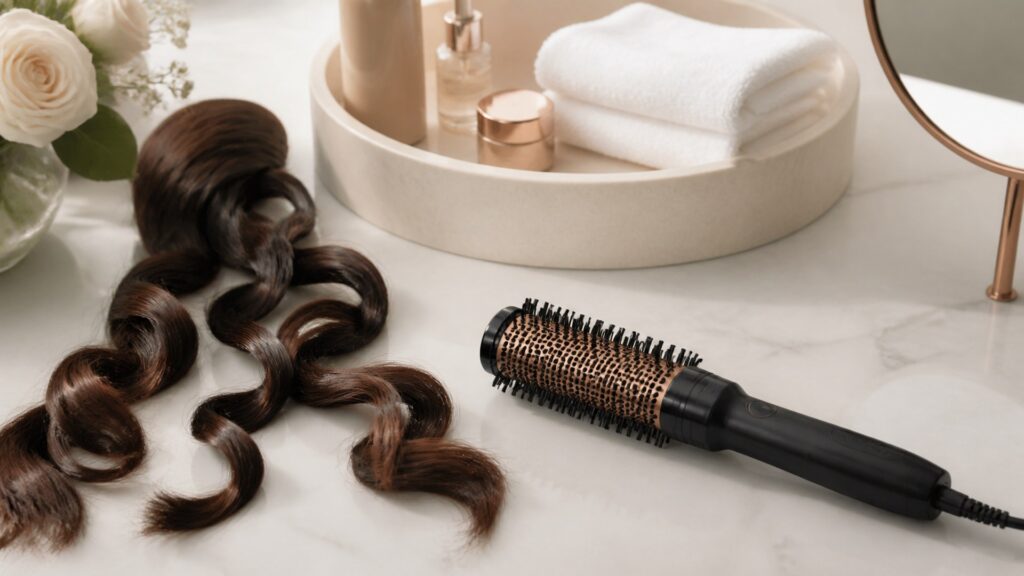
Frame the real job
Start with the result you want from a hot brush
Name the curl job precisely: refreshing an outer layer, bending straight sections, turning ends, or shaping a soft wave.
Write a finish brief: Preserve natural pattern where it already works.
Rehearse the sequence: Choose a reference with similar length and density.
Choose a stopping rule: Tight ringlets may require a different tool category.
Fit tool to user
Who benefits from this hot brush setup?
Short layers favor smaller heads and generous edge clearance.
Occasional finisher: Long hair needs enough working length without awkward weight.
Routine stylist: Naturally curly users may seek selective definition rather than full smoothing.
Technique-minded buyer: Beginners should prioritize easy unwinding; advanced rotation cannot rescue bristles that routinely trap ends.
Translate the specification sheet
Features that affect curl definition
Compare barrel circumference, head shape, bristle flexibility, tip finish, heat consistency, and space near the edges.
Evidence from the first session
A round silhouette supports rotation, while paddle forms primarily smooth.
Evidence after repetition
Check the grip and swivel cord through both clockwise and counterclockwise movements before buying.
Control under load: A round silhouette supports rotation, while paddle forms primarily smooth.
Contact and release: Check the grip and swivel cord through both clockwise and counterclockwise movements before buying.
Settings you can repeat: For hot brushes buying guide for curl definition, record this point during a complete session before reaching a verdict.
Avoid misleading trials
Common errors when testing for curl definition
Detangle the chosen section but avoid stripping its intended pattern.
Chasing the hottest result: Follow the specified dry or damp condition and start with moderate exposure.
Using showcase sections: Keep fingers away from the barrel, never wrap hair tightly, and unwind along the same path instead of pulling downward through resistance.
Ignoring tool boundaries: For hot brushes buying guide for curl definition, record this point during a complete session before reaching a verdict.
Spend for demonstrated value
Choose a basic model, upgrade, or keep waiting
Pay more for a diameter that fits the intended curl, smooth release, and regulation you can repeat.
Choose the straightforward option: Do not buy a large smoothing head because advertising shows waves on unusually long hair.
Upgrade for a named constraint: If precise curls are the priority, compare dedicated curling tools before committing.
Wait when evidence is thin: For hot brushes buying guide for curl definition, record this point during a complete session before reaching a verdict.
Include life after checkout
Cleaning, storage, and safe use of a hot brush
Remove wound strands only after the brush is unplugged and cold.
Build a cooling habit: Work them free gently from the ends of the bristles toward the base.
Clean without damaging parts: Clean styling film as instructed.
Inspect before restarting: Bent tips, loose barrels, or inconsistent heating can spoil release and signal retirement.
Practical answers
Questions buyers ask about a hot brush for curl definition
Answers to the decisions that most often change a hot brushes buying guide for curl definition shortlist.
What matters first when choosing for Curl Definition?
How should I test the tool at home?
Does the headline feature guarantee better results?
What is a clear reason to reject or replace it?
Make the final call
Your final hot brush check
Choose the brush that shapes repeatable bends while letting the section unwind cleanly.
Return to the brief: Definition should blend with the rest of the hair and remain comfortable to create on both sides.
Review the whole session: Persistent tangling or limp stretched texture means the geometry is wrong.
Record the reason: Bent tips, loose barrels, or inconsistent heating can spoil release and signal retirement.
Reading Shortcuts
Jump to the evidence you need for a curl definition decision.
Decision Reminders
Keep these hot brush checkpoints beside your shortlist.
- Desired result: Shape soft bends or reinforce definition without trapping the ends.
- Fair trial: Judge repeatability on both sides of the head.
- Safety limit: Keep sections narrow, rotate gently, and unwind instead of pulling through a knot.
Glossary Snippets
Terms that clarify a hot brush comparison.
When a Top 10 List Helps
Use a ranked list to discover credible hot brush formats, then screen them against the curl definition routine.
- The format is undecided: A broad list reveals plausible forms and price levels.
- A shortlist is needed: Rankings narrow discovery but do not replace fit testing.
Have finalists already? Open the comparison section.
When a Direct Comparison Helps
Place finalists side by side only after confirming that each can perform the curl definition job safely.
- Two candidates remain: Side-by-side evidence exposes meaningful tradeoffs.
- An upgrade is uncertain: Compare whether added cost corrects the original weakness.
Still exploring? Start with the Top 10 section.