
Hot Brushes Buying Guide: How to Choose the Right One
A hot brush sits between a finishing brush and a heated styling tool, but it cannot perform every job of either. Choose one by deciding whether you need root lift, straighter lengths, curved ends, or quick surface control.
The best general-purpose design feels easy to guide and equally easy to release. Bristles should organize a manageable section without trapping it, while the heated area should stay predictable across the settings you will genuinely use.
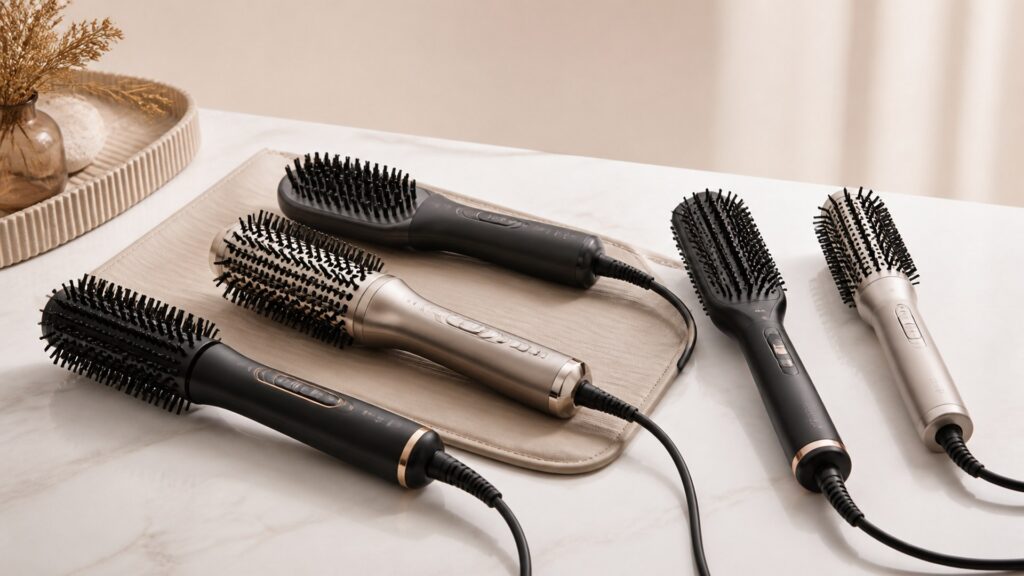
Frame the real job
Start with the result you want from a hot brush
Start at the mirror, not the specification sheet.
Write a finish brief: Identify where the current routine breaks down: roots, mid-length frizz, awkward ends, or coordination with a separate dryer.
Rehearse the sequence: Give the new brush one primary assignment.
Choose a stopping rule: A vague promise of versatility makes a poor test standard.
Fit tool to user
Who benefits from this hot brush setup?
Short hair needs a head that can approach the roots without touching skin.
Occasional finisher: Long dense hair demands enough bristle depth to engage a section.
Routine stylist: Beginners often value uncomplicated controls.
Technique-minded buyer: Skilled users may exploit rotation and tension, but nobody benefits from a slippery oversized handle.
Translate the specification sheet
Features that affect an everyday styling routine
Study bristle tips, spacing, heated-surface exposure, head profile, and handle balance.
Evidence from the first session
Confirm that temperature markings are understandable.
Evidence after repetition
If the brush uses removable parts, attach them repeatedly and listen for a positive secure lock.
Control under load: Confirm that temperature markings are understandable.
Contact and release: A swivel cord should move without twisting the wrist.
Settings you can repeat: If the brush uses removable parts, attach them repeatedly and listen for a positive secure lock.
Avoid misleading trials
Common errors when testing for an everyday styling routine
Detangle before switching on the appliance.
Chasing the hottest result: Keep fingers and scalp clear of heated surfaces, and do not wind hair tightly around fixed bristles.
Using showcase sections: Follow wet-versus-dry instructions exactly.
Ignoring tool boundaries: Place the hot unit on a stable resistant surface whenever you pause.
Spend for demonstrated value
Choose a basic model, upgrade, or keep waiting
Straightforward controls and sound bristles matter more than a long accessory list.
Choose the straightforward option: Upgrade for a genuinely better low setting, easier reach, or noticeably improved balance.
Upgrade for a named constraint: Avoid spending extra for rotation, mist, or attachments unless those functions solve a recurring styling obstacle.
Wait when evidence is thin: For hot brushes buying guide: how to choose the right one, record this point during a complete session before reaching a verdict.
Include life after checkout
Cleaning, storage, and safe use of a hot brush
Remove captured strands only after unplugging and cooling.
Build a cooling habit: Clear vents with the method in the manual, then wipe residue from accessible surfaces.
Clean without damaging parts: Store the cord loosely instead of winding it around the hot brush.
Inspect before restarting: Check bristles and seams before the next session.
Practical answers
Questions buyers ask about a hot brush for an everyday styling routine
Answers to the decisions that most often change a hot brushes buying guide: how to choose the right one shortlist.
What matters first when choosing for Hot Brushes Buying Guide: How to Choose the Right One?
How should I test the tool at home?
Does the headline feature guarantee better results?
What is a clear reason to reject or replace it?
Make the final call
Your final hot brush check
Select the model that completes its assigned job without snags, scorched odor, or hand fatigue.
Return to the brief: The winning brush should leave hair easy to release and make the overall routine simpler.
Review the whole session: If it merely relocates work to another step, keep searching.
Record the reason: Check bristles and seams before the next session.
Reading Shortcuts
Jump to the evidence you need for a an everyday styling routine decision.
Decision Reminders
Keep these hot brush checkpoints beside your shortlist.
- Desired result: Add controlled tension and surface polish without juggling a round brush.
- Fair trial: Release each section easily after a smooth root-to-end stroke.
- Safety limit: Detangle first, keep the appliance away from the scalp, and never wrap hair tightly around fixed bristles.
Glossary Snippets
Terms that clarify a hot brush comparison.
When a Top 10 List Helps
Use a ranked list to discover credible hot brush formats, then screen them against the an everyday styling routine routine.
- The format is undecided: A broad list reveals plausible forms and price levels.
- A shortlist is needed: Rankings narrow discovery but do not replace fit testing.
Have finalists already? Open the comparison section.
When a Direct Comparison Helps
Place finalists side by side only after confirming that each can perform the an everyday styling routine job safely.
- Two candidates remain: Side-by-side evidence exposes meaningful tradeoffs.
- An upgrade is uncertain: Compare whether added cost corrects the original weakness.
Still exploring? Start with the Top 10 section.