How Agility Training Equipment Works

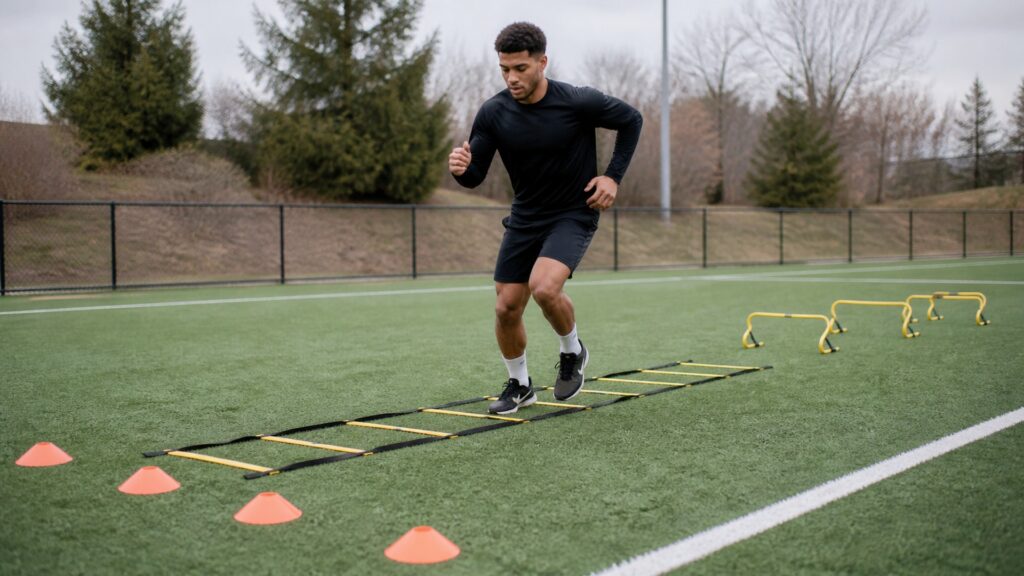
Agility training equipment works by giving athletes clear targets, boundaries, timing cues, and movement problems to solve. Ladders, cones, hurdles, markers, resistance bands, reaction lights, and timing tools do not create agility by themselves; they organize practice so footwork, body control, acceleration, deceleration, and direction changes can be trained more deliberately.

The best agility tools make movement quality easier to see. They show where the athlete should place the feet, when to change direction, how low to control the body, and whether speed is staying coordinated instead of sloppy.

By: Review Streets Research Lab
Updated: October 2, 2026
Explainer · 8-12 min read
agility training equipment explainer hero image for Review Streets
What You'll Learn

How Agility Tools Shape Movement Practice

A practical look at cones, ladders, hurdles, reaction cues, resistance, and timing.

  • How markers and cones define movement paths
  • Why ladders train rhythm more than magic foot speed
  • Where hurdles and bands change body control
  • How reaction tools add decision-making
  • Why timing and quality checks matter

Tip: Start with the swimming situation, then choose the gear detail that solves that specific problem.

Definitions

Key Concepts Behind How Agility Training Equipment Works

These concepts keep the decision tied to fit, water conditions, training purpose, and realistic limits.

Movement Target

A movement target is a visible point or space the athlete uses to organize foot placement or direction.

  • Example: cones marking a cut angle
  • Check: check whether the target matches the drill
  • Limit: targets do not guarantee good mechanics

Footwork Rhythm

Footwork rhythm is the timing and sequence of steps during a drill.

  • Example: ladder patterns used for quick coordinated steps
  • Check: watch accuracy before speed
  • Limit: fast feet without control are not agility

Deceleration Control

Deceleration control is the ability to slow down safely before changing direction.

  • Example: stopping at a cone before cutting back
  • Check: look for stable knee, hip, and trunk position
  • Limit: poor stopping mechanics can raise strain

Reaction Cue

A reaction cue tells the athlete when or where to move.

  • Example: a light, coach point, or color call
  • Check: make sure the cue changes the decision
  • Limit: scripted drills can become memorized

Resistance Load

Resistance load is added force that changes acceleration, posture, or effort.

  • Example: a light band resisted shuffle
  • Check: keep load small enough for clean movement
  • Limit: too much resistance changes the drill

Timing Feedback

Timing feedback measures speed, repeatability, or improvement across attempts.

  • Example: timing gates for a shuttle drill
  • Check: compare times with movement quality
  • Limit: faster is not better if control disappears

Tip: The useful feature is the one that makes the swim clearer, safer, or easier to repeat.

Markers

Cones And Lines Give The Drill A Shape

Cones, dots, and floor markers show the athlete where to start, stop, cut, or accelerate. They turn open space into a repeatable movement problem.

  • Use markers to define distance and angle.
  • Keep spacing appropriate for the athlete.
  • Change the layout when the drill becomes automatic.

Good markers make the movement task clear.

Rhythm

Ladders Train Coordination And Step Accuracy

Agility ladders are best understood as rhythm and coordination tools. They can help athletes practice quick step patterns, but they do not prove game-ready agility by themselves.

  • Prioritize clean steps before speed.
  • Use short sets to avoid sloppy reps.
  • Pair ladder work with open-space movement.

The ladder is a coordination tool, not a complete agility program.

Control

Hurdles And Boundaries Teach Body Position

Mini hurdles, low barriers, and boundary lines can encourage better knee lift, hip control, landing position, and spatial awareness. The height and spacing should support the drill instead of forcing awkward movement.

  • Use low hurdles for quality reps.
  • Watch landings and posture.
  • Avoid setups that make athletes reach or stumble.

Control matters more than making the obstacle look difficult.

Reaction

Cues Add Decision-Making

Agility is not only a planned route. Reaction lights, coach commands, partner cues, or color calls can make the athlete respond to changing information.

  • Add reaction only after the pattern is safe.
  • Keep cues simple at first.
  • Use random cues when decision-making is the goal.

The cue should change the athlete's choice, not just decorate the drill.

Measurement

Timing Tools Need Quality Context

Timers, gates, and apps can show whether an athlete is getting faster, but speed without control is not the target. The best checks combine time with body position, balance, and repeatability.

  • Record time and quality notes together.
  • Compare similar setups only.
  • Stop chasing time when technique breaks down.

Measurement helps when it supports better movement decisions.

Quick Reality Check

Where Agility Equipment Helps

Agility tools make movement practice easier to organize and repeat.

Where It Helps

It gives athletes targets, spacing, cues, and feedback.

It helps coaches see footwork, stopping control, and reaction quality.

Where It Falls Short

It cannot replace strength, skill coaching, or sport-specific decision-making.

It can reward fast but uncontrolled movement if used poorly.

Common Myths

Misconceptions About Agility Training Equipment

The equipment organizes the drill; it does not create agility automatically.

Ladders automatically make athletes faster

Ladders can improve rhythm and coordination, but speed needs broader movement practice.

Harder setups are better

A complicated drill can reduce quality if the athlete is not ready.

Reaction lights replace coaching

Lights add cues, but coaches still need to watch mechanics and decisions.

The fastest rep is always the best rep

A fast rep with poor braking or posture can be the wrong result.

Tip: Strong claims still need to match the swimmer, pool, and session.

FAQ

Frequently Asked Questions About Agility Training Equipment

Short answers for practical swimming decisions.

What does agility equipment actually do?

It creates targets, cues, spacing, resistance, or timing so movement practice is more specific.

Are agility ladders useful?

Yes, for rhythm, coordination, and foot placement, but they are only one piece of agility training.

What equipment should beginners start with?

Cones, flat markers, and simple low hurdles are often enough for clear, safe drills.

Do reaction lights matter?

They can help when the goal is responding to changing cues, but they should follow basic movement control.

What is the practical takeaway?

Use agility equipment to organize better movement practice, then judge speed and control together.

Bottom Line

Agility training equipment works by shaping space, cues, resistance, and feedback so athletes can practice better footwork, braking, direction changes, and reactions.

The tool is useful when it improves movement quality, not just when it makes a drill look faster or busier.

Next Steps

Go Deeper or Compare Your Options

Use these Review Streets paths to compare related categories and practical next decisions.

Fitness

Return to the fitness hub.