How Band Saws Work

Band saws are often described simply as continuous cutting tools, but that description overlooks the coordinated system that governs how they operate. Their function depends on the precise interaction between a moving blade, driven wheels, and controlled tension, all working together to maintain stability and direction through a cut. Without understanding these relationships, it is easy to misinterpret how cutting force, tracking, and material engagement are actually managed.

This explainer outlines the core mechanical system behind band saw operation, including blade motion, wheel alignment, tensioning, and guide control. It also clarifies how the motor transfers power through the system and how these elements influence cutting behavior. By the end, the underlying mechanics and their roles in maintaining consistent, controlled cuts will be clearly defined.

By: Review Streets Research Lab
Updated: April 19, 2026
Explainer · 8–12 min read
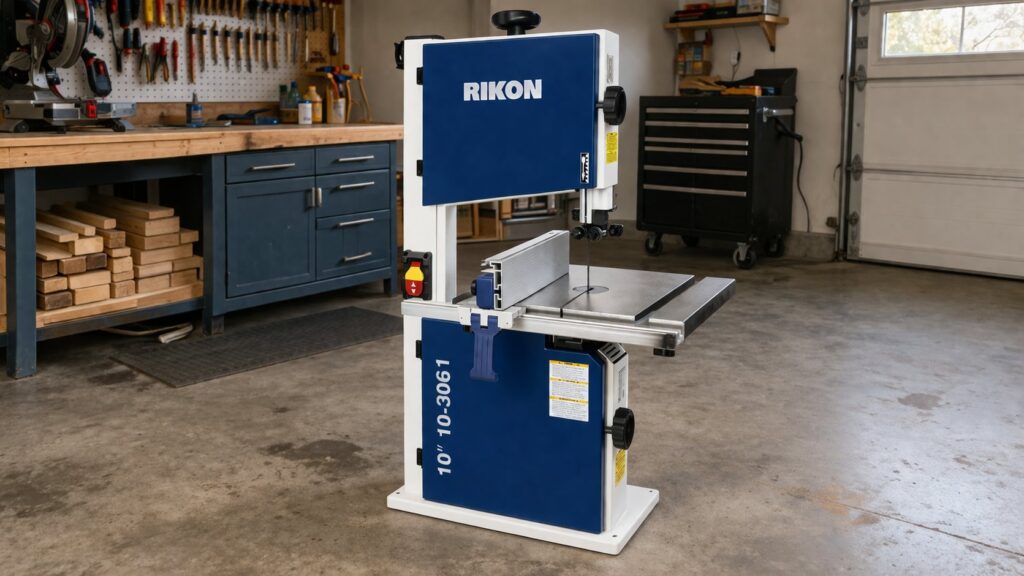
Rikon 10-3061 band saw for home DIY woodworking projects
What You’ll Learn

How Band Saws Work

A structured explanation of the internal system—so you can understand blade motion, tracking stability, and how mechanical components maintain consistent cutting behavior.

  • How the motor drives the wheels to create continuous blade motion
  • What blade tension does and how it affects tracking and stability
  • How upper and lower wheels guide and support the blade path
  • Why blade speed and tooth interaction determine cutting behavior under load
  • How guide bearings and blocks control deflection during material engagement
  • What causes drift, vibration, or instability during continuous cutting operations
  • How the table and frame maintain alignment throughout the cutting process

Tip: If you understand the motion path (motor → wheels → blade → guides), you can identify how stability and tracking are maintained during a cut.

Definitions

Key Parts That Make a Band Saw Work

Before the full mechanism makes sense, it helps to understand how each major component contributes to blade motion, control, and cutting stability.

Motor

The motor provides the rotational force that drives the saw’s wheel system. Its output determines how consistently the blade keeps moving as cutting resistance changes.

  • Power input: Supplies the energy that sets the drive system in motion
  • Load response: Affects how speed changes when material resists the blade
  • Heat buildup: Increases when resistance rises and sustained demand remains high

Drive Wheels

The upper and lower wheels carry the blade in a continuous loop and keep it moving along a fixed path. Their alignment and balance influence tracking, vibration, and motion consistency.

  • Rotation: Transfers motor-driven movement into continuous blade travel
  • Alignment: Keeps the blade centered and moving in a stable path
  • Balance: Reduces vibration that can disturb smooth cutting behavior

Blade

The blade is the cutting element that moves continuously around the wheel system. Its width, tooth pattern, and tension influence how it enters material and resists deflection.

  • Tooth action: Removes material in small, repeated cutting engagements
  • Blade width: Influences straight tracking and the ability to follow curves
  • Tension state: Helps the blade stay straight while under cutting load

Blade Guides

The guide system supports the blade near the cut and limits unwanted side movement. This control becomes especially important when cutting pressure pushes the blade away from its intended line.

  • Side control: Restrains lateral movement as the blade enters material
  • Rear support: Helps manage backward pressure during active cutting
  • Guide position: Changes how much unsupported blade length can flex

Table and Frame

The table supports the workpiece while the frame holds the operating system in alignment. Their rigidity helps maintain consistent relationships between the blade, guides, and cutting surface.

  • Work support: Provides a stable reference plane for material movement
  • Structural rigidity: Limits flex that can disturb alignment during operation
  • Positional accuracy: Keeps key components working from fixed reference points

Blade Tension

Blade tension is the controlled force that keeps the blade stretched between the wheels. It affects tracking accuracy, cutting stability, and how the blade responds when material pushes against it.

  • Tracking stability: Helps the blade remain properly positioned on the wheels
  • Cutting control: Reduces wandering caused by flex under resistance
  • System balance: Works with guides and wheel alignment to manage motion

Tip: A band saw works as one continuous motion system, where motor output, wheel movement, blade tension, and guide control all shape the cut together.

Power Path

How Motion Moves Through a Band Saw System

A band saw operates through a continuous motion path rather than a single cutting action. Understanding that path explains how rotational force becomes controlled blade movement at the cut.

  • The motor generates rotational force that starts the drive system moving
  • The lower wheel transfers that force into continuous blade travel
  • The upper wheel maintains the loop and helps stabilize blade tracking
  • The tensioned blade carries motion through the cutting zone
  • The guides control that moving blade as it meets resistance from material

When this motion path stays aligned and stable, cutting behavior remains more predictable under load.

Blade Motion

Continuous Blade Movement Defines How the System Cuts

The blade does not move back and forth or spin in place. It travels in one uninterrupted loop, which changes how force is applied and how material is removed.

  • Looped travel keeps the cutting edge moving in the same direction through the work
  • Tooth sequence spreads cutting action across many small engagements instead of one large impact
  • Steady motion reduces interruption in the cut and supports smoother material feed

This continuous movement is central to the band saw’s controlled cutting character and surface behavior.

Guidance and Support

Why Blade Control Matters More Than Blade Motion Alone

Blade movement only becomes useful when that movement is held in a controlled path. Guides, wheel alignment, and tension work together to keep the blade from wandering or flexing excessively.

  • Guide blocks or bearings limit side-to-side movement near the cut
  • Rear support helps manage backward pressure as the blade enters material
  • Wheel alignment keeps the blade tracking in the intended running position
  • Blade tension reduces deflection when cutting forces push against the blade

Cutting accuracy depends less on motion alone than on how well the system controls that motion.

Load and Resistance

Cutting Behavior Changes as Material Pushes Back Against the Blade

A band saw is not cutting in isolation; the material continuously resists the moving blade. That resistance influences speed stability, deflection, heat generation, and overall cutting behavior.

  • Dense or thick material increases resistance along the cutting edge
  • Higher resistance can slow blade speed if motor output is insufficient
  • Uneven feed pressure can push the blade away from its intended line
  • Friction rises when chip removal and tooth engagement become less efficient

Real cutting performance is shaped by the interaction between blade motion and the resistance created at the workpiece.

Structural Control

Frame and Table Stability Hold the Entire Cutting System in Alignment

The moving parts of a band saw rely on a rigid structure to preserve their relationships under load. The frame and table provide the fixed reference points that keep motion, support, and work positioning coordinated.

  • A rigid frame helps the wheels and guides stay properly aligned
  • The table supports the workpiece at a consistent angle to the blade
  • Structural flex can alter tracking, support, and material presentation during cutting
  • Stable geometry allows the blade path to remain consistent through the cut

When the structure remains steady, the saw’s moving system can perform with greater consistency and control.

Quick Reality Check

Where Band Saws Stay Controlled — and Where Limits Appear

A quick, mechanism-focused balance: where the system maintains steady cutting behavior, and where resistance, setup, or geometry can expose its limits.

Where the System Stays Stable

Band saws work smoothly when blade tension, guide support, and wheel tracking remain in balance through a continuous, controlled cutting path.

That stability is most visible when the blade removes material steadily without abrupt force changes, allowing motion and support systems to stay coordinated.

Where System Limits Show Up

Band saw behavior becomes less stable when cutting resistance rises enough to increase blade deflection, disturb tracking, or slow motion through the cut.

These limits appear when tension, guide position, blade geometry, and material load stop working as one aligned system under continuous resistance.

Common Myths

Misconceptions About How Band Saws Actually Work

Band saw operation is often reduced to simple ideas that overlook how motion, tension, guidance, and resistance work together as one system.

The blade cuts because it is simply sharp

Sharpness matters, but cutting depends on continuous blade motion, tooth geometry, tension, and guide control working together. The blade removes material effectively because the entire system keeps that cutting edge moving in a stable, supported path.

More blade tension always improves cutting

Tension helps stabilize the blade, but it is only one part of control. Tracking, guide position, wheel alignment, and material resistance also affect whether the blade stays straight and behaves predictably during a cut.

The wheels only spin the blade around

The wheels do more than carry motion through the loop. Their alignment, balance, and relationship to blade tension influence tracking stability, vibration, and how consistently the blade stays in its intended running position.

Blade drift comes from the operator alone

Drift is a system response, not just a handling issue. Blade condition, tension, guide setup, tracking, and cutting resistance can all influence whether the blade begins to move away from its intended line.

A band saw cuts the same under all loads

Cutting behavior changes as the material pushes back against the blade. Higher resistance can affect blade speed, increase deflection, and place greater demands on the motor, guides, and support system at the same time.

Tip: The clearest way to understand a band saw is to treat it as a continuous motion system, not as a blade acting on its own.

FAQ

Frequently Asked Questions About How Band Saws Work

Clear, mechanism-focused answers that explain how blade motion, tension, guidance, and resistance interact during continuous cutting.

What actually drives the blade in a band saw system?

The motor turns the lower drive wheel, which pulls the blade through a continuous loop while the upper wheel maintains alignment. This creates steady, uninterrupted motion rather than the back-and-forth or spinning action seen in other cutting systems.

Why does blade tension matter for cutting stability?

Blade tension keeps the blade stretched between the wheels so it resists bending under load. Without sufficient tension, cutting forces can push the blade off its intended path, increasing deflection and reducing tracking consistency.

How do blade guides affect cutting behavior during operation?

Blade guides support the blade close to the cut and limit unwanted movement as resistance builds. They help control side-to-side deflection and stabilize the blade so it stays aligned while material is being removed.

Why does a band saw blade sometimes drift during a cut?

Drift occurs when the balance between tension, guide support, blade condition, and cutting resistance shifts. If one part of the system is out of alignment, the blade can gradually move away from its intended cutting line.

What determines how smoothly a band saw cuts material?

Smooth cutting depends on steady blade motion, consistent tooth engagement, and stable system alignment. When these elements remain balanced, the blade removes material evenly without sudden changes in force or direction.

Why does cutting performance change with different materials or thicknesses?

Different materials create varying levels of resistance against the blade. Higher resistance increases load on the system, which can affect blade speed, deflection, and how effectively the teeth clear material during the cut.

How do the wheels influence blade tracking and stability?

The wheels guide the blade along a fixed path and determine how it tracks during operation. Their alignment, balance, and interaction with blade tension influence whether the blade stays centered and moves smoothly.

What role does the frame play in overall cutting performance?

The frame holds the wheels, guides, and table in fixed alignment under load. If the structure flexes or shifts, it can change the relationship between components and affect how consistently the blade follows its intended path.

Tip: When a band saw behaves unpredictably, trace the system—motion, tension, guidance, and structure—to identify where alignment or balance is breaking down.

Bottom Line

Band saws work through continuous motion, controlled tension, and guided blade stability. The motor, wheels, blade, guides, and frame interact continuously, and cutting behavior changes whenever that system loses alignment, support, or balance under load.

Once that system is clear, blade drift, vibration, and changing cut behavior become easier to interpret as mechanical responses rather than isolated problems.

Next Steps

Go Further Into the Category

With the core mechanism in view, these pages extend that understanding into broader category overviews, direct feature analysis, and decision-focused guidance.

Band Saw Roundups

Editorial roundup pages that organize the category by use case, helping clarify how different designs align with different types of work.

Band Saw Comparisons

Focused comparison pages that isolate key differences in design, function, and cutting behavior so category distinctions are easier to interpret.

Band Saw Buying Guides

Decision-oriented guides that explain which specifications, layout choices, and functional tradeoffs matter when narrowing the category for practical use.

Quick Summary

How Band Saws Work

  • Band saws cut through continuous blade motion guided by wheels and supports
  • Blade tension stabilizes the loop and helps resist deflection under load
  • Guides control blade movement near the cut as resistance increases
  • Wheel alignment influences tracking, vibration, and overall motion consistency
  • Cutting behavior changes when material resistance disrupts system balance