
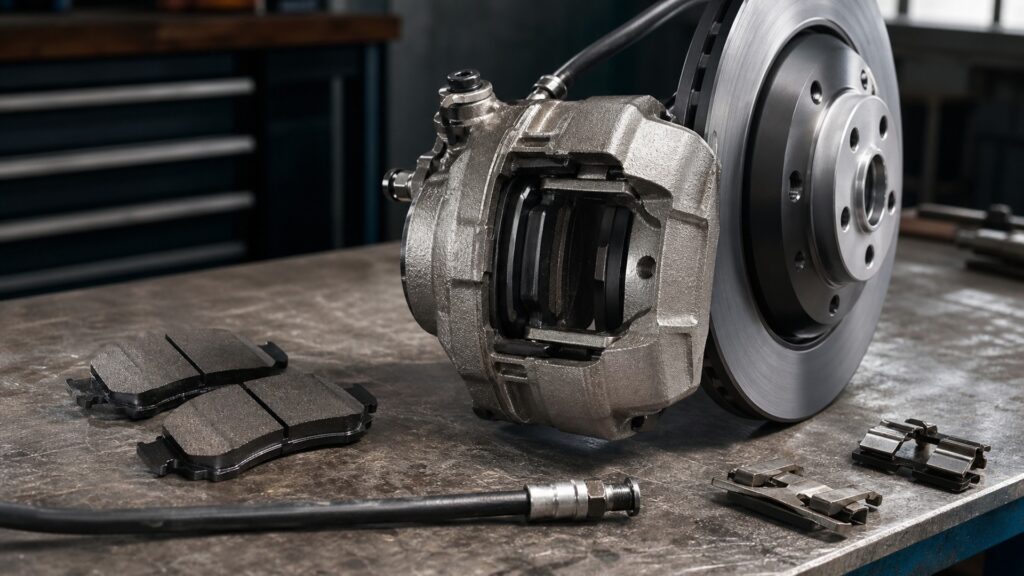
How Brake Calipers Work

Brake calipers are the clamping part of a disc brake system, but their job is more precise than simply squeezing a rotor. They turn hydraulic pressure from the brake pedal into controlled pad force, then release cleanly enough to avoid drag, heat, and uneven wear.

Understanding how brake calipers work helps shoppers and repair-minded readers compare replacement parts with better judgment. The important details are piston movement, pad support, seal behavior, heat control, and the way the caliper fits into the full braking system.

By: Review Streets Research Lab
Updated: June 16, 2026
Explainer · 8-12 min read
how brake calipers work brake caliper explainer image
What You'll Learn

How Brake Calipers Turn Pedal Force Into Stopping Force

A system-level look at hydraulic pressure, piston movement, pad clamping, release behavior, and heat in disc brakes.

  • What a brake caliper does inside a disc brake system
  • How hydraulic pressure moves pistons and pads toward the rotor
  • Why floating and fixed calipers distribute force differently
  • How seals, slide pins, and pad hardware affect release
  • Why heat and contamination change braking consistency
  • Which symptoms suggest sticking, leakage, or uneven pad pressure
  • How calipers connect to broader brake component decisions

Tip: Read the concept as part of a system, then connect it back to the use case.

Definitions

Key Concepts That Define Brake Calipers

These definitions connect the main idea to the variables, limits, and practical signals readers need to compare options.

Caliper Body

The metal housing that holds the piston, pads, and support surfaces around the rotor.

  • Role: Keeps braking force aligned with the rotor faces
  • Design: May be floating or fixed depending on the vehicle
  • Limit: Corrosion or distortion can cause drag and uneven wear

Hydraulic Piston

The movable cylinder that pushes the inner pad when brake fluid pressure rises.

  • Input: Receives pressure from the master cylinder through brake lines
  • Output: Converts fluid pressure into mechanical pad force
  • Limit: Seals, rust, or bore damage can stop smooth movement

Brake Pads

Friction blocks that press against the rotor to convert motion into heat.

  • Role: Create controlled friction against the rotor surface
  • Support: Must sit squarely in the bracket or caliper guides
  • Limit: Uneven pressure can taper-wear the friction material

Slide Pins

Guide pins that let a floating caliper center itself over the rotor.

  • Purpose: Allow the outer pad to clamp with the inner pad
  • Maintenance: Need clean surfaces and suitable lubrication
  • Failure: Seized pins can leave one pad doing most of the work

Dust Boot and Seal

Rubber parts that protect the piston and help it retract slightly after braking.

  • Protection: Keep moisture and grit away from the piston bore
  • Release: Seal flex helps reduce pad drag after pressure drops
  • Limit: Torn rubber invites corrosion and sticking

Rotor Clamp Load

The effective squeezing force applied to both sides of the disc.

  • Meaning: The force that creates braking friction at the rotor
  • Depends on: Hydraulic pressure, piston area, and caliper condition
  • Limit: More clamp force also means more heat to manage

Tip: Keep the definitions connected; the strongest answer usually comes from the whole system, not one term.

Hydraulic Path

How Pedal Pressure Reaches the Caliper

Pressing the brake pedal moves fluid through a closed hydraulic system. Because brake fluid does not compress much, pressure travels through the line and acts on the caliper piston.

  • The master cylinder creates pressure in the brake fluid
  • Brake hoses carry pressure to each caliper
  • The piston moves outward as pressure rises
  • The inner pad contacts the rotor first on many floating designs
  • The caliper then pulls the outer pad into the opposite rotor face

The caliper is the point where fluid pressure becomes pad movement.

Clamping Action

Why Piston Movement Creates Friction

A brake caliper slows the wheel by pressing pads against the rotor. The rotor keeps spinning through the pad surfaces until friction converts vehicle motion into heat.

  • Piston area affects how much force pressure can create
  • Pad shape and support keep the force spread across the friction surface
  • Rotor speed and vehicle weight determine how much heat is produced
  • The caliper must hold alignment while loads rise quickly

Good braking depends on controlled clamping, not just strong squeezing.

Caliper Types

How Floating and Fixed Designs Differ

Floating calipers use one or more pistons on one side and slide to pull the outer pad in. Fixed calipers mount rigidly and use pistons on both sides of the rotor.

  • Floating designs are common because they are compact and cost efficient
  • Fixed designs can distribute pressure more evenly in performance uses
  • Slide-pin condition matters more on floating calipers
  • Fixed calipers add parts, size, and service complexity

The better design depends on vehicle requirements, packaging, and service expectations.

Heat and Release

Why Calipers Must Let Go Cleanly

After braking, pressure drops and the pads need to relax away from the rotor. If the piston, seal, or slide pins do not move freely, the brake can drag and build heat.

  • Seal flex helps pull the piston back a tiny amount
  • Slide pins allow the caliper to recenter
  • Pad hardware prevents binding in the bracket
  • Heat can boil fluid, glaze pads, and accelerate rotor wear

A caliper that clamps well but releases poorly can create serious drivability and wear issues.

Practical Signals

How Caliper Behavior Shows Up to Drivers

Caliper problems often appear as feel, heat, noise, or wear patterns rather than one obvious broken part. Reading those signals helps narrow the repair decision.

  • A pull while braking can point to uneven clamp force
  • One hot wheel may indicate drag or a stuck piston
  • Tapered pads often suggest slide or alignment problems
  • Soft pedal feel may involve fluid, hoses, or bleeding rather than the caliper

Symptoms should be read as system clues before replacing parts.

Quick Reality Check

Where Brake Calipers Helps and Where It Has Limits

A practical check on what this concept clarifies, plus the points that still need vehicle-specific context.

What Brake Calipers Clarifies

They explain how disc brakes translate pedal pressure into controlled pad force.

They also clarify why fit, slide movement, seals, and hardware can matter as much as the caliper casting itself.

Where the Shortcut Breaks Down

Calipers do not explain every brake complaint by themselves. Pads, rotors, fluid, hoses, wheel bearings, ABS controls, and installation quality can create similar symptoms.

A caliper replacement only solves the issue when the fault is actually in piston movement, leakage, structure, or guide operation.

Common Myths

Misconceptions About Brake Calipers

Common shortcuts and misunderstandings can make the topic seem simpler than it is.

A caliper only squeezes harder or softer

The caliper also has to align pads, survive heat, protect hydraulic parts, and release cleanly after pressure drops.

A stuck caliper always means a bad piston

A piston can stick, but seized slide pins, swollen hoses, corroded pad brackets, or contaminated hardware can mimic the same drag.

Bigger calipers automatically stop shorter

Stopping distance depends on tires, pads, rotors, weight transfer, ABS tuning, and heat capacity. Larger calipers help only when the rest of the system supports the need.

Replacing one caliper always fixes a pull

A brake pull can come from uneven friction, hydraulic imbalance, suspension issues, tire problems, or air in the system. Diagnosis matters.

Tip: Treat strong claims as starting points for comparison, not final answers.

FAQ

Frequently Asked Questions About Brake Calipers

Concise answers to common questions readers may have after the main explanation.

What does a brake caliper do?

A brake caliper holds the pads around the rotor and converts hydraulic pressure into clamping force that slows the wheel.

How does a floating brake caliper work?

A floating caliper pushes the inner pad with its piston, then slides on guide pins so the outer pad clamps the other side of the rotor.

What makes a caliper stick?

Rust, damaged piston seals, torn boots, dry or seized slide pins, swollen hoses, and pad hardware binding can all keep a caliper from releasing cleanly.

Can calipers cause uneven brake pad wear?

Yes. A stuck piston, seized slide pin, bent bracket, or pad binding can make one pad wear faster or taper across its surface.

Should calipers be replaced in pairs?

Many repair approaches replace them in axle pairs to keep braking behavior balanced, but the right decision depends on diagnosis, vehicle condition, and service guidance.

Bottom Line

Brake calipers matter because they are the controlled clamp in a disc brake system, not just a metal bracket around the rotor.

The practical distinction is release quality: a healthy caliper applies force predictably and then lets the pads relax before heat and wear build up.

Next Steps

Go Deeper or Compare Your Options

Use these Review Streets paths to connect the explainer to related categories, comparisons, and next decisions.

Brake Calipers

Explore related Review Streets coverage in Brake Calipers.

Quick Summary

Brake Calipers Explained

  • Brake calipers convert hydraulic pressure into pad clamp force.
  • Pistons, seals, slide pins, and pad hardware all affect the result.
  • Floating calipers depend heavily on clean guide-pin movement.
  • A caliper that fails to release can cause heat, pull, and uneven wear.
  • Caliper symptoms should be checked against the whole brake system.