
Friction Compound
The first practical detail in brake pads.
- Role: Sets the main service clue
- Check: Compare with the installed brake package
- Limit: Cannot explain every symptom alone
How Brake Pads Work is really about separating the job of friction compound from the surrounding brake system. Brake pads work by pressing friction material against the rotor and turning wheel motion into heat. That distinction helps readers avoid treating every brake symptom as the same replacement decision.
This explainer follows the parts that actually touch, move, wear, or hold position: friction compound, backing plate, rotor contact, clamp force, heat transfer, and wear layer. The goal is to connect the part name to the real service clue a buyer should verify.
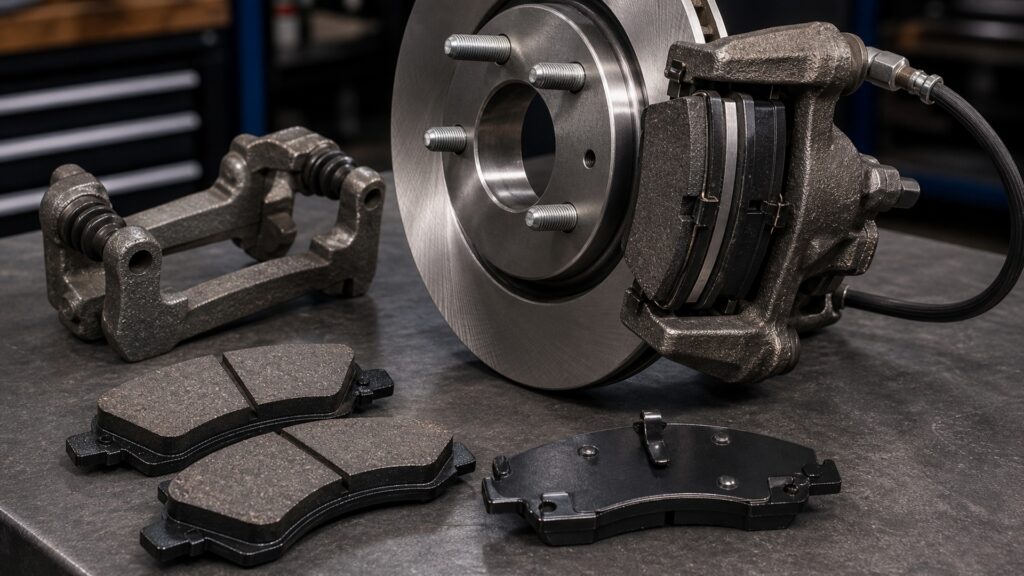
A clear explanation of brake pads with fit, movement, friction, and repair-scope context kept together.
Tip: Read the concept as part of a system, then connect it back to the use case.
These definitions connect the main idea to the variables, limits, and practical signals readers need to compare options.
The first practical detail in brake pads.
A support detail that changes whether the part moves or seats correctly.
The physical interface that often decides fitment.
The force or heat behavior behind the topic.
A secondary clue that separates one repair scope from another.
The final confirmation point before choosing parts.
Tip: Keep the definitions connected; the strongest answer usually comes from the whole system, not one term.
The useful path starts with the installed brake architecture, then follows how friction compound and backing plate affect contact or motion.
The right part is the one that matches the failed role.
Friction Compound matters because it is the detail most likely to separate normal wear from a part mismatch or movement failure.
Mechanism beats category labels.
Repair scope changes when heat transfer points away from the obvious part and toward a support, hydraulic, or friction-surface issue.
The least dramatic part may be the real fix.
Heat and wear patterns show whether clamp force and wear layer are behaving normally or forcing another part to compensate.
Wear evidence matters only when read in context.
A practical check narrows the decision before ordering parts or opening the brake system further.
A good brake decision is specific, not just category-correct.
This comparison explains what brake pads can clarify before a part is chosen.
It explains why friction compound, backing plate, and rotor contact matter in the same brake assembly.
It helps separate friction wear, support hardware, fitment, and hydraulic scope.
A single noise or wear mark can come from several brake parts.
Exact vehicle fitment and inspection still decide the repair.
Common shortcuts and misunderstandings can make the topic seem simpler than it is.
The category matters, but friction compound, backing plate, and rotor contact decide the practical repair.
The correct part is the one tied to the failed function.
Brake parts need exact dimensions, hardware shape, and system match.
Movement, retention, hydraulics, and surface condition can still be the root cause.
Tip: Treat strong claims as starting points for comparison, not final answers.
Concise answers to common questions readers may have after the main explanation.
It is the distinction between friction compound, backing plate, and the surrounding brake parts that shape fit, movement, and repair scope.
No. Product photos help, but exact fitment, wear patterns, and movement checks matter more.
Small clips, boots, shims, or contact points can decide whether pads or shoes move freely.
When inspection shows the larger part is structurally, hydraulically, or dimensionally failed.
Confirm the brake package, compare old parts, inspect wear and heat clues, and verify whether hardware is included.
Brake Pads is useful because it turns a broad brake-part label into a specific role in the assembly.
The practical takeaway is to follow friction compound, backing plate, rotor contact, and clamp force before choosing the replacement path.
Use these Review Streets paths to connect the explainer to related categories, comparisons, and next decisions.
Explore related Review Streets coverage in Automotive Replacement Parts.
Explore related Review Streets coverage in Brake Components.
Explore related Review Streets coverage in Brake Pads.
Choose a retailer
Prices checked regularly. We may earn a commission at no cost to you.