
How Circular Saws Bevel Adjustment Works

Bevel adjustment on a circular saw governs the relationship between the blade and the base plate, allowing the tool to cut at controlled angles rather than strictly perpendicular lines. The mechanism is often misunderstood because the visible tilt is simple, while the underlying linkage, pivot points, and locking system determine how accurately that angle is held during operation.

This explainer outlines how the bevel mechanism pivots the saw body, how angle scales correspond to blade orientation, and how locking components secure the setting. By the end, the reader will understand how angle adjustments are created, measured, and maintained throughout the cutting process.

By: Review Streets Research Lab
Updated: April 19, 2026
Explainer · 8–12 min read
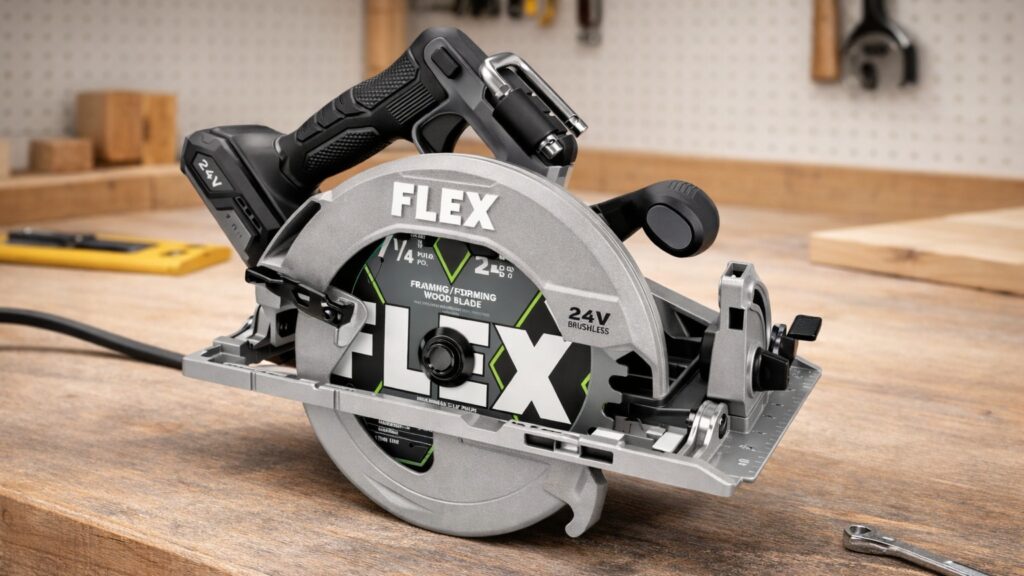
Circular saw on a workbench with the base plate tilted to demonstrate bevel adjustment angle for angled cutting
What You’ll Learn

How Circular Saws Bevel Adjustment Works

A focused explanation of how bevel adjustment mechanisms change blade angle, how settings are measured, and how alignment is maintained during operation.

  • How the saw body pivots relative to the base plate during bevel adjustment
  • What the pivot point controls and how it defines blade tilt movement
  • How angle scales correspond to actual blade orientation and cutting geometry
  • Why locking mechanisms are critical for maintaining a fixed bevel angle
  • How detents or stops provide repeatable positioning at common angle settings
  • What factors influence accuracy, including alignment between blade and base plate
  • How bevel range limits define the maximum tilt achievable by the mechanism

Tip: Think of bevel adjustment as a controlled pivot system where the base plate stays fixed while the blade assembly tilts and locks into position.

Definitions

Key Parts That Control Bevel Adjustment

Understanding bevel adjustment starts with the components that control tilt, alignment, and stability, and how they interact to maintain a consistent cutting angle.

Base Plate (Shoe)

The flat surface that rides against the material and serves as the reference plane for all cuts. It remains stable while the saw body pivots during bevel adjustment.

  • Reference surface: Establishes the baseline for angle measurement and cut consistency
  • Stability: Keeps the saw aligned and supported during angled operation
  • Contact: Maintains full surface contact to guide controlled movement across material

Bevel Pivot Mechanism

The joint that allows the saw’s motor and blade assembly to tilt relative to the base plate. It defines the path and range of angle adjustment.

  • Pivot axis: Determines how the blade changes orientation during adjustment
  • Range: Sets the limits of how far the saw can tilt
  • Alignment: Ensures consistent geometry between blade and base plate through movement

Angle Scale

A marked guide that indicates the degree of tilt between the blade and base plate. It translates mechanical movement into readable angle values.

  • Graduations: Provide visual reference points for setting specific angles
  • Calibration: Relies on accurate alignment between markings and actual blade position
  • Visibility: Placement and clarity affect how precisely settings can be interpreted

Bevel Locking System

The mechanism that secures the saw at a chosen angle by clamping the pivot in place. It prevents movement once the desired bevel is set.

  • Clamping force: Holds the pivot firmly to resist movement under load
  • Adjustment control: Allows incremental positioning before locking into place
  • Consistency: Maintains angle stability throughout the cutting process

Bevel Stops (Detents)

Preset positions built into the adjustment system that correspond to commonly used angles. They provide repeatable reference points during setup.

  • Preset angles: Common settings such as 22.5° or 45° are quickly accessible
  • Repeatability: Ensures consistent positioning without manual measurement each time
  • Engagement: Mechanical feedback confirms when a stop is properly seated

Blade Orientation

The final angle of the blade relative to the base plate, determined by the pivot and locking system. It defines the geometry of the cut path.

  • Tilt angle: Directly corresponds to the bevel setting applied at the pivot
  • Cut geometry: Influences how the blade enters and exits the material
  • Consistency: Depends on stable locking and accurate alignment across components

Tip: Bevel adjustment works as a coordinated system where the base plate stays fixed while the blade assembly pivots, aligns, and locks into a precise angle.

Power Path

How Bevel Adjustment Changes the Blade’s Cutting Angle

Bevel adjustment works by changing the angle between the blade assembly and the base plate. That mechanical relationship determines whether the saw cuts straight down or enters the material at a controlled tilt.

  • The base plate stays aligned with the material as the reference surface
  • The saw body pivots around a fixed point to alter blade orientation
  • The angle scale translates that movement into a readable setting
  • The locking mechanism holds the chosen angle once adjustment is complete
  • The blade then follows a tilted cutting path relative to the base plate

Every part of the bevel system contributes to whether the blade maintains a stable and predictable angle during the cut.

Motors

How the Pivot Mechanism Controls Blade Tilt

The pivot mechanism is the structural joint that allows bevel movement to happen in a controlled arc. Its geometry determines how smoothly and accurately the blade assembly changes angle.

  • Pivot location defines the axis around which the saw body tilts
  • Travel range sets the maximum bevel angle the mechanism can achieve
  • Mechanical fit affects how precisely the moving parts stay aligned during adjustment

When the pivot mechanism is well aligned, the blade changes angle predictably instead of shifting inconsistently through its range.

Gearing

Why Angle Scales and Stops Matter for Accurate Positioning

Bevel adjustment is not only about movement but also about measurement. Angle markings and preset stops give the system reference points so the blade can be positioned repeatedly at intended angles.

  • The angle scale shows the relationship between blade tilt and degree markings
  • Preset stops create repeatable positions at commonly used bevel settings
  • Scale accuracy depends on calibration between the markings and actual blade angle

Clear reference points allow the mechanical tilt of the saw to correspond to a known cutting geometry rather than an estimated position.

Heat Management

Why the Locking System Determines Angle Stability

Once the saw reaches the selected bevel angle, the locking system has to keep that position from shifting. Its job is to convert an adjustable joint into a fixed structure during cutting.

  • Locking pressure clamps the pivot so the blade angle does not drift
  • Mechanical rigidity helps resist movement caused by vibration and cutting forces
  • Consistent engagement keeps the selected angle stable from start to finish

Stable locking is what allows a chosen bevel setting to remain a real blade position rather than a temporary adjustment.

User Control

How Base Plate Alignment Shapes Real Cutting Behavior

The base plate is the constant reference that connects the bevel system to the work surface. As the blade tilts, the base plate preserves the saw’s support, direction, and geometric baseline.

  • Its flat contact with the material keeps the saw supported during angled cuts
  • Its orientation defines the reference plane from which bevel angles are measured
  • Its alignment relative to the blade affects how accurately the cut follows the intended angle

Real-world bevel performance depends on the blade, pivot, lock, and base plate functioning as one coordinated alignment system.

Quick Reality Check

Where Bevel Adjustment Helps — and Where Precision Can Slip

A quick mechanical contrast between what bevel adjustment enables cleanly and where small alignment errors or weak locking can affect the final cut.

What Bevel Adjustment Enables

Bevel adjustment allows the blade to tilt relative to the base plate, changing the cutting path while keeping the saw supported on the material.

This makes angled cuts possible through a controlled pivot system, where the angle scale, base plate, and blade orientation work together as one mechanism.

Where Accuracy Can Change

Because bevel cutting depends on several aligned parts, small errors in the scale, pivot, or lock can shift the blade from its intended angle.

A setting may appear correct visually, yet blade position can still vary if the locking force is inconsistent or the base plate loses stable alignment.

Common Myths

Misconceptions About How Bevel Adjustment Actually Works

Bevel adjustment is often treated as a simple tilt feature, but its accuracy depends on a connected system of pivots, scales, locks, and alignment.

Bevel adjustment only changes the base plate

The base plate remains the reference surface while the saw body and blade assembly pivot relative to it. The mechanism works by changing blade orientation, not by tilting the entire support plane.

The angle scale guarantees exact blade position

The scale is only a reference tied to the mechanism’s calibration. Actual blade angle depends on how accurately the pivot, markings, and locking system align with one another.

Once locked, the angle cannot shift

Locking reduces movement, but stability still depends on clamping force and mechanical rigidity. If the lock or pivot has play, vibration and cutting forces can alter the blade’s final position.

All bevel settings work the same way

Different angles place different demands on the pivot and locking mechanism. Small tilts and steeper bevels may both be possible, but the blade’s geometry and alignment can behave differently across the adjustment range.

Blade tilt alone determines the final cut

The final cut angle comes from the whole system, including blade orientation, base plate alignment, and how consistently the saw stays supported on the material. Tilt matters, but it does not act in isolation.

Tip: Think of bevel adjustment as a coordinated alignment system, where the visible tilt only matters because the pivot, scale, lock, and base plate stay in agreement.

FAQ

Frequently Asked Questions About Bevel Adjustment Mechanisms

Clear answers to common questions about how bevel systems create, measure, and maintain blade angles through coordinated mechanical components.

How does bevel adjustment actually change the cutting angle?

Bevel adjustment works by pivoting the saw body relative to the base plate, which changes the blade’s orientation to the material surface. The base plate stays flat while the blade tilts, creating an angled cutting path.

What role does the pivot mechanism play in bevel adjustment?

The pivot mechanism defines the axis and path of movement for the blade assembly. Its alignment and rigidity determine how smoothly the saw tilts and how accurately the blade maintains its intended angle during adjustment.

Why doesn’t the angle scale always match the exact cut angle?

The angle scale is a visual reference tied to the mechanism’s calibration, not a direct measurement of the blade in motion. Small differences in alignment, wear, or locking position can cause the actual blade angle to vary slightly from the markings.

How does the locking system keep the bevel angle stable?

The locking system clamps the pivot joint to prevent movement once the desired angle is set. Its effectiveness depends on clamping force and mechanical rigidity, which together resist vibration and cutting forces that could shift the blade.

What happens if the base plate is not aligned properly?

If the base plate is not aligned, it changes the reference plane from which the blade angle is measured. Even with a correct bevel setting, the cut can deviate because the entire system relies on that surface remaining consistent and flat.

Do different bevel angles affect how the saw behaves during cutting?

Yes, as the blade tilts further from perpendicular, the geometry of the cut changes and places different forces on the pivot and base plate. This can influence how the saw tracks through material and how stable the system remains.

Why can bevel cuts sometimes feel less stable than straight cuts?

When the blade is tilted, the contact relationship between the base plate and material becomes more sensitive to alignment. Any looseness in the pivot or locking system can translate into small shifts that feel less stable during operation.

What determines how accurate a bevel adjustment system is overall?

Accuracy depends on how well the pivot, angle scale, locking system, and base plate remain aligned as a single system. Consistency comes from these components working together to maintain a fixed blade orientation under load.

Tip: When evaluating bevel accuracy, think in terms of system alignment—pivot position, lock stability, and base plate reference must all remain consistent together.

Bottom Line

Bevel adjustment is a pivot-and-lock system, not just a visible tilt. The blade angle only stays meaningful when the pivot, scale, lock, and base plate remain mechanically aligned throughout the adjustment and cut.

Once that system is clear, it becomes easier to interpret angle markings, understand stability limits, and see why small alignment changes affect real cutting behavior.

Next Steps

Go Deeper or Compare Your Options

Now that you understand how circular saw bevel adjustment works, these pages show where to go next for broader context, clearer distinctions, and practical tool selection guidance.

Circular Saw Roundups

An organized overview of circular saw options across common use cases, helping you see how bevel range and design affect angled cuts and project versatility.

Circular Saw Comparisons

A direct look at how two saws differ in bevel adjustment range, control, stability, and intended use, making practical differences easier to understand.

Circular Saw Buying Guides

A practical guide to bevel capabilities, adjustment systems, ergonomics, and jobsite considerations that matter most when selecting a circular saw.

Quick Summary

How Bevel Adjustment Works

  • Bevel adjustment tilts the blade by pivoting the saw body relative base plate
  • The base plate stays flat, acting as the reference surface for angle measurement
  • Angle scales translate pivot movement into readable degree settings for positioning
  • Locking mechanisms clamp the pivot to maintain a fixed blade orientation
  • System accuracy depends on alignment between pivot, scale, lock, and base plate