
How Circular Saws Depth Adjustment Works

Depth adjustment is a fundamental function of a circular saw, yet its mechanics are often overlooked or misinterpreted. While it appears to be a simple change in blade exposure, the system is built around a coordinated relationship between the motor housing, pivot point, and base plate. This movement determines how far the blade extends below the shoe, directly defining the cutting depth relative to the material surface.

This explainer breaks down how the depth adjustment mechanism operates, from the pivoting action to the locking system that holds position. It clarifies how blade position is measured against the base plate and how adjustments translate into precise, repeatable depth control during operation.

By: Review Streets Research Lab
Updated: April 19, 2026
Explainer · 8–12 min read
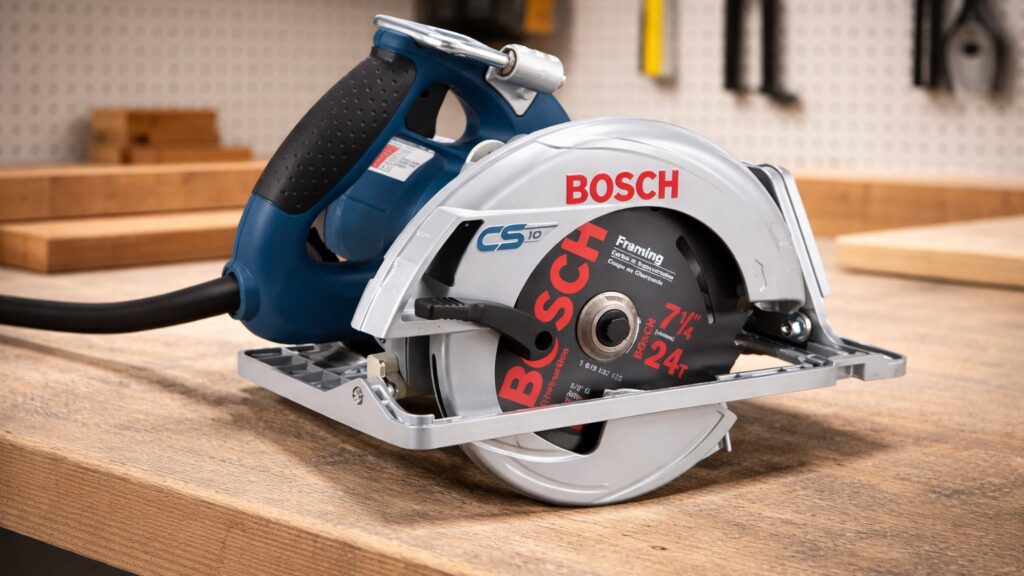
circular saw showing depth adjustment mechanism with base plate and blade depth set above wood surface in workshop setting
What You’ll Learn

How Circular Saw Depth Adjustment Works

A structured explanation of how the saw’s depth mechanism operates, translating pivot movement into controlled blade exposure relative to the base plate.

  • How the motor housing pivots relative to the base plate assembly
  • What determines how far the blade extends below the shoe
  • How the depth scale corresponds to actual blade projection measurements
  • What the locking mechanism does to secure the selected depth position
  • How pivot geometry controls movement range and adjustment precision limits
  • Why base plate position defines the reference point for depth measurement
  • How consistent depth settings rely on stable contact with the material surface

Tip: Think of depth adjustment as a pivot system: changing the angle between motor housing and base plate sets blade exposure.

Definitions

Key Parts That Control Depth Adjustment

Understanding how depth is set requires looking at how the main components interact to position the blade relative to the base plate.

Base Plate (Shoe)

The flat surface that rests on the material and defines the reference plane for all depth measurements. It remains in contact with the workpiece as the saw moves.

  • Reference surface: Sets the baseline for blade depth measurement
  • Stability: Maintains consistent positioning during cutting motion
  • Alignment: Keeps the blade oriented relative to the material plane

Motor Housing Pivot

The hinge point where the motor and blade assembly rotate relative to the base plate. This pivot enables controlled changes in blade exposure.

  • Rotation axis: Defines the arc of movement during adjustment
  • Range: Limits how far the blade can extend below the shoe
  • Consistency: Ensures repeatable positioning across adjustments

Depth Adjustment Mechanism

The system that moves the motor housing along its pivot path, changing how much of the blade extends beneath the base plate.

  • Control input: Adjusts the position of the motor assembly
  • Increment changes: Allows fine or coarse depth setting adjustments
  • Positioning: Directly determines blade exposure below the shoe

Depth Lock Lever

A clamping mechanism that secures the selected depth by locking the motor housing in place along the pivot path.

  • Clamping force: Prevents movement during operation
  • Release action: Allows repositioning of the depth setting
  • Stability: Maintains consistent blade projection under load

Blade Exposure

The portion of the blade extending below the base plate, which defines how deep the cut will reach into the material.

  • Measurement: Distance from shoe to lowest tooth point
  • Variation: Changes as the pivot position is adjusted
  • Relation: Directly tied to material thickness during cutting

Depth Scale Indicator

A visual guide marked on the saw that shows approximate blade depth relative to the base plate position.

  • Reference marks: Provide quick visual alignment for depth settings
  • Calibration: Represents blade projection in standardized increments
  • Interpretation: Requires alignment with the base plate position

Tip: Depth adjustment is a pivot-driven system where blade exposure changes as the motor housing rotates relative to a fixed base plate.

Power Path

How Depth Adjustment Changes Blade Position

Depth adjustment is not a separate cutting function but a positioning system built into the saw’s structure. It changes the relationship between the blade assembly and the base plate, which sets how far the blade extends below the material-facing surface.

  • The motor and blade assembly pivot relative to the base plate
  • That pivot changes the distance between the blade’s lowest point and the shoe
  • The selected position determines how much blade is exposed beneath the work surface reference plane
  • A locking mechanism holds that position during movement and cutting load

The saw’s cutting depth is therefore a direct result of controlled geometric repositioning, not a change in blade size or speed.

Motors

The Pivot Point Controls the Adjustment Arc

The pivot point is the mechanical center of the depth adjustment system. As the housing rotates around it, blade exposure increases or decreases along a fixed arc rather than a straight vertical path.

  • Pivot location determines how the blade travels relative to the base plate
  • Arc motion means depth changes are produced through rotation, not simple lifting
  • Mechanical geometry influences adjustment range, repeatability, and structural stability

This pivot-driven movement explains why depth adjustment feels smooth when the mechanism is aligned and securely locked.

Gearing

Why the Base Plate Defines All Depth Measurements

The base plate establishes the reference plane from which cutting depth is measured. Because it rests directly on the material, every depth setting is defined relative to that contact surface rather than the tool body itself.

  • The shoe creates the fixed baseline used to interpret blade projection
  • Blade depth is measured from the underside of the base plate to the lowest tooth point
  • Any change in base plate position directly changes the effective cutting depth
  • Stable contact keeps the selected depth consistent as the saw moves forward

Real cutting behavior depends on the blade maintaining a predictable relationship to the base plate at all times.

Heat Management

How the Locking Mechanism Holds the Selected Depth

Once the housing is moved to the desired position, the depth lock secures that setting by resisting further movement at the pivot. Its role is not to adjust depth directly, but to preserve the chosen geometry during use.

  • The lock clamps the moving assembly against unintended rotation
  • Secure clamping prevents the blade from shifting deeper or shallower mid-cut
  • Lock integrity affects how consistently the saw maintains blade projection

A stable lock keeps the adjustment system behaving as a fixed structure while the saw is under motion and load.

User Control

How Depth Scales Translate Position Into Readable Settings

Depth scales provide a visual shortcut for estimating blade projection without measuring the blade directly. They work by linking marked values to known positions of the housing relative to the base plate.

  • Scale markings correspond to approximate blade exposure below the shoe
  • Reading accuracy depends on correct alignment of the indicator and adjustment point
  • Scale values simplify repeatable setup by converting geometry into readable increments

The scale turns a mechanical position into an interpretable depth reference, making the system easier to set and understand.

Quick Reality Check

Where Depth Adjustment Helps — and Where Precision Still Depends on Setup

A quick mechanical reality check: depth adjustment creates useful control, but its accuracy still depends on how the system is positioned and locked.

What Depth Adjustment Controls

Depth adjustment gives the saw a defined way to position blade exposure relative to the base plate and material surface.

When the housing pivots and locks correctly, the blade extends below the shoe by a predictable amount during cutting.

Where Precision Can Shift

Depth settings remain approximate because the system depends on pivot geometry, scale interpretation, and steady base plate contact.

If the shoe lifts slightly or the lock allows movement, actual blade projection can differ from the intended setting.

Common Myths

Misconceptions About How Depth Adjustment Actually Works

Depth adjustment often looks simpler than it is, which leads to common misunderstandings about what the mechanism changes and what it does not.

Depth adjustment moves the blade straight up

Depth adjustment usually works through a pivoting housing, not a purely vertical slide. The blade follows an arc relative to the base plate, and that changing geometry is what alters blade exposure below the shoe.

The scale gives an exact cutting depth

The scale is an approximate reference tied to the saw’s mechanical position. Actual cutting depth still depends on blade projection, tooth reach, and whether the base plate stays flat against the material surface.

More exposed blade means a stronger cut

Blade exposure changes depth, not the saw’s power system. The mechanism only repositions the blade relative to the shoe, so it affects how far the blade reaches into material rather than how force is produced.

The lock changes depth by itself

The lock does not create the adjustment; it preserves it. Its job is to hold the housing at the selected pivot position so the blade remains at the same projected depth during movement and load.

Base plate position does not affect depth

The base plate is the reference surface for the entire system. Because depth is defined by the distance between the shoe and the blade’s lowest point, any change in shoe position changes effective cutting depth.

Tip: Think of depth adjustment as a geometry system: the pivot moves, the lock holds, and the base plate defines what the setting actually means.

FAQ

Frequently Asked Questions About Circular Saw Depth Adjustment

Clear answers to common questions about how depth settings work, how they are measured, and what influences real cutting depth in practice.

How does a circular saw actually change its cutting depth?

Depth changes when the motor and blade assembly pivot relative to the base plate. This rotation alters how far the blade extends below the shoe, which defines cutting depth as measured from the base plate to the blade’s lowest point.

What does the depth scale on the saw really measure?

The depth scale corresponds to approximate blade projection below the base plate based on the housing’s position. It reflects mechanical geometry rather than direct measurement, so the indicated value depends on accurate alignment and consistent base plate contact.

Why can actual cut depth differ from the setting?

Actual depth depends on how the base plate sits against the material and how the blade teeth engage. Small changes in shoe contact or material irregularities can shift the effective distance between the blade and the reference surface.

What role does the base plate play in depth adjustment?

The base plate defines the reference plane for all depth measurements. Because it rests on the material, the distance from its underside to the blade’s lowest tooth determines how deep the saw will cut at any given setting.

What happens if the depth lock is not secure?

If the lock does not hold the pivot position firmly, the housing can shift during movement. This changes blade exposure mid-cut, leading to inconsistent depth as the relationship between the blade and base plate is no longer fixed.

Is depth adjustment a vertical movement or something else?

Most systems use a pivot, so the blade follows an arc rather than moving straight up and down. The depth change comes from rotating the assembly relative to the base plate, not from a linear vertical translation.

How is blade exposure related to material thickness?

Blade exposure is the distance the blade extends below the base plate, which determines how far it can reach into the material. The relationship is direct, with deeper exposure allowing the blade to pass through thicker sections.

Why does consistent base plate contact matter during cutting?

The system assumes the base plate remains flat against the material surface. If that contact changes, the reference plane shifts, and the effective blade depth changes even if the adjustment setting itself remains unchanged.

Tip: When depth seems inconsistent, trace the system: pivot position sets exposure, the lock holds it, and the base plate defines what that exposure means.

Bottom Line

Depth adjustment works by changing blade exposure relative to a fixed base plate. The pivot sets the position, the lock preserves it, and that geometry determines how deeply the blade reaches below the material-facing surface.

Once that system is clear, depth settings become easier to interpret because the mechanism explains why scale readings, blade exposure, and actual cut depth can differ.

Next Steps

Go Deeper or Compare Your Options

Now that you understand how circular saw depth adjustment works, these pages show where to go next for broader context, clearer distinctions, and practical tool selection guidance.

Circular Saw Roundups

An organized overview of circular saw options across common use cases, helping you see how depth capacity and saw design fit different materials and cutting tasks.

Circular Saw Comparisons

A direct look at how two saws differ in depth range, adjustment design, handling, and intended use, making practical differences easier to understand.

Circular Saw Buying Guides

A practical guide to cutting capacity, adjustment controls, ergonomics, and jobsite considerations that matter most when selecting a circular saw.

Quick Summary

Circular Saw Depth Adjustment Explained

  • Depth adjustment pivots the motor housing relative to the base plate
  • Blade exposure below the shoe defines actual cutting depth into material
  • The base plate acts as the reference plane for all measurements
  • The locking mechanism secures pivot position to maintain consistent blade projection
  • Depth scales approximate blade position, not exact cutting depth in practice