
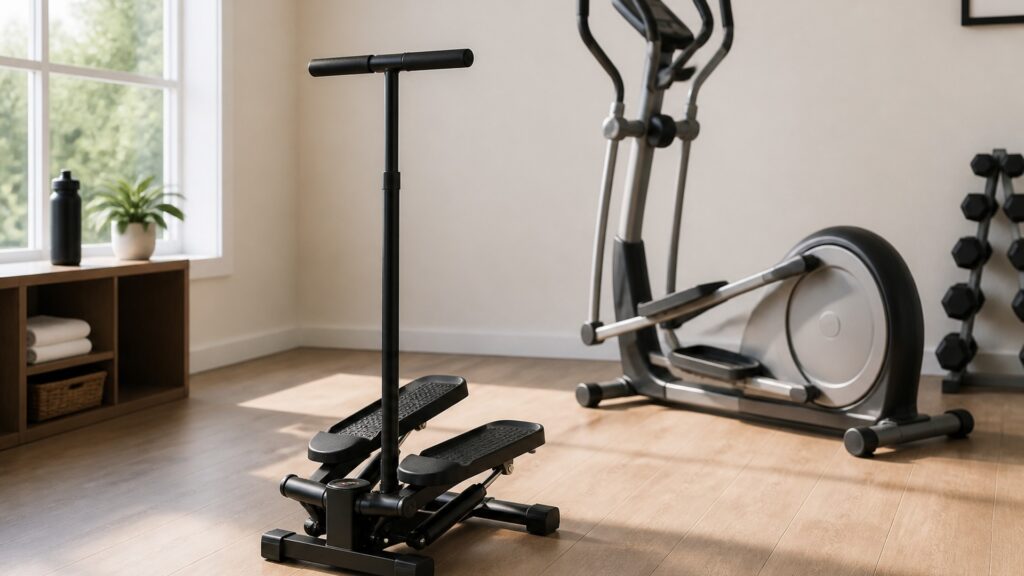
How Compact Stair Machines Work

Compact stair machines work by giving the user a repeated stepping motion in a smaller frame than a full stair climber. Depending on the design, the machine may use pedals, hydraulic cylinders, magnetic resistance, or a compact step mechanism to create climbing-style effort.

The value is simple: a stair machine can raise cardio demand quickly in a small footprint. The tradeoff is that step depth, stability, hand support, resistance feel, and user height can strongly affect comfort.

By: Review Streets Research Lab
Updated: October 7, 2026
Explainer · 8-12 min read
compact stair machines explainer hero image for Review Streets
What You'll Learn

How Compact Stair Machines Create Step-Based Cardio

A practical look at pedals, resistance, balance, frame size, and setup.

  • How compact stair machines create repeated stepping
  • Why step depth and pedal travel change comfort
  • How resistance and cadence affect intensity
  • Where balance support and frame stability matter
  • What to check before using one in a small room

Tip: Judge the machine by the step motion at real workout pace, not by footprint alone.

Definitions

Key Concepts Behind Compact Stair Machines

These concepts explain how compact stair machines turn stepping into a workout.

Step Mechanism

The step mechanism is the part of the machine that moves under the user's feet.

  • Example: two pedals rising and falling through a short stair-like path
  • Check: try the motion slowly and at workout pace
  • Limit: some compact mechanisms feel shallow

Step Depth

Step depth is how much vertical travel each step provides.

  • Example: a deeper step that feels closer to climbing stairs
  • Check: notice knee and hip comfort
  • Limit: deeper steps can feel harder or less stable

Resistance Feel

Resistance feel is how hard the pedals are to move and how smoothly effort changes.

  • Example: turning a setting or changing cadence to raise intensity
  • Check: test low and high effort
  • Limit: some compact models have limited adjustment

Cadence

Cadence is the stepping rate during the workout.

  • Example: slow climbing for control or faster stepping for cardio
  • Check: see whether the machine stays smooth at the expected pace
  • Limit: rushed stepping can reduce control

Balance Support

Balance support is the help provided by handles, rails, or frame design.

  • Example: upright handles that steady the user
  • Check: try the posture expected during workouts
  • Limit: too much leaning can change the workout

Compact Footprint

Compact footprint is the smaller space the machine uses compared with full stair climbers.

  • Example: a stepper stored near a desk or wall
  • Check: measure use space and storage space separately
  • Limit: small machines still need safe clearance

Tip: A compact stair machine should feel stable and repeatable before it feels intense.

Motion

The Machine Repeats A Climbing Pattern

Compact stair machines create cardio by asking the user to step again and again. The motion may be shallower than a gym stair climber, but it still loads the legs and raises effort quickly.

  • Check how far the pedals travel.
  • Try the motion at a realistic pace.
  • Notice whether the step feels smooth or choppy.

The step motion is the heart of the machine.

Resistance

Effort Comes From Resistance And Pace

The workout becomes harder when resistance rises, cadence increases, or both. Compact designs vary widely, so the user should test whether the machine has enough range.

  • Test the easiest setting.
  • Test a harder setting.
  • Make sure the machine stays controlled.

Useful resistance should challenge the user without making the movement sloppy.

Stability

Small Frames Need Stable Contact

Compact size is helpful only if the machine stays steady. A stepper that shifts, rocks, or feels narrow can make workouts less comfortable and less safe.

  • Use a flat surface.
  • Check frame movement.
  • Try the handles or support position.

Stability matters more as the workout gets harder.

Fit

Body Position Changes The Experience

Step height, handle position, and pedal spacing affect posture. A compact stair machine should let the user step without crowding the hips, knees, or ankles.

  • Watch knee tracking.
  • Avoid leaning too heavily on handles.
  • Check comfort after several minutes.

The best compact machine fits the body, not just the room.

Use

The Best Version Is Easy To Repeat

A compact stair machine often succeeds because it is easy to start. If moving it, balancing on it, or adjusting it feels annoying, the small footprint loses value.

  • Keep setup simple.
  • Store it where it can be used.
  • Choose the model that feels repeatable.

Compact cardio works when it removes friction from short, regular sessions.

Quick Reality Check

Where Compact Stair Machines Help And Where They Fall Short

They can deliver strong cardio in a small space, but fit and stability matter.

They Help When

The user wants climbing-style cardio without a full stair climber.

The machine feels stable, comfortable, and easy to start.

They Fall Short When

Step depth feels cramped or awkward.

The frame, pedals, or handles do not support controlled movement.

Common Myths

Misconceptions About Compact Stair Machines

A smaller stair machine still has to work well under real effort.

Small means easy

Compact stair machines can become intense quickly.

Any step motion is good enough

Step depth, smoothness, and stability change the workout.

Handles are only comfort features

Support placement can affect balance and posture.

Footprint is the only space issue

The user still needs room to mount, step, and dismount safely.

Tip: Test stability and step feel before judging the machine by size.

FAQ

Frequently Asked Questions About Compact Stair Machines

Short answers about stepping motion, resistance, fit, and home use.

How do compact stair machines create a workout?

They use repeated stepping against resistance to raise leg and cardio demand.

Are they the same as full stair climbers?

No. They are usually smaller and may have shorter step travel or different resistance systems.

What should I test first?

Test step depth, frame stability, handle support, resistance range, and comfort after several minutes.

Are compact stair machines good for small spaces?

They can be, if the machine is stable and the user has enough operating clearance.

What is the practical takeaway?

Compact stair machines work best when the step motion feels stable, comfortable, and easy to repeat.

Bottom Line

Compact stair machines work by turning repeated stepping into a small-space cardio workout.

The best choice depends on step depth, resistance feel, stability, posture, and how easy the machine is to use regularly.

Next Steps

Go Deeper or Compare Your Options

Use these Review Streets paths to compare related categories and practical next decisions.