How Electric SUVs Work

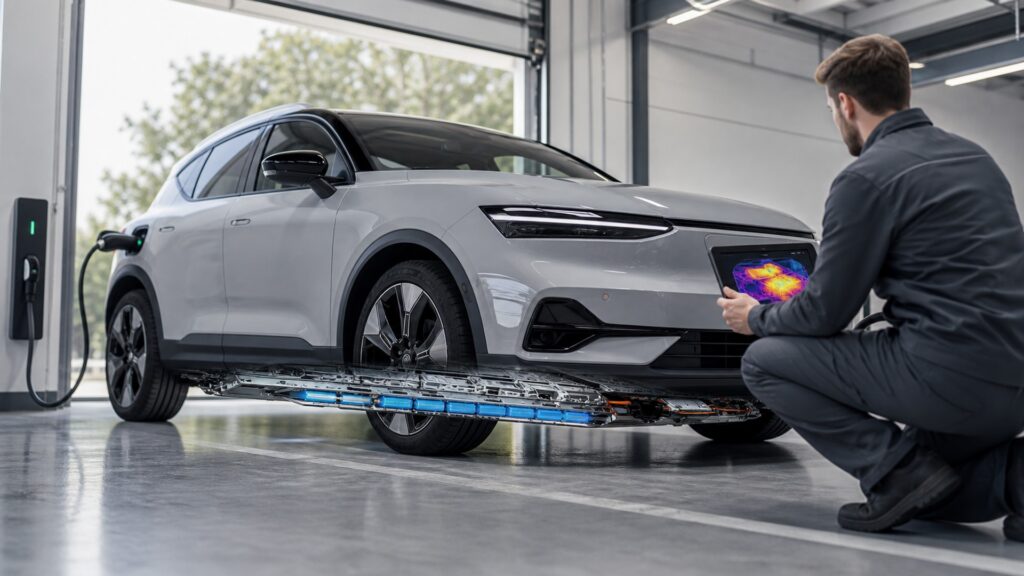
A battery-electric SUV moves by sending energy from a traction battery through power electronics to one or more electric motors. The motors create rotational force, which reaches the wheels through drive components. Charging replenishes the battery, while braking can recover part of the energy already used to move the vehicle.

The battery is only one part of the system. Control electronics regulate output, thermal equipment manages temperature, and a lower-voltage electrical supply supports accessories and controls. These systems cooperate continuously, which explains why charging speed, available power, and deceleration can change with operating conditions.

By: Review Streets Research Lab
Updated: September 30, 2026
Explainer · 8-12 min read
electric suvs explainer hero image for Review Streets
What You'll Learn

Trace Energy from the Charger to the Wheels

Understanding the energy path makes common EV behavior easier to explain.

  • Separate stored energy from the rate at which energy moves.
  • Follow battery power through electronics and motors.
  • Distinguish AC charging from DC fast charging.
  • Understand what braking can recover and what it cannot.
  • Recognize the role of temperature and auxiliary systems.

Tip: Battery capacity, motor output, and charging power describe different capabilities; their numbers are not interchangeable.

Definitions

Six Building Blocks of an Electric SUV

Each component performs a particular job in the energy path.

Traction battery

The onboard battery that stores electrical energy used for propulsion.

  • Example: Stored energy supplies the motor during a journey.
  • Check: Distinguish usable capacity from the energy needed for a particular trip.
  • Limit: A capacity figure does not guarantee the same range in every condition.

Power electronics

Equipment that converts and controls electrical power between major systems.

  • Example: An inverter controls electrical supply to the drive motor.
  • Check: Recognize that the battery and motor need managed electrical flow.
  • Limit: These are high-voltage systems requiring qualified service.

Electric motor

A machine that converts electrical energy into mechanical rotation.

  • Example: Motor torque passes through drive components to turn the wheels.
  • Check: Check the vehicle’s motor layout and driven wheels.
  • Limit: Motor count alone does not establish traction or towing capability.

Onboard charger

Equipment that converts incoming AC electricity for charging the battery.

  • Example: A compatible AC connection supplies energy through the vehicle’s charger.
  • Check: Compare vehicle capability with the available supply.
  • Limit: DC fast charging uses a different conversion path.

Energy recovery

Using motor operation during deceleration to return some energy to the battery.

  • Example: The SUV slows while electrical energy flows back toward storage.
  • Check: Understand the conditions that limit recovery.
  • Limit: The process has losses and does not replace external charging.

Thermal management

Control of component temperatures using the fitted heating and cooling systems.

  • Example: Battery preparation supports operation in suitable temperature conditions.
  • Check: Follow the vehicle’s preparation and operating guidance.
  • Limit: Temperature control also consumes energy.

Tip: The complete system balances driver demand, available energy, traction, and component limits.

Energy and power

The Battery Stores Energy; Power Describes Its Rate of Use

Battery capacity is commonly expressed in kilowatt-hours, a measure of energy. Motor and charging ratings commonly use kilowatts, a measure of power. More stored energy can support more travel under comparable conditions, while higher power describes how quickly energy can be delivered or transferred within system limits.

  • Use kWh to discuss an amount of stored or consumed energy.
  • Use kW to discuss a rate of energy transfer.
  • Compare efficiency and conditions alongside battery capacity.

Two SUVs with the same usable battery capacity need not travel the same distance. Their size, efficiency, speed, route, temperature, and load can produce different energy consumption.

Propulsion

Electronics and Motors Turn Electrical Demand into Motion

The control system interprets accelerator input and manages electrical delivery to the motor or motors. Power electronics provide the appropriate electrical conversion and control. Drive gearing and related components carry motor rotation to the wheels; the exact arrangement depends on the model.

  • Identify whether one or several motors are fitted.
  • Distinguish motor output from usable tire grip.
  • Evaluate response in normal driving rather than output alone.

A motor can produce strong torque without an engine’s familiar rise through its operating range. That characteristic helps explain electric response, but acceleration still depends on the complete vehicle and available traction.

Replenishing the battery

AC and DC Charging Use Different Conversion Paths

With AC charging, the vehicle’s onboard charger converts the incoming supply for the battery. At a compatible DC fast charger, conversion takes place in external equipment and the vehicle manages the supplied DC through its charging system. The achievable rate depends on both vehicle and station, along with battery conditions.

  • Check connector and network compatibility.
  • Compare the vehicle’s supported charging capabilities.
  • Expect charging power to vary during a session.

Connecting to a station with a higher advertised maximum does not force the SUV to accept that power. The vehicle’s capability and present battery limits still govern the session, and charging may slow as the battery fills.

Recovering motion

The Motor Can Help Slow the Vehicle

During regenerative braking, motor operation converts some motion back into electrical energy for storage. This reduces energy otherwise dissipated in friction braking, but recovery is partial and constrained. The vehicle retains conventional brakes for the braking demand and conditions that electrical recovery cannot cover.

  • Learn the selected deceleration mode and its limits.
  • Remain ready to use the brake pedal appropriately.
  • Avoid treating recovered energy as a replacement for charging.

A downhill segment can add energy back to the battery, but the earlier climb and system losses still matter. Recovery improves efficiency within a journey; it does not make the journey energy-free.

Supporting the main energy path

Temperature and Auxiliary Power Keep the System Working

Battery, motor, and electronics performance depend on operating conditions, so thermal systems manage temperatures according to the design. A separate lower-voltage system supplies many controls and accessories, typically supported through a DC-to-DC converter. Having charge in the traction battery does not prove every supporting system is healthy.

  • Use supported preparation features for their intended purpose.
  • Follow warnings and prescribed service requirements.
  • Seek qualified diagnosis for abnormal electrical behavior.

Cold conditions may change energy use or available charging performance while the vehicle manages battery temperature. The result reflects the interaction of storage, thermal control, and power limits rather than the battery percentage alone.

Quick Reality Check

What the Main Specifications Actually Describe

Read each number according to the job it measures.

Energy figures describe…

How much energy is stored or consumed, commonly in kWh.

A basis for range planning when combined with realistic consumption.

Power figures describe…

The rate of delivery or transfer, commonly in kW.

A capability subject to vehicle, station, battery, and operating limits.

Common Myths

Misconceptions About Electric SUV Mechanics

Avoid turning one component’s rating into a claim about the whole vehicle.

Are kW and kWh the same measurement?

No. kW measures power; kWh measures energy.

Will a high-power charger always deliver its maximum?

No. Vehicle capability, battery state, temperature, and station conditions can limit the actual rate.

Can braking recovery supply all the energy for driving?

No. It recovers only part of energy already present in the vehicle’s motion, with losses.

Does a charged traction battery rule out electrical faults?

No. Auxiliary power, controls, charging equipment, and other components can still need diagnosis.

Tip: Think in terms of an energy path with controls and limits, not a battery connected directly to unrestricted motors.

FAQ

Questions About Electric SUV Power Flow

These answers connect the component roles to ordinary ownership.

Where does the SUV get new driving energy?

From an external electricity supply through compatible charging equipment. Energy recovery supplements efficiency but does not replace that supply.

Why can range change without a battery fault?

Speed, weather, terrain, load, cabin demand, and other conditions change consumption. An unexplained persistent change may still warrant assessment.

Does every electric SUV have the same transmission?

No. Electric drive arrangements vary; many use a reduction drive, but the exact design is model-specific.

Can I service the battery or inverter myself?

High-voltage work requires qualified personnel and appropriate procedures. Follow the owner’s manual for permitted owner care.

Bottom Line

Electric SUVs work by managing stored electrical energy through conversion, propulsion, recovery, and temperature control.

Understanding each component’s role explains why range and charging performance depend on the whole system and the conditions of use.

Next Steps

Go Deeper or Compare Your Options

Use these Review Streets paths to compare related categories and practical next decisions.

Vehicles

Compare related vehicle choices against the same carrying needs and driving routine.

SUVs

Compare related vehicle choices against the same carrying needs and driving routine.

Electric SUVs

Explore Electric SUVs with your passenger, cargo, and ownership requirements in mind.

Further reading: DOE electric-vehicle components; NHTSA electrical-system overview; EV charging equipment; Energy-recovery behavior. Use the owner’s manual for the exact vehicle’s instructions and limits.