
Stride path
The oval loop the pedals follow as the user moves.
- It replaces a running step with a guided path.
- Length and shape affect feel.
- The path is set by the machine design.
Elliptical machines work by guiding the feet through a repeated oval path while resistance makes that path harder to drive. The user does not strike the ground the way they would when running, and they do not pedal in a circle exactly like a bike. The machine creates its own stride pattern.
That pattern comes from the pedal linkage, flywheel, resistance system, frame, handlebars, ramp, and console controls. A good explanation follows how those parts shape stride feel, effort, posture, and stability.
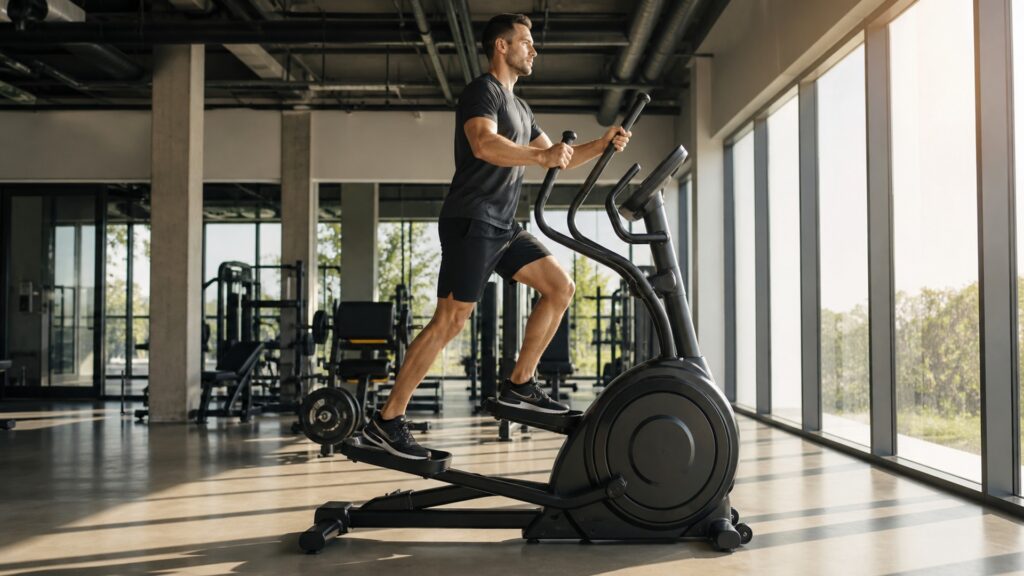
An elliptical is a guided-motion cardio machine built around pedal path, resistance, and rhythm.
Tip: When comparing ellipticals, separate the path the machine forces from the resistance the user chooses.
These definitions connect the main idea to the variables, limits, and practical signals readers need to compare options.
The oval loop the pedals follow as the user moves.
The mechanism that makes each stride harder or easier.
A rotating mass that helps create momentum and smoothness.
Arms that let the upper body contribute to the rhythm.
An adjustable ramp that changes pedal angle and emphasis.
Software that changes resistance, intervals, or prompts.
Tip: Stride feel comes from the linkage, flywheel, frame, and fit working together.
The defining feature is the guided pedal path. Each foot stays on a platform and travels through a loop shaped by the linkage. That reduces ground impact but also means the machine decides the stride shape.
The elliptical stride is a machine-made pattern, not free running.
Resistance usually comes from magnetic or mechanical braking applied to the flywheel system. Raising resistance makes the stride harder to drive, but it does not automatically make the motion smoother.
Resistance controls effort; the frame and linkage still control feel.
Moving handlebars let the arms push and pull while the feet move. That can increase coordination and perceived involvement, but the movement is still tied to the pedal cycle.
Handlebars make the motion more integrated without turning the machine into a rower.
Incline ramps, resistance programs, and intervals change how the session feels. They can shift posture, cadence, and effort, but they operate inside the machine's built-in path.
Settings tune the machine; they do not replace fit.
A machine can list many resistance levels and still feel awkward if the stride is too short, frame unstable, pedals poorly spaced, or handles poorly placed.
An elliptical works well when the machine-guided path matches the user's body and pace.
The mechanics explain stride feel and effort, but not every comfort or training outcome.
It explains why stride path, flywheel, resistance, handlebars, and incline create different experiences across machines.
It helps readers look beyond resistance-level counts and focus on actual motion quality.
It does not guarantee comfort, weight loss, injury prevention, or better cardio outcomes.
User height, cadence, setup, maintenance, and model design can change the experience.
Common shortcuts and misunderstandings can make the topic seem simpler than it is.
The motion is machine-guided rather than free stepping. The user follows a fixed pedal path, which changes stride mechanics and fit questions.
Level count is only a control range. Smoothness depends on the flywheel, brake system, frame, linkage, and calibration.
The arms move with the pedal cycle. That adds involvement, but it does not create the same drive sequence as a rowing machine.
A short path can feel cramped for taller users or faster cadence. Fit depends on body size and stride preference.
Reduced impact does not eliminate fit, posture, balance, or comfort issues. A poor match can still feel awkward.
Tip: Treat strong claims as starting points for comparison, not final answers.
Concise answers to common questions readers may have after the main explanation.
The feet stay on pedals instead of repeatedly striking the floor, so the machine guides a continuous stride loop.
It can affect momentum and feel, but placement, linkage, frame stiffness, and resistance design matter too.
Stride length, pedal spacing, ramp angle, flywheel behavior, handle reach, and frame stability all change the motion.
No. They add arm rhythm and coordination, but fixed handles may feel better for some users or sessions.
It can provide cardio work with a different movement pattern, but it does not duplicate outdoor running mechanics.
Elliptical machines work by combining a guided pedal loop with adjustable resistance and optional upper-body rhythm.
The best explanation follows the machine path first, then looks at resistance, frame stability, fit, incline, and console behavior.
Use these Review Streets paths to connect the explainer to related categories, comparisons, and next decisions.
Use this hub to compare elliptical types, stride designs, resistance systems, and console features in one place.
Use this path when the comparison turns on seated cycling, flywheel resistance, bike fit, and lower-body cardio.
Use this path when the next decision involves drive sequence, handle pull, damper feel, and full-body rhythm.
Choose a retailer
Prices checked regularly. We may earn a commission at no cost to you.