
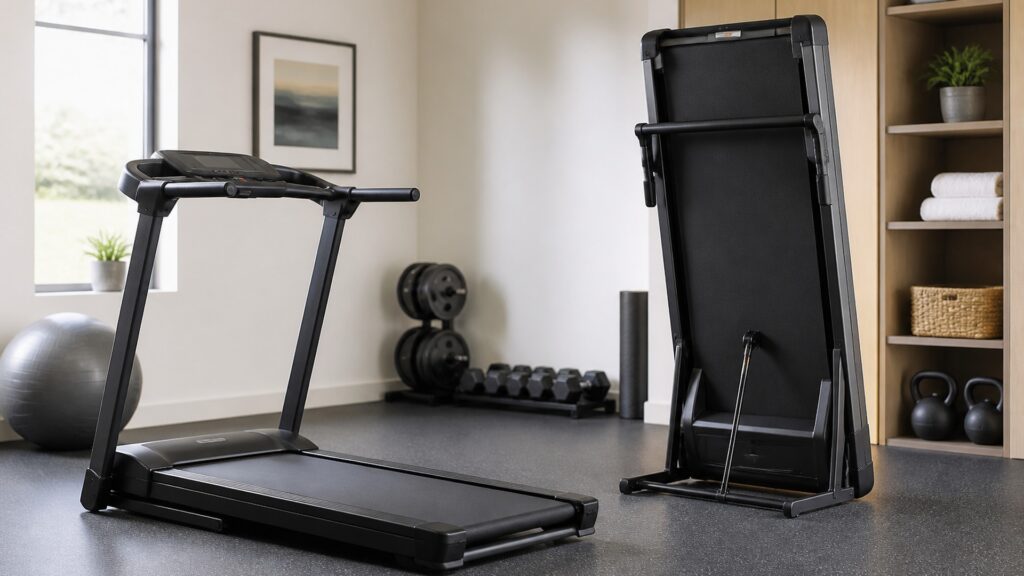
How Folding Treadmills Work

Folding Treadmills works as a chain: belt speed, deck cushioning, motor output, stride, incline if equipped, folding lock, frame stability, user position, workout duration, and maintenance. For Folding Treadmills, the result changes when any link in that chain is poorly fitted, adjusted, maintained, or used.

This guide follows that chain from user input to practical outcome, using the six components below to explain what folding treadmills can do and where its limits begin.

By: Review Streets Research Lab
Updated: August 19, 2026
Explainer · 8-12 min read
folding treadmills explainer hero image for Review Streets
What You'll Learn

The Operating Chain Behind Folding Treadmills

Follow the input, transfer, control, feedback, and maintenance steps that make folding treadmills function.

  • Where force, data, or materials enter folding treadmills
  • How running belt and deck starts the operating chain
  • Why motor and rollers changes control or consistency
  • What the user must adjust before relying on folding treadmills
  • Which feedback reveals a good or poor setup
  • How wear and maintenance alter performance
  • Why the mechanism cannot guarantee the promised outcome

Tip: Read the concept as part of a system, then connect it back to the use case.

Definitions

Key Concepts That Define Folding Treadmills

These definitions connect the main idea to the variables, limits, and practical signals readers need to compare options.

Running belt and deck

Within folding treadmills, the function of running belt and deck is to hold the working parts in alignment and manage load against the floor at the input or starting-condition stage.

  • Role: In folding treadmills, the role of running belt and deck is to mark the input or starting-condition stage of this operating chain.
  • Use: In folding treadmills, to assess running belt and deck, look for movement, flex, and clearance during the full task.
  • Limit: In folding treadmills, with running belt and deck, insufficient stability or space can undermine otherwise capable hardware.

Motor and rollers

Within folding treadmills, the function of motor and rollers is to create, transfer, or regulate the working resistance at the transfer and stabilization stage.

  • Role: In folding treadmills, the role of motor and rollers is to mark the transfer and stabilization stage of this operating chain.
  • Use: In folding treadmills, to assess motor and rollers, test whether changes feel smooth and predictable at realistic effort.
  • Limit: In folding treadmills, with motor and rollers, headline resistance levels do not reveal control, noise, or usable range.

Folding hinge and latch

Within folding treadmills, the function of folding hinge and latch is to coordinate the component's contribution at stage 3 of the folding treadmills system.

  • Role: The role of folding hinge and latch is to mark the adjustment and user-control stage of this operating chain.
  • Use: To assess folding hinge and latch, observe how folding hinge and latch changes setup, control, or feedback during realistic use.
  • Limit: With folding hinge and latch, judging folding hinge and latch alone can hide interactions with fit, technique, maintenance, or environment.

Handrails and uprights

Within folding treadmills, the function of handrails and uprights is to hold the working parts in alignment and manage load against the floor at the contact or feedback stage.

  • Role: In folding treadmills, the role of handrails and uprights is to mark the contact or feedback stage of this operating chain.
  • Use: In folding treadmills, to assess handrails and uprights, look for movement, flex, and clearance during the full task.
  • Limit: In folding treadmills, with handrails and uprights, insufficient stability or space can undermine otherwise capable hardware.

Console and controls

Within folding treadmills, the function of console and controls is to turn operating data into controls, prompts, or feedback at the repeatability and durability stage.

  • Role: In folding treadmills, the role of console and controls is to mark the repeatability and durability stage of this operating chain.
  • Use: In folding treadmills, to assess console and controls, check whether the displayed metric changes a real decision.
  • Limit: In folding treadmills, with console and controls, a polished interface can still present estimates or distracting features.

Frame, wheels, and stabilizers

Within folding treadmills, the function of frame, wheels, and stabilizers is to hold the working parts in alignment and manage load against the floor at the maintenance, storage, or release stage.

  • Role: The role of frame, wheels, and stabilizers is to mark the maintenance, storage, or release stage of this operating chain.
  • Use: To assess frame, wheels, and stabilizers, look for movement, flex, and clearance during the full task.
  • Limit: With frame, wheels, and stabilizers, insufficient stability or space can undermine otherwise capable hardware.

Tip: Keep the definitions connected; the strongest answer usually comes from the whole system, not one term.

Operating chain

From Input to Outcome

For folding treadmills, the practical sequence is belt speed, deck cushioning, motor output, stride, incline if equipped, folding lock, frame stability, user position, workout duration, and maintenance. For Folding Treadmills, trace that sequence instead of attributing the result to a single headline feature.

  • Identify the input entering running belt and deck
  • Watch how motor and rollers changes the transfer
  • Confirm that folding hinge and latch remains controlled
  • Use feedback from handrails and uprights before increasing demand

A break in one step can change how the entire folding treadmills setup behaves.

Setup

Fit and Adjust Folding Treadmills Before Adding Demand

The relationship among running belt and deck, motor and rollers, and folding hinge and latch establishes the starting position. For Folding Treadmills, small setup errors can become more noticeable as speed, load, duration, or repetition rises.

  • Set running belt and deck for the intended task
  • Check clearance around motor and rollers
  • Rehearse control through folding hinge and latch
  • Begin below the maximum available setting

Setup quality is part of how folding treadmills works, not a separate cosmetic step.

Control and feedback

Read the Signals from Folding Treadmills

For Folding Treadmills, useful feedback may be physical, mechanical, or digital. For Folding Treadmills, interpret it alongside comfort, movement quality, repeatability, and the specific task rather than allowing one number or sensation to dominate the decision.

  • Observe the response at handrails and uprights
  • Compare repeated results involving console and controls
  • Change only one meaningful setting at a time
  • Record conditions when consistency matters

Reliable feedback from folding treadmills depends on consistent conditions and sensible interpretation.

Failure points

Where the Mechanism Can Break Down

For Folding Treadmills, wear, contamination, poor alignment, unsuitable fit, and rushed technique can interrupt the operating chain. For Folding Treadmills, inspect the parts that carry force or provide feedback before assuming the product itself has reached its limit.

  • Inspect console and controls for wear or drift
  • Maintain frame, wheels, and stabilizers as its material requires
  • Stop when control changes unexpectedly
  • Separate maintenance problems from user-capacity limits

A predictable failure check makes folding treadmills easier to use and troubleshoot.

Practical result

What Folding Treadmills Can Realistically Deliver

The intended benefit is specific: folding treadmills can provide indoor walking or running while reducing storage footprint when the deck is safely folded and secured. For Folding Treadmills, that result remains conditional on appropriate setup, user input, and repeated use rather than appearing automatically from ownership.

  • Define the desired outcome in observable terms
  • Test the mechanism at a manageable demand
  • Confirm that the benefit persists across sessions
  • Reassess fit and condition when results change

The mechanism explains the opportunity offered by folding treadmills; it does not guarantee the outcome.

Quick Reality Check

What This Answer Supports—and What It Cannot Promise

Keep the conclusion about Folding Treadmills tied to the operating facts and the user's actual conditions.

A Defensible Benefit for Folding Treadmills

For this question, the supported benefit is that folding treadmills can provide indoor walking or running while reducing storage footprint when the deck is safely folded and secured

That benefit is credible when the components are fitted, used, and maintained for the stated task in how folding treadmills work.

The Boundary That Still Applies

The central limitation in this answer is that folding treadmills cannot suit every stride or running load, eliminate fall risk, replace progression, or remain safe with a faulty latch, loose belt, or unstable placement

If pain, alarming symptoms, unstable equipment, or a health condition changes the situation, this folding treadmills explainer is not a substitute for qualified assessment.

Common Myths

Misconceptions About Folding Treadmills

Common shortcuts and misunderstandings can make the topic seem simpler than it is.

One specification settles the question about Folding Treadmills

No single number captures the interaction among running belt and deck, motor and rollers, user setup, and the conditions addressed by how folding treadmills work.

A feature automatically creates the advertised result

A folding treadmills feature provides a capability; the outcome still depends on suitable use, repeatable conditions, and whether the capability serves the stated goal.

More support, resistance, data, or complexity is always better

For Folding Treadmills, additional capability can add friction, fatigue, cost, or new failure points. For folding treadmills, the useful amount is the amount that solves the defined problem.

Owning Folding Treadmills removes the need for technique or maintenance

The condition of console and controls, the handling of frame, wheels, and stabilizers, and the user's decisions remain part of the outcome after purchase.

Tip: Treat strong claims as starting points for comparison, not final answers.

FAQ

Frequently Asked Questions About Folding Treadmills

Concise answers to common questions readers may have after the main explanation.

What is the short answer to “How Folding Treadmills Work”?

The short answer begins with the operating facts in this specific question: belt speed, deck cushioning, motor output, stride, incline if equipped, folding lock, frame stability, user position, workout duration, and maintenance. For Folding Treadmills, use that mechanism to judge the stated task rather than relying on the product label alone.

Which part of Folding Treadmills should be checked first?

For Folding Treadmills, start with running belt and deck because it is an early link in this article's operating or decision chain, then confirm how motor and rollers changes the response.

How can someone test this folding treadmills claim?

Use one representative task, keep the setup consistent, observe the response involving folding hinge and latch, and retest after changing only one relevant variable.

What limitation matters most for Folding Treadmills?

The practical boundary is that folding treadmills cannot suit every stride or running load, eliminate fall risk, replace progression, or remain safe with a faulty latch, loose belt, or unstable placement; a feature should not be interpreted as a guarantee beyond that boundary.

What is the final selection rule for this question?

Choose the setup whose operating method, fit, feedback, upkeep, and limits match the exact task posed by how folding treadmills work.

Bottom Line

The answer to how folding treadmills work comes from matching the operating chain to a defined task, then checking the components under realistic conditions.

Use running belt and deck and motor and rollers as starting checks, but make the final judgment from the complete folding treadmills system and its stated limits.

Next Steps

Go Deeper or Compare Your Options

Use these Review Streets paths to connect the explainer to related categories, comparisons, and next decisions.

Cardio Equipment

Explore the Cardio Equipment category for related Review Streets explainers, comparisons, and buying context.

Treadmills

Explore the Treadmills category for related Review Streets explainers, comparisons, and buying context.

Folding Treadmills

Explore the Folding Treadmills category for related Review Streets explainers, comparisons, and buying context.

Quick Summary

Folding Treadmills Explained

  • This page answers how folding treadmills work directly.
  • Running belt and deck is the first concrete checkpoint.
  • Motor and rollers changes control or consistency.
  • The relevant benefit is conditional, not guaranteed.
  • The final choice depends on task, setup, evidence, and limits.