
Plantar skin
The skin on the bottom of the foot.
- Location: It includes the underside of the heel.
- Upper surface: Dorsal skin is the skin on the top of the foot.
- Load: The sole’s skin is built to bear weight.
Foot care works on specific surfaces. A wash lifts residue from skin, and a moisturizer can help a dry heel hold water. A foot file can smooth hardened skin, and a nail file can even out a rough toenail edge. Look at the spot the product or tool touched to see what changed.
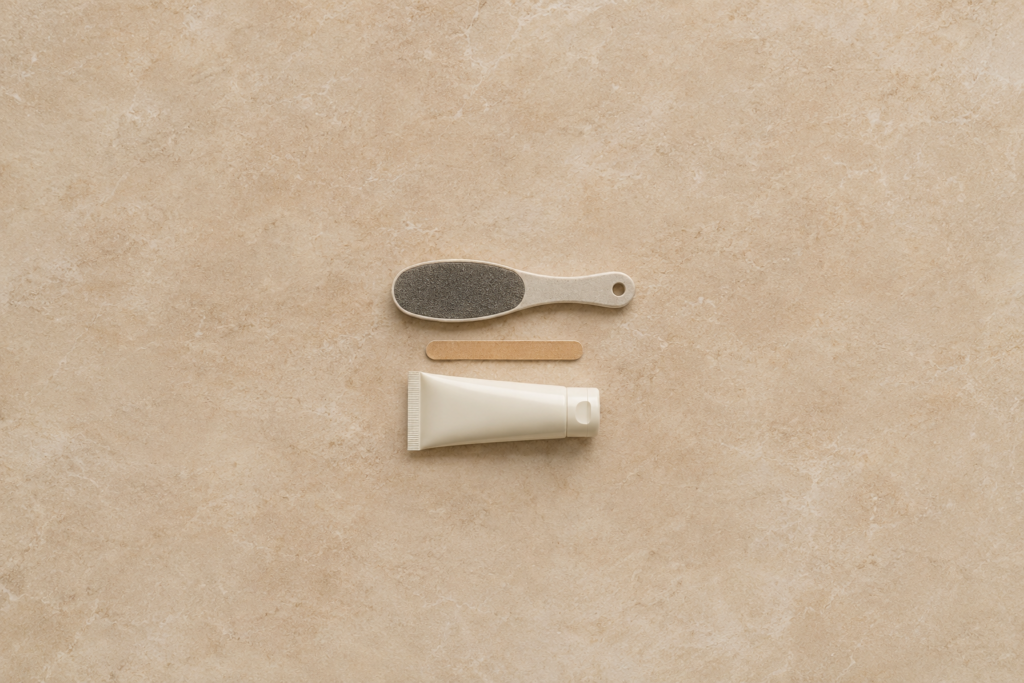
A foot file acts on hardened skin. Use that example to follow a single change from first contact to the result you can look for.
Tip: Picture one spot, such as the underside of the heel. Keep that spot in mind as you follow the product’s action and the result.
Plantar skin names a location. Manual abrasion names an action. Keeping those terms in their separate roles makes it easier to follow what a product or tool does.
The skin on the bottom of the foot.
The very outer layer of the epidermis, the skin’s outer covering.
A patch of thickened skin that can develop where pressure or rubbing recurs.
A product applied directly to dry skin and left in contact with it.
Using a hand-held rough surface to rub away some outer material.
In the U.S., a drug you can get without a prescription.
Tip: In the foot-file example, callus names the patch and abrasion names the action. Use the same distinction when the target is a nail edge.
Start with the change you have in mind. If that means removing residue from the skin, you’re asking for a cleaning action.
Once the task is clear, you can identify the target. For a foot file, that means the patch of hard skin it can reach.
The site can narrow what you mean by ‘foot skin.’ Plantar skin covers the underside of the foot.
The patch or edge the tool touches tells you which surface can change.
Once a tool or product makes contact, follow what moves. Water can leave the skin through its outer layer.
A smoother feel can come from a change in surface bulk or from dry skin holding more water.
A softer patch is something you can feel. Look for an outcome that makes sense for the surface the product touched.
If all you notice is a smoother nail edge, that’s the result you can describe. ‘Smoother’ is specific enough when you know where.
A foot file can take down hardened skin at the area it reaches. The result leaves a separate question about what prompted the thickening.
Pain that interrupts everyday activity changes the question. It’s a reason to ask a clinician what’s going on at the spot.
One case follows a heel moisturizer. The other follows a spot where a shoe rubs. Each starts with a change someone might notice.
Imagine a person with dry, intact heel skin who notices it feels softer after using a leave-on moisturizer. A raised patch is still visible on the heel. They can report a change in feel and still point to the patch.
A separate trial included 50 patients with dry, thickened foot skin. The moisturizing formula tested in that part of the trial increased measured skin hydration. Researchers detected no change in how fast water left the skin of the feet.
Imagine an adult with an intact patch of hardened skin in a spot where a shoe repeatedly rubs. In this example, the patch is suitable for self-care and feels less raised after manual smoothing. Removing some surface bulk is within a foot file’s job.
Now imagine they put the same shoe back on and it rubs in the same place. The source of friction is still present, so the skin at that spot can thicken again. The flatter feel was a result at the surface.
Thick skin on the sole is one example where appearance can suggest more than it tells you. The questions below take a closer look at those assumptions.
Some thickness is part of the sole’s normal structure. Its outer layer helps distribute the loads the foot bears, so thickness alone is a poor reason to remove skin.
Taking off too much can injure the skin. It can bleed and become more vulnerable to infection.
A coating can slow water loss. Researchers measured slower loss after applying petrolatum to healthy adult forearms. A separate experiment found that petrolatum fell short of an impermeable seal. The forearm result by itself leaves the dry heel question open.
A cream can carry a specific antifungal claim. In the U.S., classification follows intended use, so a product with more than one purpose can fall under both drug and cosmetic rules.
The American Academy of Dermatology describes slightly rounded corners for fingernails and a straighter edge for toenails. The straighter toenail shape can reduce the chance of an ingrown nail.
Tip: When an explanation says skin got smoother, ask which patch changed and what you would actually notice at that spot.
A toenail can have a smooth edge and still be long enough to push the toe against the shoe. The questions below pick up where the surface changes leave off.
Yes. The American Academy of Dermatology notes that spending too long in the bath or shower can dry the skin further and aggravate dry, cracked heels.
A moisturizer can help a damp heel retain water in the skin. The spaces between the toes are a different spot. General NHS podiatry guidance advises leaving moisturizer out of those spaces.
The cuticle helps protect the area at the base of the nail from infection. The exposed edge that a nail file smooths is at the other end.
Toenails generally grow more slowly. It can take longer for enough new length to show that the edge needs attention again.
Extra length can push the toe against the shoe and add pressure. That depends on how far the nail extends. A smooth edge describes its finish.
Nail changes can have different causes. A dermatologist can assess a new change and work out what may be behind it.
The U.S. clotrimazole cream label above expressly says the product is ineffective on nails.
If dry, cracked heels are severe or keep troubling you despite ordinary care, the American Academy of Dermatology recommends talking with a dermatologist.
Tip: Read the cream’s named use and the nail exclusion together on its Drug Facts label.
To make sense of a foot-care claim, start with the spot the product or tool reaches. A nail file gives you a simple test case. Judge its effect by the part of the edge it can touch.
Put the site and result together when you describe what happened. If the heel feels softer and the same raised patch is still visible, say both. That gives a clearer account than saying the moisturizer worked. Keep that account separate from the trial result.
These Foot Care archives cover lists, comparisons and buying guides.
Browse foot-care lists organized around a particular need.
Explore foot-care comparisons when you have two options in mind.
Find foot-care buying guides when you’re ready to weigh a purchase.
Choose a retailer
Prices checked regularly. We may earn a commission at no cost to you.