How Full Size SUVs Work

A full-size SUV works by combining a large passenger-and-cargo body with the systems that support, move, steer, and stop it. The engine or electric motors supply driving force, the driveline delivers that force to the wheels, and the suspension and tires manage contact with the road. Brakes and control systems help the driver reduce speed and maintain the intended path.

Full-size is a size description, not a single mechanical design. Some models use a separate frame; others use a different structural arrangement. Gasoline, hybrid, and electric powertrains also change the route energy takes to the wheels. Understanding those differences explains why similar-looking SUVs can have different ride behavior, loading limits, and operating requirements.

By: Review Streets Research Lab
Updated: September 30, 2026
Explainer · 8-12 min read
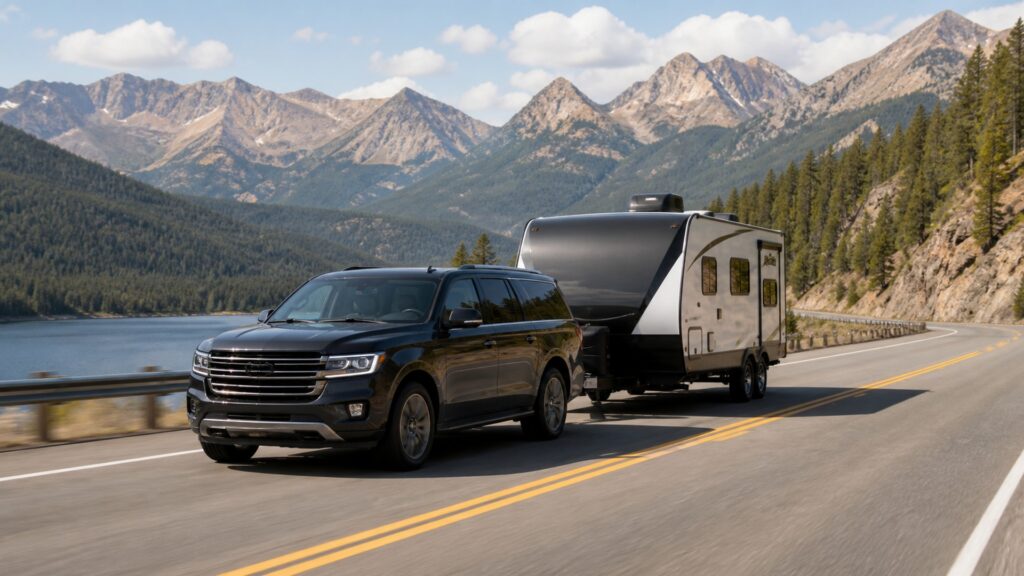
full size suvs explainer hero image for Review Streets
What You'll Learn

Follow the Systems from Structure to Road Contact

Each major system has a distinct job, and the useful capability depends on their combination.

  • Separate body size from construction and powertrain.
  • Trace driving force from its source to the tires.
  • Understand what suspension and steering contribute.
  • Distinguish friction braking from electrical energy recovery.
  • Connect carrying and towing limits to the whole vehicle.

Tip: A strong engine alone cannot establish how much an SUV is permitted to carry or tow.

Definitions

The Main Systems Beneath a Full-Size SUV

These definitions connect a mechanical function with something the driver can observe.

Vehicle structure

The load-bearing body or frame arrangement that supports the vehicle and its installed systems.

  • Example: A body-on-frame design mounts the body on a separate frame.
  • Check: Identify the actual construction of the model being considered.
  • Limit: The size class does not guarantee one structural design.

Powertrain

The engine or motors and related equipment that produce and transmit propulsion.

  • Example: A hybrid coordinates engine and electric-motor contributions.
  • Check: Check the specific powertrain rather than only peak output.
  • Limit: Different systems can deliver similar performance in different ways.

Driveline

The components that transfer driving torque to the driven wheels.

  • Example: A fitted transfer case distributes drive in a four-wheel-drive arrangement.
  • Check: Identify the drive layout and permitted operating modes.
  • Limit: Not every SUV uses the same shafts, gears, or transfer system.

Suspension

The springs, dampers, and links that support the body while allowing wheel movement.

  • Example: A wheel moves over a bump while the suspension moderates body motion.
  • Check: Compare ride and control on representative roads.
  • Limit: Suspension features do not override load ratings.

Braking system

The equipment that reduces vehicle speed and holds it when required.

  • Example: Friction brakes turn motion into heat during deceleration.
  • Check: Learn the brake and parking-brake controls for the vehicle.
  • Limit: Electrical energy recovery, where fitted, does not replace every brake function.

Thermal management

The systems that control component temperatures during operation.

  • Example: Cooling supports sustained work on a demanding journey.
  • Check: Follow the specified operating and service guidance.
  • Limit: Available performance can depend on conditions and system limits.

Tip: Think of capability as cooperation among these systems, not the output of one component.

Body and support

The Structure Carries More Than the Cabin

The structure provides the foundation for occupants, cargo, suspension mounting, and other equipment. In a body-on-frame SUV, the body and a separate frame perform related roles; other designs integrate structural functions differently. Neither the exterior styling nor the full-size label is enough to identify the underlying construction.

  • Look up the actual chassis and body arrangement.
  • Distinguish structural design from available seating volume.
  • Use published ratings for the exact configuration.

Two large SUVs may both seat a family comfortably while using different construction. Their ratings, ride, and packaging need direct comparison rather than assumptions based on which design sounds stronger.

Energy to movement

The Powertrain Turns Stored Energy into Wheel Torque

A combustion powertrain converts fuel energy into engine rotation, then uses transmission and driveline components to deliver torque. An electric vehicle uses stored battery energy and motors; a hybrid combines an engine with electrical equipment. Gear ratios and control decisions help match the available output to the driving task.

  • Identify the engine, motor, and transmission arrangement.
  • Check which wheels are driven and under what conditions.
  • Evaluate predictable response during ordinary driving.

Pulling away from a stop and maintaining highway speed require different operating points. The control system manages the fitted equipment to meet demand, so a peak-power figure cannot describe the complete experience.

Contact and direction

Suspension and Steering Manage the Wheels Beneath the Body

Springs carry the sprung load, dampers control motion, and suspension links guide wheel movement. Steering changes the direction of the steered wheels. Tires provide the contact through which driving, braking, and cornering forces act, making their condition and specification central to how the vehicle behaves.

  • Assess ride and steering on the roads you actually use.
  • Keep tires at the specified cold pressures.
  • Have abnormal pulling, vibration, or uneven wear assessed.

An adaptive suspension or leveling feature can change aspects of ride or body position. It does not grant permission to exceed a loading limit merely because the vehicle still looks level.

Slowing the mass

Brakes Convert Motion into Heat or Recover Some Energy

Friction brakes reduce speed by converting motion into heat. Hybrid and electric models can also use their motors to recover some energy during deceleration. The amount of electrical recovery depends on the fitted system and operating conditions, while the conventional braking equipment remains necessary.

  • Understand the brake pedal and parking-brake operation.
  • Read any one-pedal or energy-recovery mode instructions.
  • Respond to warnings or changed brake behavior as directed.

A descent or heavily loaded journey places a different demand on braking than a short empty commute. Follow the vehicle’s guidance for the situation instead of assuming an assistance feature will manage every condition.

Sustained capability

Cooling and Ratings Keep the Complete Task Within Bounds

The systems that move a large SUV also have temperature, weight, and equipment limits. Cooling arrangements help control heat, while published ratings define permitted loading and towing configurations. Passenger space and a large engine do not bypass those constraints.

  • Account for occupants, cargo, accessories, and applicable hitch load.
  • Match towing equipment to the exact vehicle and trailer.
  • Follow warnings and operating instructions during demanding use.

A trailer setup must satisfy more than the headline towing maximum. Carrying the family, their luggage, and the trailer’s imposed load can bring another limit into play before that maximum is reached.

Quick Reality Check

What the Size Label Tells You

Body class and mechanical specification answer different questions.

Full-size suggests…

A large exterior and a cabin intended for substantial passenger or cargo tasks.

A reason to examine parking, access, and real occupied-seat luggage space.

The specification establishes…

The actual structure, powertrain, suspension, drive system, and equipment.

The permitted loading and towing conditions for the chosen configuration.

Common Myths

Misconceptions About How Large SUVs Work

Avoid extending a familiar design to every full-size model.

Are all full-size SUVs body-on-frame?

No. Check the construction of the actual model instead of treating size as a chassis specification.

Does four-wheel drive supply extra braking grip?

Driven-wheel count does not guarantee stopping traction. Tires, surface conditions, speed, and braking remain critical.

Does a level ride mean a load is acceptable?

No. Leveling features do not change the applicable vehicle ratings.

Can electrical braking replace the regular brakes?

No. Energy recovery is one contribution where fitted; friction and parking-brake functions remain necessary.

Tip: Use the exact vehicle’s specifications whenever capability or operating procedure depends on the design.

FAQ

Questions About the Systems Working Together

These distinctions help translate a specification sheet into useful understanding.

What determines whether an SUV can tow my trailer?

The exact vehicle configuration, relevant ratings, required equipment, and complete loading arrangement must all suit the trailer.

Why do similarly sized SUVs ride differently?

Suspension design and tuning, tires, wheel choices, structure, and loading all contribute. Compare the actual versions on representative roads.

Does electric propulsion change the basic chassis jobs?

It changes the energy and drive equipment, but the vehicle still needs structure, suspension, steering, tires, and braking.

Where should I learn the drive-mode rules?

Use the owner’s manual for the fitted drive system; procedures and permitted surfaces vary.

Bottom Line

A full-size SUV is a coordinated set of carrying, propulsion, control, and cooling systems.

Understand the actual design and its limits before translating spaciousness or power into a claim of capability.

Next Steps

Go Deeper or Compare Your Options

Use these Review Streets paths to compare related categories and practical next decisions.

Vehicles

Compare related vehicle choices against the same carrying needs and driving routine.

SUVs

Compare related vehicle choices against the same carrying needs and driving routine.

Full Size SUVs

Explore Full Size SUVs with your passenger, cargo, and ownership requirements in mind.

Further reading: How gasoline vehicles work; Electric-vehicle components; Hybrid-vehicle components; Towing configurations. Use the owner’s manual for the exact vehicle’s instructions and limits.