
Thermal Transfer
Movement of heat from air or a surface into hair.
- Use: control exposure
- Variable: temperature, contact and moisture
- Tradeoff: Too little may prolong styling
Hair styling tools work by combining energy and mechanical control. Dryers move heated or unheated air to remove water and direct shape; irons press fibers between hot plates; curling tools wrap hair around a heated surface; brushes and multi-stylers add tension, airflow, or both.
The outcome is temporary because water and humidity can rearrange many of the interactions responsible for shape. Damage risk rises with excessive temperature, long contact, repeated passes, wet hair under direct high heat, and force on tangled fibers. A good tool creates the intended shape efficiently at the lowest workable exposure while providing stable controls, suitable geometry, safe electrical construction, and a grip the user can manage.
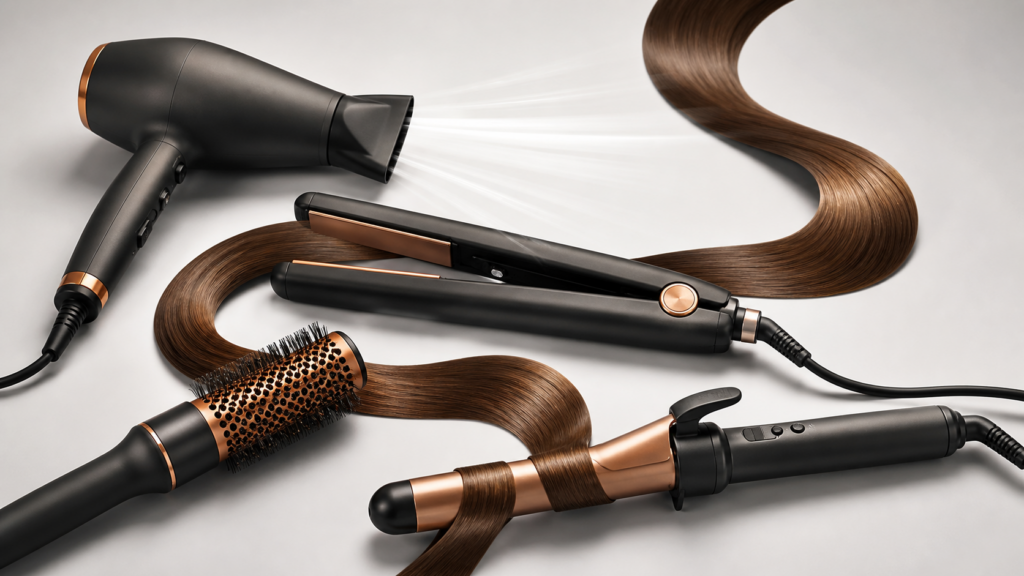
Explain tools as controlled transfers of heat, airflow, tension, pressure, and shape over time, with water state, section size, contact geometry, repetition, ergonomics, and safety governing the result.
Tip: Water state determines which tool action is appropriate.
These hair styling tools concepts separate mechanism, application, limits, and purchasing consequences.
Movement of heat from air or a surface into hair.
Volume and velocity of moving air through a section.
Pulling force used to align fibers during brushing or wrapping.
Shape and area where the tool touches or supports hair.
How long one area receives heat or tension.
Total heat and force across passes, days, and chemical history.
Tip: Use these terms to test hair styling tools instead of relying on a front-label promise.
Water changes hair's temporary bonding and flexibility. Dryers remove moisture while tension guides alignment; heated surfaces reshape already dry sections. Direct high heat on wet hair can create additional structural risk.
Water state determines which tool action is appropriate.
A high setting is not automatically faster when it forces repeated correction or causes discomfort. Efficient styling uses enough energy to work in one controlled sequence, with movement and distance preventing concentrated exposure.
The relevant dose is temperature multiplied by time and repetition.
Wide plates cover more hair, narrow edges reach roots and short styles, barrel diameter changes curl radius, and concentrators focus airflow. Oversized sections create uneven results and repeated passes.
Tool geometry becomes the template the hair follows.
Clear temperature levels, even heating, smooth hinges, secure attachments, and usable buttons reduce guesswork. Sensors and displays can help, but they do not replace conservative technique or confirm the temperature reaching every fiber.
Reliable feedback matters more than a long feature list.
Pre-drying, detangling, sectioning, nozzle choice, and a realistic style can lower exposure more than upgrading wattage. Compare total minutes, passes, arm strain, noise, storage, and cleanup.
The best workflow reaches the result with the least cumulative load.
They temporarily shape fibers through controlled energy and force; they cannot make repeated high exposure harmless or permanently change new growth.
The target shape is reached with few controlled passes and manageable tension.
Controls, geometry, grip, and safety features make exposure predictable.
Scorching odor, steam from wet hair, snagging, plate hot spots, or repeated correction indicates a poor process.
Brittleness, breakage, scalp burns, or electrical damage requires stopping and reassessment.
These claims flatten the variables that determine how hair styling tools performs in a real routine.
Higher temperature may change shape faster, but it also narrows the margin for error and can increase fiber damage. Sectioning, drying, tension, and contact time often improve results without maximum heat.
These terms identify selected components or claims, not airflow, calibration, plate evenness, ergonomics, safety, or durability. The finished tool and routine must be evaluated as a system.
Exposure depends on actual temperature, dwell, pressure, moisture, and repetition. A very slow high-heat pass can be damaging; use the lowest workable setting and efficient controlled technique.
Selected formulas can reduce some measured damage, but protection is incomplete and product-specific. It cannot cancel extreme temperature, wet ironing, repeated passes, or contact with the scalp.
Salon tools may emphasize speed, long cords, high output, or continuous duty. A home user may benefit more from lighter weight, clearer controls, lower settings, smaller geometry, and easier storage.
Tip: Test the exact hair styling tools tool, setting, and routine before generalizing from its category.
The remaining decisions about hair styling tools concern technique, compatibility, safety, upkeep, and value.
Unless a tool is explicitly designed and directed for that use, use conventional flat irons only on fully dry hair. Research shows wet hair can experience different and substantial structural damage under heated styling.
Follow the manufacturer's directions, keep it moving, and avoid concentrating hot air on one spot or the scalp. Distance, nozzle, airflow, temperature, and section moisture all affect the actual exposure.
Begin with the lowest setting that can produce the style on prepared hair, then increase cautiously if necessary. Test a hidden section and prioritize control over the tool's advertised maximum.
Less frequent exposure generally reduces cumulative damage. AAD recommends limiting hot tools and using low or medium settings; chemical history, existing breakage, and style technique should make the schedule more conservative.
In the United States, hand-supported dryers should include integral immersion protection in the plug. Still keep appliances away from water, inspect cords, use suitable outlets, and unplug after use.
Stop using tools with damaged cords, cracked housings, loose plugs, sparking, burning odor, unstable temperature, snagging surfaces, or failed attachments. Cosmetic appearance does not outweigh electrical or thermal defects.
Hair styling tools work by transferring heat, airflow, tension, pressure, and shape over a controlled interval. Water state, geometry, section size, and repeated passes determine whether that transfer is efficient or needlessly stressful.
Prepare the hair, select the lowest workable exposure, keep energy moving, and choose controls the user can operate reliably. Styling performance includes safety, ergonomics, and cumulative routine load—not only the first finished look.
These Review Streets paths narrow the next hair styling tools decision by format, goal, and routine fit.
Compare dryers, irons, wands, multi-stylers, and their buying paths.
Explore airflow, heat control, attachments, ergonomics, and long-term versatility.
Choose a retailer
Prices checked regularly. We may earn a commission at no cost to you.