
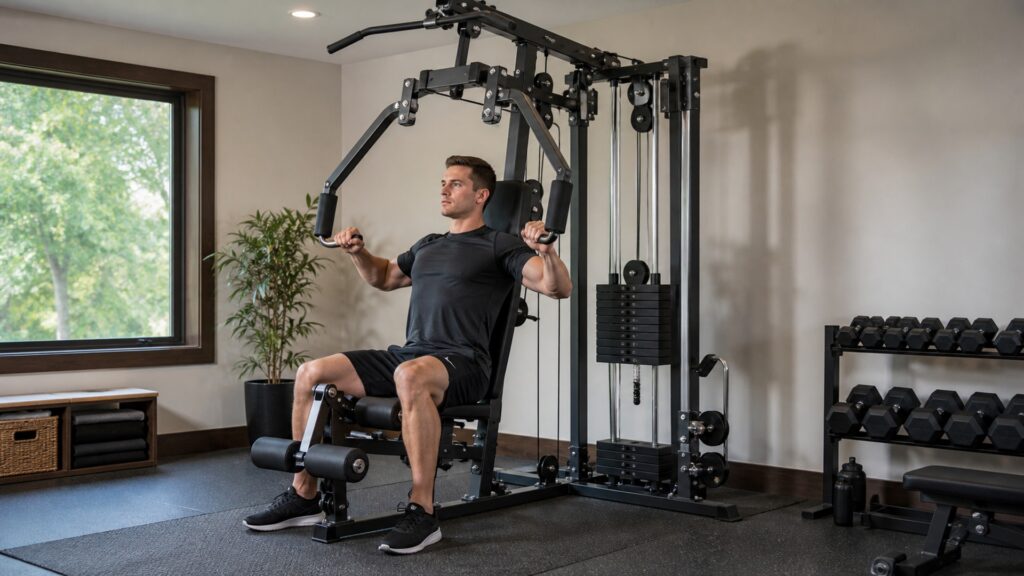
How Home Gym Systems Work

Home gym systems work by combining several strength-training functions into one home-based setup. Instead of buying every bench, rack, cable station, and machine separately, the system tries to give the user a compact way to train multiple movement patterns in one place.

The best systems make setup simpler, keep resistance predictable, and support the exercises a person will repeat. The tradeoff is that an all-in-one design can limit adjustability, loading, movement feel, or expansion compared with separate pieces of equipment.

By: Review Streets Research Lab
Updated: September 25, 2026
Explainer · 8-12 min read
home gym systems explainer hero image for Review Streets
What You'll Learn

How Home Gym Systems Turn One Setup Into Multiple Stations

A practical look at frames, resistance, stations, attachments, and workout flow.

  • How one frame can combine several exercise stations
  • Why resistance type changes workout feel
  • Where benches, pulleys, press arms, and leg stations fit
  • How setup speed affects consistency
  • What limits to check before buying an all-in-one system

Tip: Follow the workout from station to station. The best systems make repeated training simpler, not just more crowded with features.

Definitions

Key Concepts Behind Home Gym Systems Work

These concepts clarify the practical equipment differences and buying checks.

Home Gym System

A home gym system is a strength-training setup that combines multiple exercise functions in one unit.

  • Example: a multi-gym with press arms, pulleys, and leg station
  • Check: review which stations match the user's routine
  • Limit: one system may not cover every training style

Resistance Source

Resistance source is what creates the load the user trains against.

  • Example: a weight stack, plates, bands, or cable resistance
  • Check: compare resistance range and adjustment method
  • Limit: the feel may differ from free weights

Training Station

A training station is a built-in area for a specific type of movement.

  • Example: a chest press station or lat pulldown station
  • Check: test comfort and setup for each station
  • Limit: unused stations add size without value

Exercise Path

Exercise path is the route the handles, arms, cable, or bar follows during a movement.

  • Example: a press arm moving through a fixed arc
  • Check: confirm the path feels natural
  • Limit: fixed paths may not fit every user

Adjustment Point

An adjustment point is a place where the user changes seat height, load, pulley position, attachment, or bench setup.

  • Example: moving a pin before switching from rows to presses
  • Check: count changes in a normal workout
  • Limit: too many adjustments can slow the session

Space Requirement

Space requirement includes the machine footprint plus room to move, load, sit, stand, and store accessories.

  • Example: leaving clearance behind a pulldown station
  • Check: measure the full working area
  • Limit: compact frames still need exercise clearance

Tip: The right choice is the equipment that supports the user's repeated workouts with the least wasted space, cost, and setup friction.

Structure

The Frame Holds Several Training Jobs

A home gym system starts with a frame that supports stations, cables, arms, seats, or benches. The frame determines the footprint, stability, and exercise layout.

  • Check frame stability under realistic load.
  • Review how users move between stations.
  • Measure the machine and the working area.

The frame is the base that makes the system practical or frustrating.

Resistance

The Load Source Shapes The Workout Feel

Home gym systems may use weight stacks, plates, bands, cables, or guided arms. Each resistance type changes setup speed, smoothness, maximum load, and progression.

  • Compare light and heavy settings.
  • Check how quickly the load changes.
  • Make sure the resistance range matches the user.

The system works only if the load feels useful for repeated training.

Stations

Built-In Stations Create The Exercise Menu

A system's value depends on which stations it includes and how well they fit the user. Press arms, pulldowns, rows, leg stations, and cable points should support real workouts, not just a long feature list.

  • Test the stations that matter most.
  • Look for comfortable seat and handle positions.
  • Ignore stations that will rarely be used.

The useful exercise menu is the one the user will repeat.

Workout Flow

Setup Speed Affects Consistency

An all-in-one system should reduce friction. If switching exercises requires too many pins, attachments, seat changes, or awkward transitions, the workout may feel slower than expected.

  • Walk through a normal session.
  • Keep common attachments close.
  • Check whether settings are easy to repeat.

Good workout flow makes the system easier to use often.

Limits

All-In-One Design Still Has Tradeoffs

A home gym system can save space and simplify choices, but it may not match dedicated equipment for every lift. Fixed paths, stack limits, frame size, and upgrade limits all matter.

  • Compare the system against the user's main goals.
  • Check whether it can grow with training needs.
  • Avoid buying stations that only look useful on paper.

The best system solves the user's actual home-training problem.

Quick Reality Check

Where Home Gym Systems Help And Where They Have Limits

Home gym systems can simplify strength training, but they still require a routine fit check.

Where They Help

They combine several strength stations into one home setup.

They can reduce equipment clutter and setup decisions.

Where They Fall Short

They may limit movement paths, loading, or exercise variety.

They can be bulky even when marketed as compact.

Common Myths

Misconceptions About How Home Gym Systems Work

An all-in-one setup is useful only when its stations match real training.

More stations always mean better value

Stations matter only when they support exercises the user will repeat.

A home gym system replaces every machine

It may cover many needs, but specialized equipment can still be better for some goals.

Compact systems need almost no room

The frame may be compact, but the workout still needs clearance.

Guided movement removes all setup concerns

Seat height, handle position, load, and body fit still matter.

Tip: Treat broad feature claims as a starting point. The useful test is the workout the machine makes easier to repeat.

FAQ

Frequently Asked Questions About Home Gym Systems

Short answers for comparing home strength equipment.

What does a home gym system include?

It may include press arms, pulleys, cables, a bench, leg station, weight stack, plate loading, or other built-in exercise areas.

Are home gym systems good for beginners?

They can be, especially when stations are clear and resistance is easy to adjust.

Can a home gym system replace a commercial gym?

It can replace many strength-training needs for some users, but it will not match every machine, rack, or free-weight option.

What should I check before buying?

Check space, resistance range, station comfort, exercise coverage, adjustment speed, and long-term training goals.

What is the practical takeaway?

Choose a home gym system when its built-in stations match the workouts you will repeat at home.

Bottom Line

Home gym systems work by combining several strength-training stations into one home setup.

They are most useful when the frame, resistance, stations, and adjustment points support the user's repeated workouts without unnecessary friction.

Next Steps

Go Deeper or Compare Your Options

Use these Review Streets paths to compare related categories and practical next decisions.

Cable Machines

Compare cable-focused machines with broader home gym systems.