How Hybrid SUVs Work

Hybrid SUVs use an internal-combustion engine together with electric-drive components to propel the vehicle. A battery stores energy for electrical assistance, and the control system manages when the engine, motor, or a combination contributes. During suitable slowing, the electric drive can recover some motion energy and return it to the battery.

The power flows depend on the design. Some hybrids primarily assist the engine, some can move electrically under certain conditions, and plug-in hybrids add external charging. The shared idea is coordinated energy use, not a universal promise that the engine stays off or that the battery can power every trip.

By: Review Streets Research Lab
Updated: September 30, 2026
Explainer · 8-12 min read
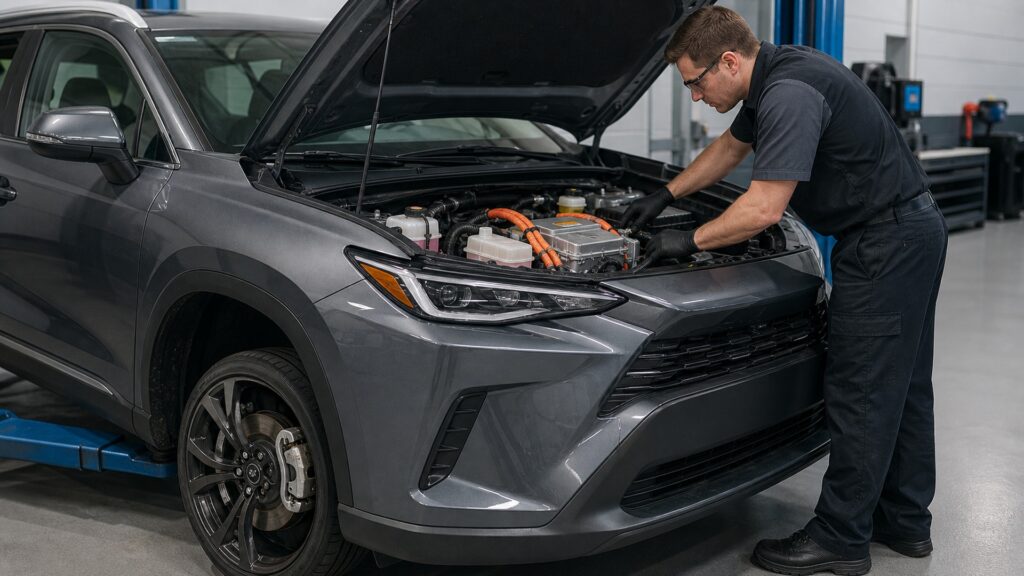
hybrid suvs explainer hero image for Review Streets
What You'll Learn

Follow the Energy Through a Hybrid SUV

Understand the major components and how their jobs change during a journey.

  • Distinguish fuel energy from stored electrical energy.
  • Identify the engine, motor-generator, battery, and power electronics.
  • Understand why power flow changes with demand.
  • See what braking energy recovery can and cannot do.
  • Separate conventional hybrids from plug-in and battery-electric vehicles.

Tip: Think of the battery as an energy store managed within a system, not as a source that creates energy.

Definitions

The Components Behind Hybrid Propulsion

The arrangement varies, but these roles explain the main energy paths.

Combustion engine

The power source that converts fuel energy into mechanical output.

  • Example: The engine supplies energy during a sustained drive.
  • Check: Identify how it is connected in the particular hybrid design.
  • Limit: It may run for system needs even when the driver requests little acceleration.

Motor-generator

An electrical machine that can provide mechanical drive or convert mechanical input into electrical energy, where the design uses it for both roles.

  • Example: A drive motor contributes during acceleration and recovers energy during suitable slowing.
  • Check: Check the manufacturer’s component layout.
  • Limit: Some designs divide these jobs among separate machines.

Traction battery

The store of electrical energy used by the propulsion system.

  • Example: Energy saved during slowing is later available for motor assistance.
  • Check: Use model-specific information about operating range and care.
  • Limit: Usable electrical assistance is limited by system conditions and capacity.

Power electronics

The equipment that controls and converts electrical power for the drive system.

  • Example: An inverter supplies the electrical form required by a traction motor.
  • Check: Understand it as part of the propulsion system, not an owner-service component.
  • Limit: It does not eliminate energy-conversion losses.

Mechanical drive path

The gears, transmission elements, shafts, and related connections that carry torque to the wheels.

  • Example: Engine and motor contributions reach the driven wheels through the vehicle’s chosen layout.
  • Check: Consult the actual design instead of assuming one transmission type.
  • Limit: Different hybrids can use very different mechanical connections.

Hybrid controller

The control function coordinating power sources and operating needs in response to demand and conditions.

  • Example: It adjusts engine and motor contributions as speed and battery state change.
  • Check: Use displays to understand the resulting operation.
  • Limit: An energy-flow graphic simplifies a more complex control process.

Tip: The components have different jobs even when a display shows them working at the same time.

Energy sources

Fuel and Stored Electricity Enter the System Differently

A conventional hybrid gets its externally supplied propulsion energy from fuel. Its battery is charged through the vehicle’s operation, including energy recovery and engine-driven electrical production where the design provides it. A plug-in hybrid can also receive electricity from a charging connection.

  • Fuel provides energy to the combustion engine.
  • The battery stores electrical energy for later use.
  • A plug-in connection adds another way to replenish that store.

No hybrid produces free energy. Every conversion has losses, and braking can recover only part of the motion energy available. Avoiding wasted acceleration remains useful even when recovery is available.

Propulsion layouts

There Is More Than One Route to the Wheels

In a parallel arrangement, engine and electric-drive contributions can reach the wheels through mechanical paths. In a series arrangement, the engine’s contribution is used to produce electricity while a motor provides wheel drive. Other designs combine or switch between paths. These descriptions explain broad architectures, not every vehicle’s exact sequence.

  • Identify the manufacturer’s actual layout for the model.
  • Do not assume every hybrid uses the same transmission.
  • Distinguish full electric-driving capability from limited motor assistance.

Two hybrid SUVs can feel similar from the driver’s seat while achieving that response through different mechanisms. The badge alone does not identify which route the energy takes.

Changing demand

The Controller Adjusts the Contributions During the Trip

Moving away, maintaining speed, climbing, and slowing request different work. The controller manages the available engine and motor output while considering battery state and operating conditions. The engine may stop when it is not needed or start for a requirement that is not obvious from accelerator position alone.

  • Electric assistance can support a requested acceleration.
  • The engine can contribute to sustained driving or other system needs.
  • Available behavior can change with temperature and battery state.

The driver normally requests speed and braking through familiar controls. The vehicle chooses its internal contribution pattern rather than requiring the driver to manually balance engine and motor output.

Slowing down

Energy Recovery Works Alongside Friction Brakes

An electric machine can resist motion while converting some of that energy into electricity. The battery stores what the system can accept. Friction brakes supply braking as required, including when electrical recovery is limited or insufficient for the requested stop.

  • Recovery availability depends on the design and conditions.
  • Friction braking remains part of the complete system.
  • The brake controls coordinate the response the driver requests.

A long descent cannot be treated as an unlimited battery-charging opportunity. Follow the vehicle’s operating instructions, and do not assume electrical recovery alone handles every slowing task.

Hybrid types

Plug-In Capability Changes the Energy Routine

A conventional hybrid manages its battery without routine external charging. A plug-in hybrid is designed to accept charging and usually supports a larger share of electric travel when appropriately charged. A battery-electric SUV has no combustion engine and relies on externally supplied electrical energy for propulsion.

  • Check which type the vehicle actually is.
  • For a plug-in, evaluate charging access and both charged and gasoline operation.
  • Use the exact vehicle’s specifications for range, economy, and service needs.

The practical distinction is where the trip’s energy comes from and how the vehicle uses it. A plug-in that is rarely charged has a different operating pattern from one charged regularly, even though the hardware is the same.

Quick Reality Check

What Hybrid Coordination Can Achieve

The benefit comes from the whole design and how it is used.

It can help…

Recover some energy during slowing and reduce unnecessary engine operation.

Combine engine and electrical contributions to meet driving demand.

It cannot guarantee…

Electric-only travel at every speed or in every condition.

Identical fuel savings, layout, or behavior across all hybrid SUVs.

Common Myths

Misconceptions About How Hybrids Work

Separate the energy mechanism from simplified claims.

The battery creates the electricity needed to keep driving indefinitely

It stores energy supplied through the vehicle’s operation or a plug-in connection. It does not create energy.

The engine only starts when the accelerator is pressed hard

It can run for battery, temperature, or other operating needs specified by the design.

Every hybrid has the same transmission

Hybrid architectures and mechanical connections vary.

Recovered braking energy replaces ordinary brakes

Friction brakes remain necessary, and electrical recovery has limits.

Tip: Use the model’s explanation when a broad description does not match the vehicle you are considering.

FAQ

Questions About Hybrid SUV Mechanisms

Answers that connect the components to normal use.

Do I have to charge a hybrid SUV?

A conventional hybrid does not plug in. A plug-in hybrid accepts external charging, which should be part of evaluating its intended use.

Why does the battery charge display move up and down?

The system stores and uses energy during normal driving. A changing display alone does not establish a fault.

Can a hybrid be driven while the engine is silent?

Some designs allow electric propulsion under certain conditions. Check the ready-state indication and the capabilities of the specific vehicle.

Does a hybrid still need engine maintenance?

Yes. A vehicle retaining a combustion engine has its applicable service requirements, alongside care for the rest of the vehicle.

Bottom Line

Hybrid SUVs work by coordinating fuel-powered and electrical propulsion, with a battery storing energy and controls managing the flow.

The exact architecture determines the behavior. Understand the energy paths, then use model-specific information for capability, charging, and maintenance.

Next Steps

Go Deeper or Compare Your Options

Use these Review Streets paths to compare related categories and practical next decisions.

Vehicles

Compare related vehicle choices against the same carrying needs and driving routine.

SUVs

Compare related vehicle choices against the same carrying needs and driving routine.

Hybrid SUVs

Explore Hybrid SUVs with your passenger, cargo, and ownership requirements in mind.

Further reading: DOE: hybrid component roles; DOE: plug-in hybrid operation; Honda: combined hybrid power paths; DOE: hybrid braking. Use the owner’s manual for the exact vehicle’s instructions and limits.